Oct 11, 2026
Importing a Crane Truck into Kazakhstan: The Class That Decides the Deal
Kazakhstan's tariff is not what decides the deal. Vehicle safety, fuel quality and duty are set at union level, and the ecological class inside TR CU 018/2011 is the entry condition.
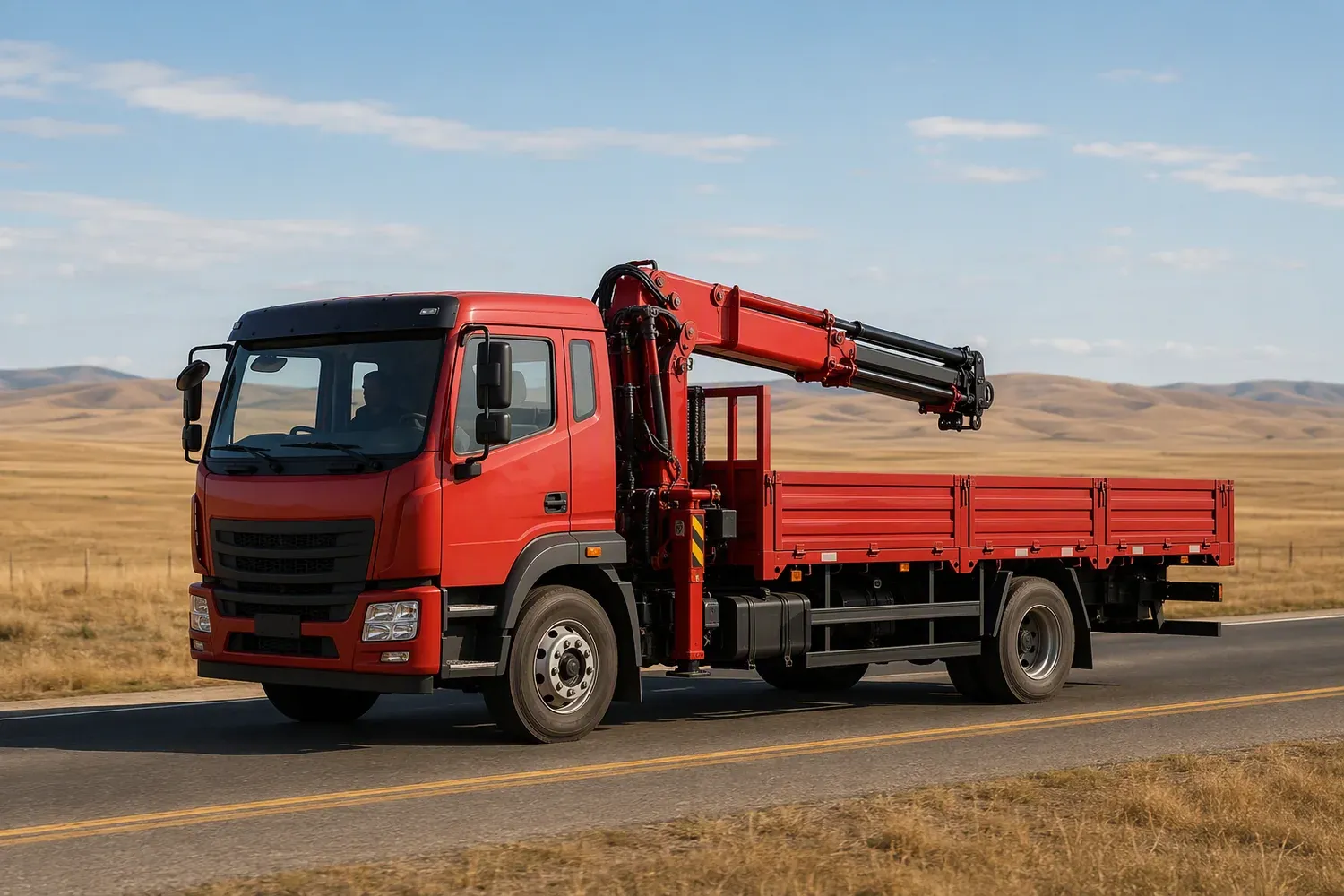
If you have read an import guide for Kazakhstan, the odds are it opened with the duty rate. The duty rate is not where the deal is decided.
Kazakhstan is a member of the Eurasian Economic Union, and that changes the shape of the question. Vehicle safety, fuel quality and the customs tariff are not set in Astana — they are set at union level and applied directly. What decides whether your crane truck clears and registers is the ecological class the vehicle is certified to, because that class is the entry condition for the union's technical regulation, and the class definitions are inside a regulation that is not Kazakh.
The three union documents that apply
Document | What it governs | Status |
|---|---|---|
TR CU 018/2011 — "On the safety of wheeled vehicles" | Type approval and the ecological class of the vehicle itself | In force; confirmed on the Eurasian Economic Commission's own pages |
TR CU 013/2011 — requirements for motor and aviation petrol, diesel, marine and jet fuel | The fuel, not the vehicle | In force; separate regulation from the above |
ETT EAEU — the union's common customs tariff, approved by Council Decision No. 80 of 14 September 2021 | The import duty on 8705 10 | In force since 1 January 2022 |
The distinction in the second and third rows is the one that costs money when it is missed. Emission class is a rule about the truck. Sulphur content is a rule about the fuel. They are enforced by different bodies and they fail in different ways. A chassis certified to a high ecological class will still be the wrong purchase if the diesel it will actually burn is not the grade that class assumes — and the reverse is also true.
We could not obtain the union's per-line tariff schedule as an official file, and we will say so plainly rather than dress the number up. What we have is the legal basis officially, and the rate itself from a non-official legal database: 8705 10 at 10% for new, and 10% but not less than EUR 0.28 per cubic centimetre of engine displacement for used. Treat that as the shape of the rate, not as a quotation — your broker reads the current schedule, and the subheading for your specific build is what governs.
Fuel, and why we ask before we quote an engine
TR CU 013/2011 grades diesel by ecological class, and the highest grade in that regulation is the one a high-emission-class engine is designed around. We were not able to read the regulation's annexes word for word in this review, so we are not going to print a sulphur figure and call it verified. What we can say is what that means for an order: the fuel specification at the point of use belongs in the specification conversation, before the engine is chosen.
If the truck will run on a supply whose actual sulphur level is unknown, that is a fact about the order, not a detail for later. We would rather build a chassis with a simpler after-treatment system than sell a truck whose emissions hardware fails in its first year — and if the honest answer is that the simpler chassis is the right one, we will say so.
Registration, and what is still not verified
Registration of a vehicle in Kazakhstan is handled through the Ministry of Internal Affairs, under the state registration rules for vehicles (Order No. 375 of 5 May 2020). The technical regulation route for the vehicle itself is TR CU 018/2011, and conformity is assessed on the union side — which means the certification body that issues your document may sit outside Kazakhstan, and the paperwork is portable across member states.
Kazakhstan drives on the right and registers left-hand-drive vehicles; a right-hand-drive import is not a practical route here, and the specific prohibition is something your importer should confirm in the current text rather than take from us. Left-hand drive is our standard build, so a Kazakhstan order carries no conversion cost.
A utilisation fee (утильсбор) is levied on imported vehicles; the operator of the scheme is АО «Жасыл даму», whose payment pages are official. We could not locate the underlying legal text with the rate table, and we are not publishing a figure we could not verify.
What we could not verify, and will not pretend to
- Whether Kazakhstan applies an ecological class requirement stricter than the union's at first registration, and the minimum class for first registration.
- The tariff rate for 8704 if your build is classed as a goods vehicle rather than a crane lorry.
- Whether import licensing, quotas or sole-agency rules apply to 8705 10 vehicles.
- Any age or model-year limit, and the text that defines a "new" vehicle.
- The document list for registration and reception.
- Whether Chinese-origin goods receive most-favoured-nation treatment in every subheading — there is no free trade agreement between the EAEU and China, but we did not obtain the official text stating the consequence for this heading.
None of these is a "no requirement". Each is a question we could not close inside this review, and each is worth one email to your importer before you commit a production slot.
What to send us
- The tariff subheading your broker uses, and the rate with it.
- The ecological class your registration route requires, in the wording your authority uses.
- The sulphur level of the diesel the truck will actually burn — and whether it will run on one supply only.
- The job: tonnage, boom type, and whether the body tips.
Our published figures for the crane and grab range — tonnage, boom sections, GVW, body type — are those currently listed on this site, reviewed 1 October 2026. The truck-mounted crane and grab truck listings carry the range, and the chassis and emission question is covered in more detail in a separate article.
Left-hand drive is our standard build; right-hand drive is available on request for other destinations.
Send us the four lines on WhatsApp and we will come back with the chassis, the CIF price and the document list your importer needs.