Sep 22, 2026
Which Truck-Mounted Crane Brand Should You Buy? UNIC vs SANY PALFINGER vs XCMG vs SHIMEI Compared
An evidence-based comparison of UNIC (Furukawa), SANY PALFINGER, XCMG and SHIMEI truck-mounted cranes — lifting ranges, boom types, engineering features, service networks and the pros and cons of each
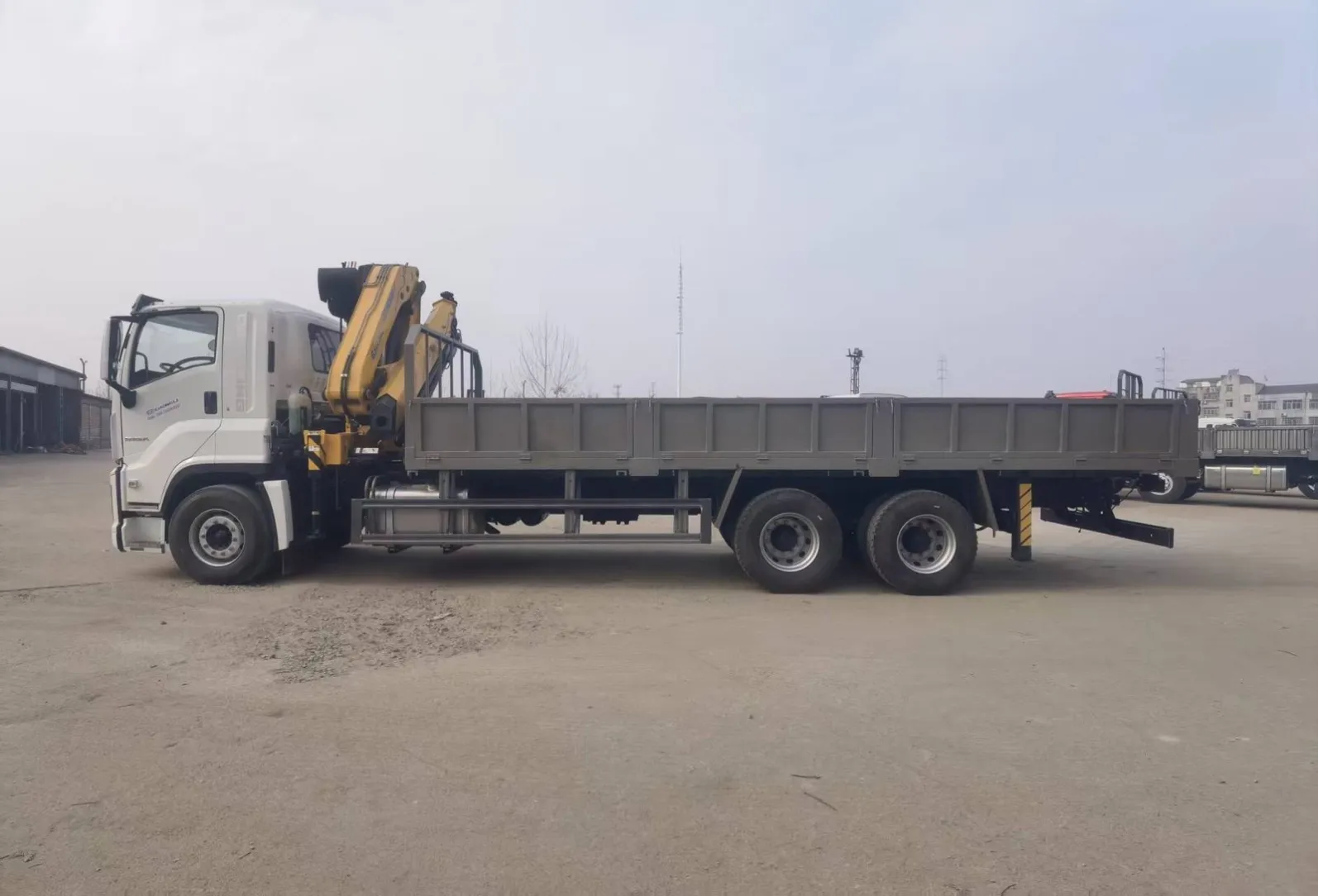
Choosing a truck-mounted crane (also called a loader crane, lorry-mounted crane or articulated crane) is rarely a brand decision alone — it is a decision about matching a lifting envelope to a chassis, a duty cycle, and a spare-parts corridor. Yet brand still matters, because it determines the engineering culture behind the boom, the availability of parts five years from now, and the price you pay for both.
This guide compares four brands that dominate enquiries from Africa, Latin America, the Middle East and Asia for crane-equipped commercial vehicles:
- UNIC — manufactured by Furukawa UNIC Corporation, Japan
- SANY PALFINGER — a joint venture between SANY (China) and PALFINGER (Austria)
- XCMG — Xuzhou Construction Machinery Group, China
- SHIMEI — Shijiazhuang Coal Mining Machinery Co., Ltd., China
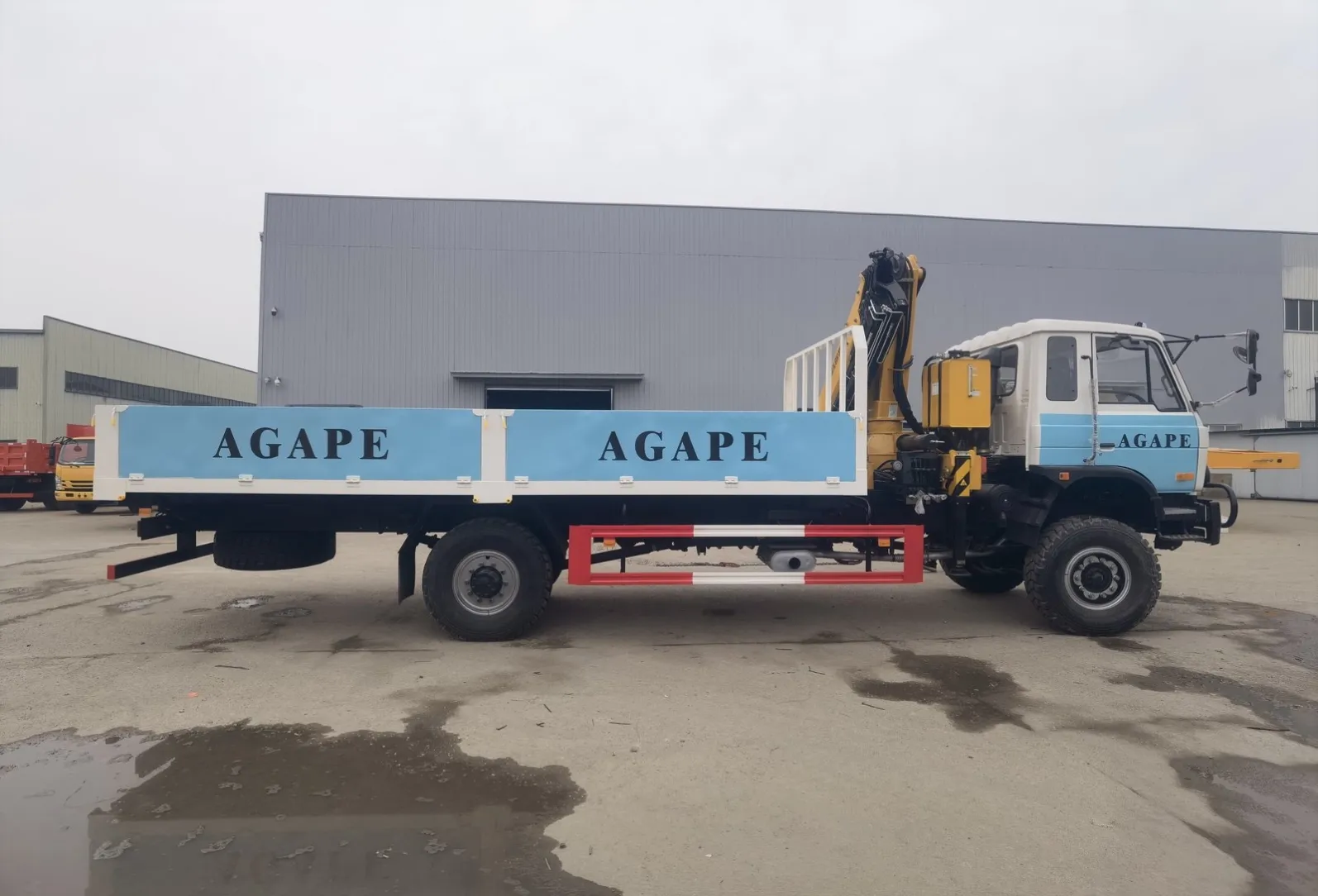
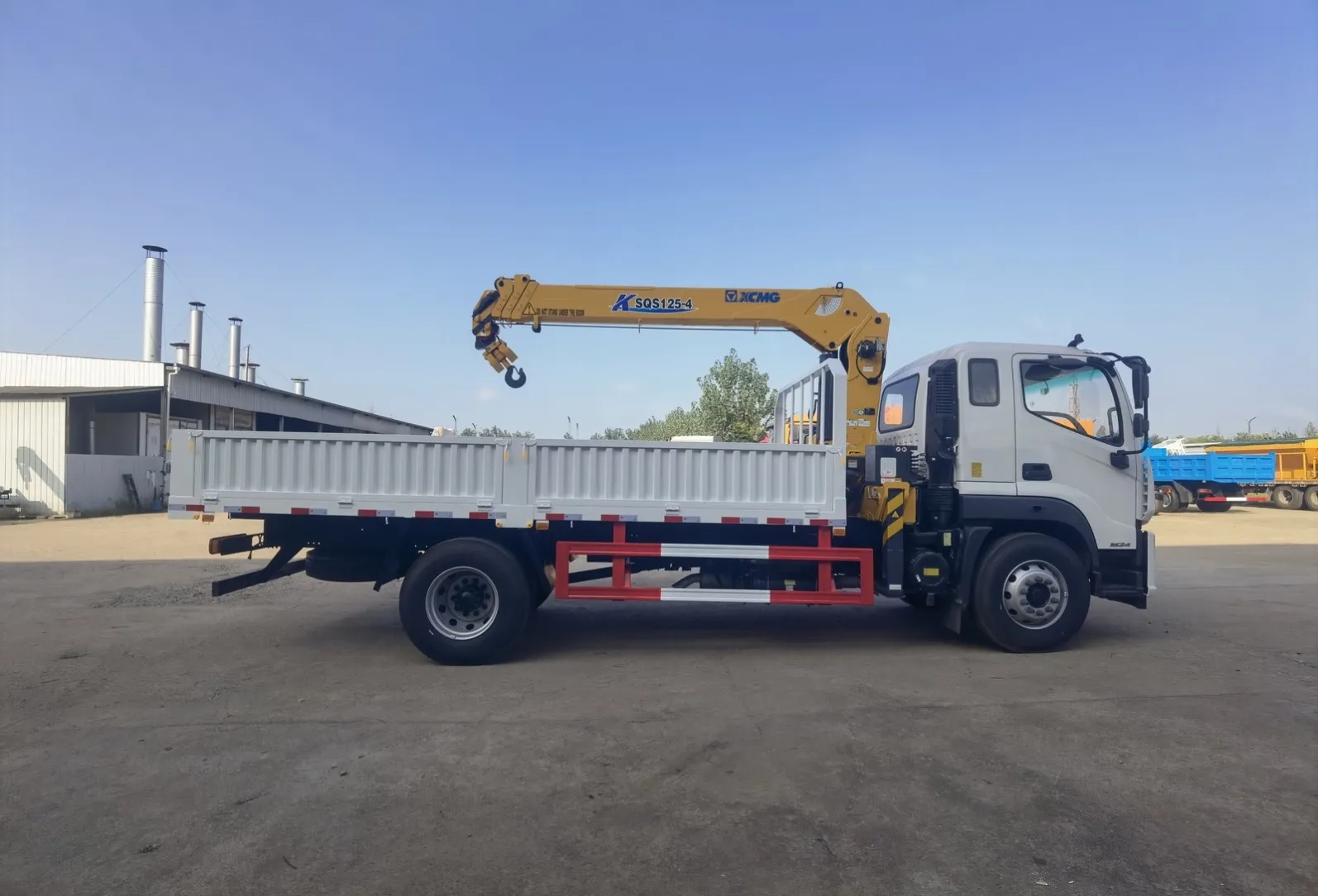
A truck-mounted crane with a folding knuckle boom stowed for road travel. The crane is a component: the truck's payload, drive side and emission stage are all set by the chassis underneath it.
Every figure quoted below is traceable to the manufacturer's own published material or an attributed source, listed at the end of the article.
Quick comparison at a glance
| UNIC (Furukawa) | SANY PALFINGER | XCMG | SHIMEI |
|---|---|---|---|---|
Origin / ownership | Japan — Furukawa UNIC Corporation | China–Austria joint venture (SANY + PALFINGER, since 2012) | China — XCMG Group (listed, XCMG Machinery 000425) | China — Shijiazhuang Coal Mining Machinery, established 1939 |
Published range (global line-up) | 3.03 t up to 15.1 t | 3.2–22 t (stiff boom); 3.3–21.5 t (knuckle boom) | Documented models from 4 t class up to 25 t | 1 t up to 16 t (straight and knuckle boom) |
Boom types | Predominantly straight (stiff) boom; knuckle variants in some series | Both stiff boom and knuckle boom, over 100 published models | Both straight and knuckle boom | Both; plus non-excavation (QYF) and rail (QYG) variants |
Documented engineering features | 360° continuous slewing; continuous hook stowage; overwind prevention; slewing interlock for road travel | PALTRONIC electronic overload protection; HPLS high-efficiency lifting system (documented +10% lifting capacity); OSK overload protection; European-imported main hydraulic components | Reinforced synchronous boom extension; in-house merged-flow proportional control; automatic hook stowage; optional moment limiter, work basket, remote control | Designed around durability in industrial, mining and rail service; wide QYS straight/knuckle model spread |
Service & parts | International dealer network organised by region (Asia, Oceania, Europe, Russia & CIS, Middle East, North America, Central & South America, Africa) | PALFINGER-backed global parts and partner network; spare parts stocked by partners or shipped direct | Extensive XCMG global dealer and service footprint | Mainly China-based support with project-based export delivery |
Positioning | Premium Japanese engineering | Premium-adjacent European design and quality control, Chinese manufacturing | Volume leader with a very broad, cost-efficient model range | Value-focused, industrial-duty alternative |
Positioning is a qualitative market assessment by the author, not a measured price index. Ask each supplier for a configuration-specific quotation.
How to read truck-mounted crane specifications
Manufacturers use a handful of figures to describe very different machines. Understanding them prevents expensive mis-selection.
- Rated lifting moment (t·m or kN·m). The crane's structural strength, expressed as load × radius. A 5 t·m crane can lift 5 t at 1 m, or 1 t at 5 m — but only within the load chart. Do not compare "tonnage" alone.
- Maximum lifting capacity. Valid only at a specific small radius (commonly 2.0–2.5 m). It is not the load you can lift at full reach.
- Maximum hydraulic outreach / working radius. How far the boom reaches horizontally. Beyond this, the load chart stops.
- Maximum hook height / lift height. Vertical reach; affected by boom sections and mounting position.
- Boom sections. More sections = more reach. It is normal for several models in one family to share the same lifting capacity and differ only in the number of sections.
- Outrigger span and installation space. These two figures decide whether the crane physically fits the chassis and whether it can be deployed safely on the site.
- Hook and attachment weight. Most load charts require you to deduct the hook weight — for example, UNIC's 5 t-class catalogue states a 50 kg hook deduction, while its 3 t-class series states 30 kg.
- Rated load charts are conditional. They assume outriggers fully extended, level ground, and the actual radius measured including boom deflection. Vehicle weight, load distribution, mounting position and operating speed all reduce the allowable load.
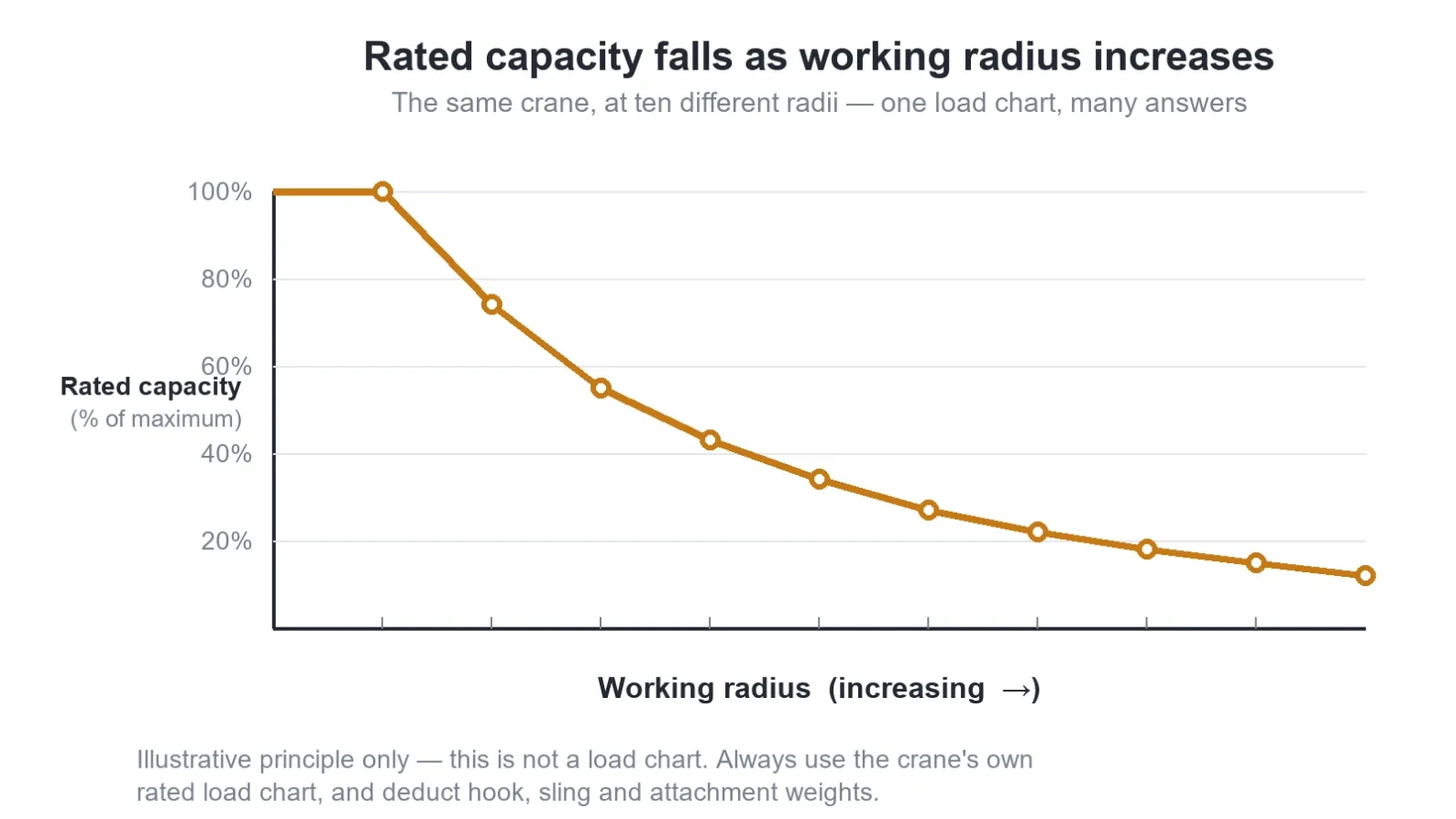
The single most important idea in this article: a crane has no single "capacity". It has a load chart — and the allowable load falls away quickly as you work further out. For a step-by-step walkthrough of reading one, see our guide to how to read a load chart.
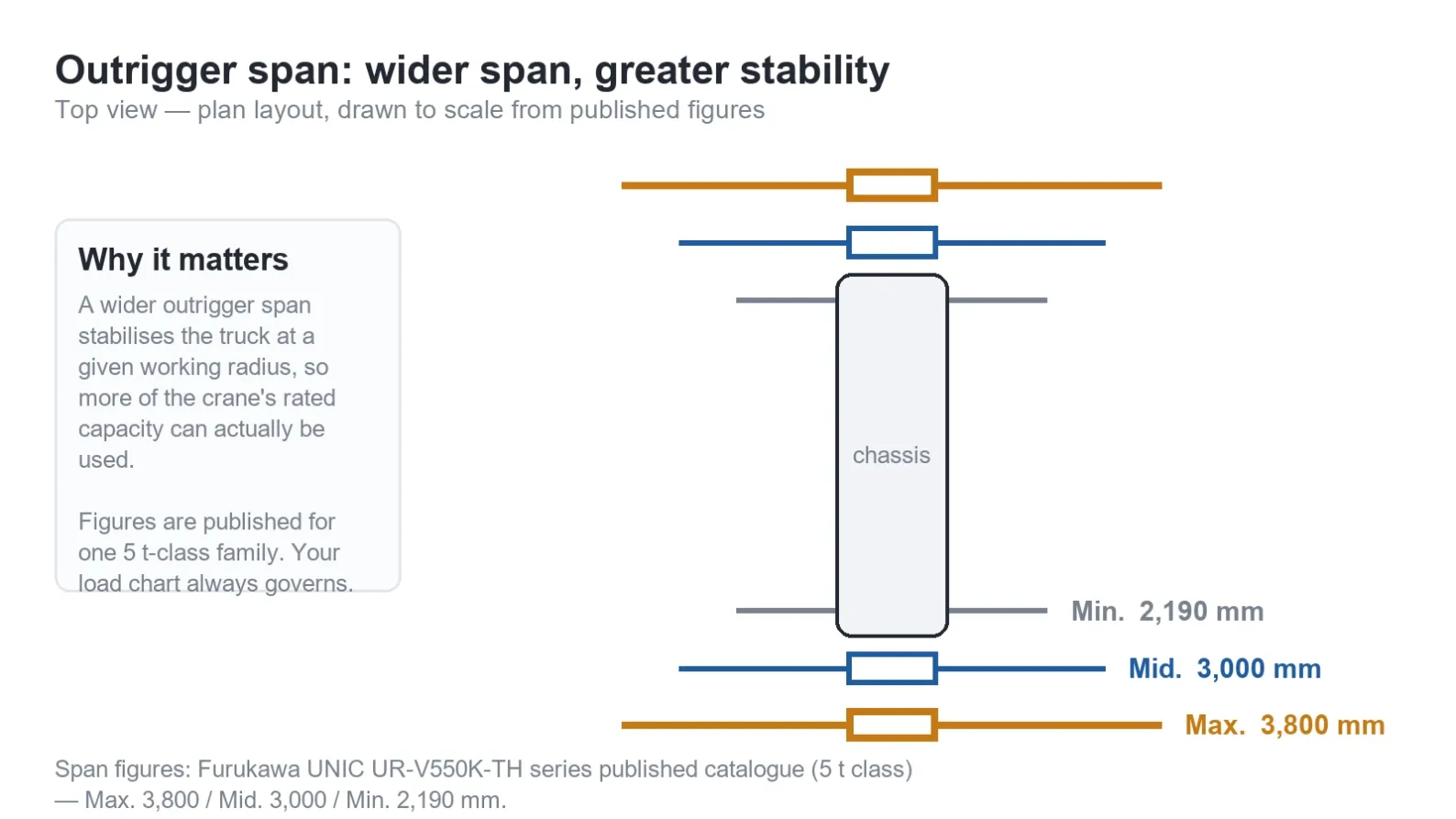
Outrigger span, drawn to scale from published 5 t-class figures. Extending the outriggers fully is not a formality — it is what converts the crane's structural rating into usable lifting capacity.
Rule of thumb: never buy on "tonnage". Buy on the load chart at your real working radius, then confirm the chassis, outriggers and installation space support it.
1. UNIC (Furukawa UNIC, Japan)
Who they are. Furukawa UNIC is a Japanese specialist that has built truck-mounted cranes since the mid-20th century and is widely regarded as one of the reference brands in the category. Its international line-up is published by model family with capacity, outreach and the recommended truck GVW range.
Published line-up (global).
Series | Max. lifting capacity | Max. out reach | Recommended truck |
|---|---|---|---|
URV290 | 3.03 t at 1.5–1.6 m | 6.43–12.63 m | GVW 8 t and less |
URV340 | 3.03 t at 2.4–2.7 m | 5.32–14.42 m | GVW 8–15 t |
URV370 | 3.03 t at 2.4–2.7 m | 7.51–14.42 m | GVW 8–15 t |
URV550K-TH | 5.05 t at 2.5 m | 8.13–15.50 m | GVW 15 t and more |
URU550H | 5.05 t at 2.5 m | 8.13–13.14 m | GVW 15 t and more |
URV800 | 8.07 t at 2.5 m | 9.20–15.60 m | GVW 15 t and more |
URV1004-CNCT | 10.1 t at 2.5 m | 13.69 m | GVW 24 t and more |
URG1200-CNCT | 12.1 t at 2.5 m | 16.0–19.43 m | GVW 24 t and more |
URV1505W-CNCT | 15.1 t at 2.0 m | 18.11 m | GVW 24 t and more |
What the model code tells you. In the 5 t family (UR-V550K-TH: UR-V553K / 554K / 555K / 556K), the final digit is the number of boom sections — 3, 4, 5 or 6 sections — while the lifting capacity stays at 5.05 t at 2.5 m across the family. The same logic runs through the 3 t family (UR-V503 / 504 / 505 / 506). This is a genuinely useful convention: it lets you specify reach without changing the load chart's top end.
Where UNIC is strong.
- Consistent, well-documented specification sheets, including mounting drawings and articulated load charts.
- Safety architecture is a design priority: 360° continuous slewing, continuous hook stowage, overwind prevention (hook-block protection), and a slewing interlock that hydraulically locks the slewing motor during road travel.
- Regional dealer structure, which matters when a machine works far from the port of entry.
- Produced in both Japan and, through Taian Furukawa in China, locally — which changes price and lead time depending on the model and market.
Where UNIC needs care.
- Premium pricing and typically longer lead times than Chinese-built alternatives.
- Its export line-up concentrates on straight-boom cranes; buyers who prefer a knuckle boom for tight urban work have fewer options within the UNIC family.
- Genuine parts are priced as premium parts. Budget for them in the total cost of ownership, not just the purchase price.
UNIC-pattern cranes are one of the crane families we integrate onto customer-specified chassis — see the crane trucks we build.
2. SANY PALFINGER (China–Austria joint venture)
Who they are. SANYPALFINGER was formed in 2012 as a joint venture between SANY Heavy Industry (China) and PALFINGER AG (Austria), the European loader-crane specialist. The venture develops and produces truck-mounted knuckle-boom and stiff-boom cranes, and the company positions itself explicitly as combining "European technology, Chinese manufacturing".
Published line-up.
- Stiff boom cranes (SPS series) — max. lifting capacity 3.2–22 t, boom length 10.4–21.6 m, crane weight 1.2–6.8 t. Published models include SPS8000, SPS12500, SPS16000, SPS17500, SPS20000, SPS25000, SPS30000, SPS35000, SPS40000, SPS45000 and SPS50000.
- Knuckle boom cranes (SPK series) — max. lifting capacity 3.3–21.5 t, crane weight 0.7–7.5 t, max. hydraulic outreach 9.6–16 m. Published models run from SPK6500 to SPK74002.
- Portfolio breadth — PALFINGER's Asia-Pacific materials state more than 100 knuckle-boom and stiff-boom models from 6 to 74 MT.
Documented model examples.
- SPK50002 — 49 t·m lifting moment, maximum lifting capacity 16.5 t, maximum hydraulic outreach 16.8 m.
- SPK15500 — 14.6 t·m, rated lifting capacity 6,200 kg, full boom length 12.2 m.
- SPK60002 — 58.3 MT lifting performance with a maximum load of 21 t, 8.6 m wide-span outriggers and 180° automatically rotating vertical outriggers.
- SPS30000 — 12 t stiff-boom crane.
Where SANY PALFINGER is strong.
- Technology transfer is real, not marketing. Documented features include PALTRONIC electronic overload protection with safe-direction protection, the HPLS high-efficiency lifting system (published as increasing lifting capacity by 10%), OSK hydraulic overload protection, and adjustable boom-extension speed using a return-oil utilisation system.
- European hydraulic components. Main hydraulic components are imported from Europe — a meaningful reliability and serviceability argument in markets where hydraulic failures are the most expensive downtime.
- The widest single product spread of the four brands, particularly in knuckle-boom cranes, which suit municipal, utility, brick-handling, landscaping and waste-management work where a straight boom is impractical.
- Spare parts reach. Parts are stocked by PALFINGER's partner network or shipped directly, which is a practical advantage over brands with thinner international support.
Where SANY PALFINGER needs care.
- Two product philosophies under one badge (SPS stiff boom, SPK knuckle boom) — verify which you are being quoted, because the load charts and mounting requirements differ completely.
- Premium European design implies a price above purely domestic Chinese brands; the value argument rests on the components and the control systems.
- As with any joint venture, model availability and support quality vary by market — ask for the local partner's name and parts lead time in writing.
3. XCMG (China)
Who they are. Truck-mounted cranes are produced by Xuzhou XCMG Truck-mounted Crane Co., Ltd., founded in January 2002 as a wholly owned subsidiary of XCMG Group and part of the listed XCMG Machinery (stock code 000425). The company works across four major product categories and, by its own account, more than 40 series and over 400 models, including truck-mounted cranes, bridge-inspection vehicles, aerial work platforms and recovery vehicles. XCMG is the highest-volume construction-machinery group in China, which gives it unmatched scale in components and dealer coverage.
Documented model examples.
Model | Parameter | Value |
|---|---|---|
GSQS400-5 | Max. lifting moment | 430 kN·m |
| Max. lifting mass | 16,000 kg |
| Max. hydraulic boom length | 21.77 m |
| Slewing angle | 360° |
| Outrigger span | 2,436–8,396 mm |
| Installation space | 1,340 mm |
| Max. working pressure | 28 MPa |
SQS625A | Max. lifting capacity | 25 t |
| Max. working radius | 30 m |
(The SQS625A figures come from Chinese trade press reporting at launch in 2015, when it was described as the largest telescopic truck-mounted crane in China. Confirm current availability with XCMG.)
Where XCMG is strong.
- Breadth at every price point. From a 4 t-class utility crane to a 25 t long-reach machine, XCMG can cover a fleet's entire range from one supplier — which simplifies spares, training and service contracts.
- Documented engineering depth. The current G series is published with a reinforced synchronous telescoping mechanism for better on-load extension, an in-house merged-flow proportional control system for smooth combined movements, automatic hook stowage to protect the crane during road travel, and optional fly jib, work basket, radio remote control and moment limiter.
- Component availability. Because XCMG builds at very large volume, hydraulic and structural spare parts are widely available outside the official channel — a real advantage in markets with long import cycles.
- Worldwide service presence, and a genuine choice between straight and knuckle boom configurations.
Where XCMG needs care.
- The model range is so large that specification discipline matters: two similarly named models can differ substantially in moment, reach and installation dimensions. Always request the specific load chart.
- Base configurations omit features (moment limiter, remote control, work basket) that some competitors list as standard — price the options into the comparison so you are comparing like with like.
- As with every high-volume brand, quality is configuration-dependent; the specification you sign is the specification you receive.
Two examples from our own build list: a 4 t XCMG crane on an Isuzu Elf 4x2 and a 25 t-class chassis-mounted crane.
4. SHIMEI (China)
Who they are. SHIMEI cranes are built by Shijiazhuang Coal Mining Machinery Co., Ltd., a company founded in 1939 and relocated to Shijiazhuang, Hebei Province, in 1957, corporatised in 1998 and now operating within a coal-industry group. Truck-mounted cranes are one of its three principal product lines, alongside coal-mining equipment and drilling equipment. This industrial heritage shows in the product philosophy: robust, repair-friendly machines aimed at continuous duty in quarries, mines, rail and municipal works.
Published line-up. The QYS family spans roughly 1 t to 16 t, in both straight-boom and knuckle-boom form:
- Straight boom: QYS-1.0ⅡA (1 t), QYS-1.6Ⅱ, QYS-2.0ⅡB, QYS-3.2Ⅰ / 3.2Ⅱ, QYS-4Ⅱ, QYS-5Ⅱ, QYS-6.3Ⅲ, QYS-8ⅢA, QYS-10ⅢA / 10ⅢB, QYS-12ⅢA / 12ⅢB, QYS-14Ⅲ / 14Ⅳ / 14ⅣA, QYS-16Ⅳ.
- Knuckle boom: QYS-1ZⅡ, QYS-2ZⅠA, QYS-3.2ZⅡ, QYS-4ZⅡ, QYS-6.3ZⅡ, QYS-8ZⅢ, QYS-10ZⅡ, QYS-12ZⅢ, QYS-16ZⅣ.
- Specialised variants: QYF non-excavation series, QYG rail-service cranes, and a grab/grapple (timber) variant.
- In 2014 the company announced a heavy knuckle-boom crane with a 500 kN·m lifting moment and 25 t maximum lifting capacity, positioning it in the larger end of the Chinese market.
Export record. SHIMEI has supplied project-based export orders rather than building a global dealer network — for example, 3.2 t and 8 t straight-boom cranes delivered to Indonesian infrastructure projects in 2022, and crane batches shipped to Algeria.
Where SHIMEI is strong.
- Cost per lifting tonne is competitive, with a wide spread of small and mid-size models that suit municipal fleets and small contractors.
- Industrial-duty construction — the coal-machinery background favours simple, serviceable hydraulics over electronic complexity, which many buyers in remote areas prefer.
- Specialised variants (rail service, non-excavation, grab) that volume brands treat as special orders.
Where SHIMEI needs care.
- The thinnest international support of the four brands. If your fleet operates far from China, plan the spare-parts package up front rather than relying on local availability.
- Brand familiarity outside China is limited, so resale value may depend heavily on the local market's knowledge of the badge.
- Documentation and English-language technical material may require more effort to obtain; ask for the load chart, parts catalogue and mounting drawing before you commit.
Head-to-head: the pros and cons
Brand | Pros | Cons |
|---|---|---|
UNIC (Furukawa) | Japanese build quality and documentation; safety systems designed in, not added; clear section-based model logic; established regional dealer network; strong resale reputation | Premium price; longer lead times; straight-boom-dominant; premium-priced genuine parts |
SANY PALFINGER | Genuine European technology transfer (PALTRONIC, HPLS, OSK); European main hydraulic components; widest knuckle-boom range of the four; PALFINGER-backed global parts | Higher price than purely domestic Chinese brands; two distinct product families to choose between; support quality varies by market |
XCMG | Unmatched range from 4 t to 25 t class; large-volume component availability; strong dealer and service footprint; documented modern control features | Huge model range requires careful specification; key features often optional; configuration-driven quality |
SHIMEI | Best cost per lifting tonne; robust, simple hydraulics; wide small/mid-size spread; specialised rail and grab variants; long manufacturing history | Weakest international service network; limited overseas brand recognition; documentation may need chasing |
Which brand should you choose?
Choose by application first, then by budget.
Your situation | Sensible shortlist |
|---|---|
Municipal, utility and landscaping work needing a compact folded crane in city streets | SANY PALFINGER knuckle boom (SPK series); SHIMEI QYS-Z knuckle boom |
Long-reach general cargo handling on 15–25 t GVW trucks | UNIC URV550K-TH / URV800; XCMG GSQS series |
Heavy structural lifting (10–25 t) on large chassis | XCMG (up to 25 t class); SANY PALFINGER heavy knuckle booms |
Mining, quarry or rail duty where simplicity and repairability matter | SHIMEI QYS / QYG rail variants |
Fleet standardisation across many truck classes | XCMG or SANY PALFINGER (range breadth and parts depth) |
Highest resale confidence and lowest technical risk | UNIC (Furukawa) |
A practical note on chassis and export markets. A truck-mounted crane is a component; the vehicle's compliance — drive side, emission stage, axle loads and registration rules — is determined by the chassis, not the crane. In left-hand-traffic markets such as Pakistan, Kenya or Jamaica, the chassis must be right-hand drive, while many crane families are engineered around left-hand-drive trucks. Confirm both halves of the package together, and confirm the front and rear axle loads after the crane is mounted. For the market-by-market detail, see specify the crane for your market.
Eight things to verify before you sign
- The load chart at your real working radius — not the headline lifting capacity.
- The hook and attachment weight deduction stated in the chart (for example, 50 kg in UNIC's 5 t-class catalogue).
- Maximum hydraulic outreach and maximum hook height, measured with your intended mounting position.
- Installation space and outrigger span — do they fit the chassis frame and reach the ground safely?
- Crane weight versus chassis payload, so the finished vehicle stays within legal axle loads.
- Which safety systems are standard (overload protection, moment limiter, overwind prevention, hook stowage) and which are options.
- Spare-parts package and lead time in writing, including the local partner's name and contact.
- The crane's own rating plate on delivery, checked against the ordered model code.
Frequently asked questions
Is a higher "tonnage" crane always better? No. A 5 t crane and an 8 t crane may have identical outreach but very different weights and prices. Compare load charts at your working radius, then check chassis compatibility.
Straight boom or knuckle boom? Straight (stiff) booms generally offer simpler geometry, better long-reach lifting and lower maintenance. Knuckle booms fold compactly, reach over obstacles and suit urban and utility work. UNIC's export range concentrates on straight booms; SANY PALFINGER and SHIMEI both publish extensive knuckle-boom ranges.
Straight telescopic boom extended (left) and folding knuckle boom stowed for transport (right). The choice changes the crane's working envelope, its stowed length and how much deck space it leaves behind the cab.
Does the crane brand affect vehicle type approval or customs? The crane normally enters as a component mounted on a chassis; homologation, emission stage and registration depend on the completed vehicle and the importing country's rules. Confirm requirements in the destination market before ordering.
Why do several models in one family share the same lifting capacity? Because the family shares one structural design, and the differences are the number of boom sections — and therefore reach. UNIC's 3 t and 5 t families are clear examples.
How much do these cranes cost? There is no meaningful list price for a crane alone: price depends on model, boom sections, safety options, outrigger configuration, mounting and delivery terms. Request a configuration-specific quotation and compare total delivered cost, including the spares package.
Sources
- Furukawa UNIC — Truck-mounted Cranes product line-up (capacity, outreach, recommended GVW by series): https://uniccrane-global.com/products/category/truck-mounted-cranes/
- Furukawa UNIC — UR-V550K-TH Series official catalogue (specifications, mounting dimensions, rated load charts, hook deduction note): https://uniccrane-global.com/cms/wp-content/uploads/2021/01/catalog_urvV550K-TH_C-1946.pdf
- Furukawa UNIC — URU550H series product page: https://uniccrane-global.com/products/urv550h/
- Taian Furukawa (China) — URV500 series product catalogue (URV503 / URV504 / URV505 technical data and rated load charts): https://www.unic.com.cn/a/chanpin/suiche/
- SANY — Loader Crane range (stiff boom and knuckle boom ranges, model lists): https://www.sanyglobal.com/en/product/crane/loader_crane/
- PALFINGER — SANYPALFINGER Knuckle Boom Cranes (joint-venture positioning, >100 models from 6 to 74 MT, PALTRONIC / HPLS / OSK, European components, SPK60002 data): https://www.palfinger.com/apac/en/our-products/cranes/sany-palfinger-knuckle-boom-cranes.html
- SANY PALFINGER — model pages for SPK50002 and SPK15500: http://www.sanypalfinger.com/
- XCMG — GSQS400-5 official specification page: https://www.xcmg.com/product/pro-detail-136713.htm
- China Truck Network — report on the SQS625A (25 t, 30 m) launch, December 2015: https://m.chinatruck.org/news/21_59290.html
- Shijiazhuang Coal Mining Machinery — truck-mounted crane model listings (QYS straight and knuckle boom, QYF, QYG, grab variant): https://brand.lmjx.net/l_shimeiji/product/suicheqizhongji/
- China Coal News — SHIMEI heavy knuckle-boom crane (500 kN·m, 25 t), 2014: https://www.chinacoal.com/col34/art/2014/art_34_15741.html
- iFeng Hebei — SHIMEI export order of 3.2 t and 8 t straight-boom cranes to Indonesia, 2022: https://hebei.ifeng.com/c/8LL3G3ZBDol
Disclaimer
This article compares publicly documented product information and is provided for general guidance. Specifications, model availability and options change without notice and vary by market. All trademarks and brand names are the property of their respective owners, and this article is not endorsed by, affiliated with or sponsored by any of them. Every figure should be confirmed against the manufacturer's current documentation and the individual crane's nameplate and load chart before purchase or operation. Lifting operations must be carried out only by trained operators, with the crane's rated load chart and the vehicle's stability conditions observed.
Planning a crane-equipped truck? We integrate truck-mounted cranes onto the chassis that fits your market — drive side, emission stage, axle loads and body configuration included — and we are happy to prepare a like-for-like comparison across crane brands for your duty cycle. Request a configuration-specific quotation and we will come back with the load chart, the chassis match and the delivered cost in one document.