Oct 15, 2026
Importing a Crane Truck into the United States: The Lane Question Comes First
For a crane truck entering the United States, the deciding question is not which crane. It is whether the truck is a motor vehicle or equipment, and that decides which EPA form is filed.
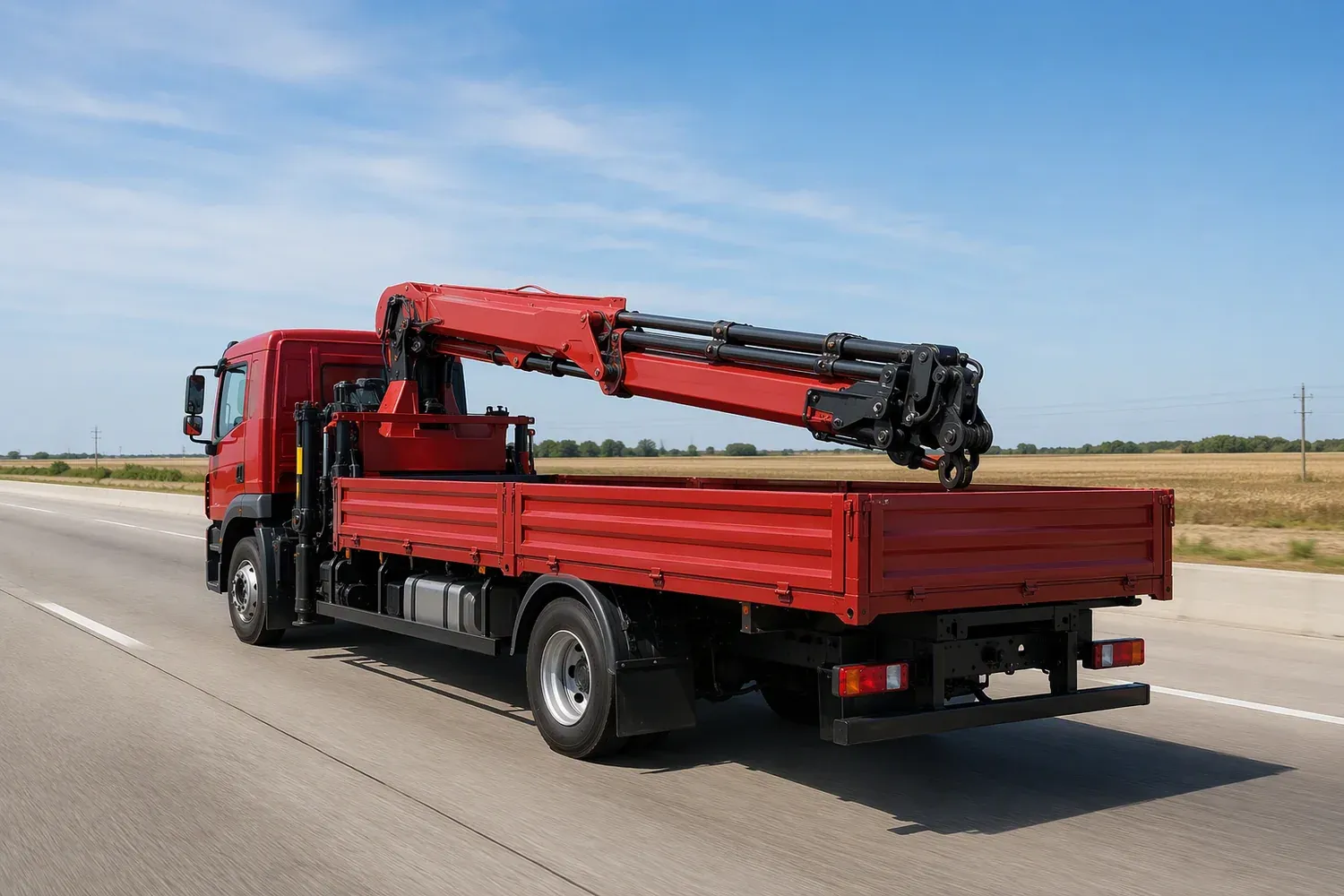
Most buyers importing into the United States start by asking which crane. The question that decides the file is a prior one: is your truck a motor vehicle, or is it equipment?
That is not semantics. It decides which EPA form you file, which part of the Code of Federal Regulations your engine is judged under, and therefore whether the truck you are looking at is importable in the form it was built. Getting this wrong is not a paperwork delay; it is a truck sitting at a port.
Two classifications, one decision
The customs side is comparatively simple. At the time of writing, the Harmonized Tariff Schedule records:
HTS | Article | General (MFN) rate | Column 2 |
|---|---|---|---|
8705.10.00 | Mobile cranes — this is the crane lorry | Free | 25% |
8426.49.00 | Other self-propelled machinery, not on tyres | Free | 35% |
8426.41.00 | Self-propelled, on tyres | Free | 35% |
So the duty line is not the obstacle. The emission lane is. And the emission lane is decided by a definition, not by the tariff heading: 40 CFR 1068.30 defines a nonroad engine to include engines used in self-propelled equipment — the regulation's own examples include off-highway mobile cranes — but then excludes engines used to propel a motor vehicle. An engine that propels a truck is judged as a highway engine; an engine that powers equipment is judged as nonroad.
For a crane lorry, both descriptions look plausible on paper, and that is exactly why we will not tell you which one applies to your build. The two lanes carry different regulatory parts — Part 86 / 1036 / 1037 on the highway side, Part 1039 for new nonroad compression-ignition engines — and different forms:
- EPA Form 3520-1 applies to passenger vehicles, highway motorcycles and their engines.
- EPA Form 3520-21 applies to heavy-duty highway engines and to nonroad engines, including engines already installed in a vehicle or piece of equipment.
A crane truck will not be filing 3520-1. Whether it files 3520-21 on the highway side or the nonroad side is the question to put to the importer, and the answer changes what evidence the engine has to carry.
The vehicle side: HS-7 and the twenty-five year rule
Vehicle safety is administered by NHTSA under 49 CFR Part 591, declared on Form HS-7. Section 591.5 lists the declarations a person may make, and two entries matter to a buyer of a Chinese-built crane truck:
- §591.5(i)(1) — the vehicle is 25 years old or older. This is the provision people mean when they talk about the 25-year rule, and it is why older chassis are a different kind of transaction from new ones.
- §591.5(f) — the vehicle does not conform, but is being imported under bond by a Registered Importer registered under Part 592, for a model and year determined eligible under Part 593, with a bond equal to 150% of the vehicle's dutiable value. The vehicle may not be a salvage or reconstructed vehicle.
Both routes are real. Neither is a formality, and neither is something a manufacturer can complete on the buyer's behalf from the other side of the ocean. EPA also notes that imports additionally carry customs requirements, with declarations filed through Customs and Border Protection.
For a new, non-conforming crane truck, the practical question is whether it can be brought in at all in the form it was built — and the answer is held by the importer's own eligibility route, not by us.
The operating side, which is not an import question
The United States also regulates how the machine is used. 29 CFR Part 1926 Subpart CC covers cranes and derricks in construction, and §1926.1400(a) expressly names articulating cranes, such as knuckle-boom cranes, and mobile cranes including commercial truck-mounted and boom truck cranes. The obligations in that subpart run to employers and operators — training, certification, evaluation, inspection and maintenance. §1926.1427 sets out operator training, certification and evaluation, with certification issued by an accredited testing organisation and, under §1926.1427(d)(4), valid for five years; the section also carves out derricks, sideboom cranes and machines with a maximum rated lifting capacity of 2,000 lb or less.
We are deliberately not turning that into a statement about equipment approval. Within the scope of the provisions we read, the regulated party is the employer and the operator. We did not obtain an official statement that no equipment type-approval regime exists, so we are not making that claim.
What we could not verify, and will not pretend to
- Whether Section 301 additional duties apply to HTS 8705.10 for Chinese origin. The mechanism is official; the product list is not something we could confirm for this heading, and the HTS entry did not carry an additional-duties note.
- Whether any Section 232 or other presidential tariff action applies to this heading.
- Whether there is a federal-level value added tax — we did not find an official provision, and we are not converting that into a negative answer.
- The official case-by-case classification of a crane lorry as highway or nonroad equipment.
- Any federal or provincial-level equivalent on the Canadian side of the operating rules.
Two of the five items above are the ones most likely to move a landed cost. They are also the two a customs broker can answer in an afternoon. That is the right place for them.
What we will not tell you
- We will not quote you a duty rate, and we will not say whether 301 duties attach to your vehicle.
- We will not tell you which EPA lane your build falls into. That is a classification decision with regulatory consequences, made with your importer.
- We will not claim the truck meets FMVSS or EPA requirements. A Chinese-built truck is built to Chinese requirements; whether that is accepted on your route is decided by your route.
- We will not describe the operating rules as an import condition. OSHA governs use; NHTSA and EPA govern entry.
What to send us
- The importer's route for your vehicle — new non-conforming, Registered Importer, or an eligible model and year.
- The engine's emission certification as it stands, and who issued the report.
- The job: tonnage, boom type, body type, and whether the crane will be used in construction work.
- Destination port.
Our quoted models and figures are those listed on this site, reviewed 1 October 2026. The truck-mounted crane and grab truck listings carry the range, and the emission-label question in general is covered in a separate article.
Left-hand drive is our standard build; right-hand drive is available on request for other destinations. The United States is left-hand-drive, so no steering conversion is involved.
Send us the four lines on WhatsApp and we will come back with the chassis, the documentation we can supply, and the questions your importer will ask.