Sep 30, 2026
The Grab Is the Visible Part: How the Chassis Is Actually Chosen, and Why One Grab Unit Fits So Many Trucks
Buyers argue about the grab; the chassis decides whether the truck survives. Why one grab unit fits so many brands, and the decisions that actually set the chassis cost.
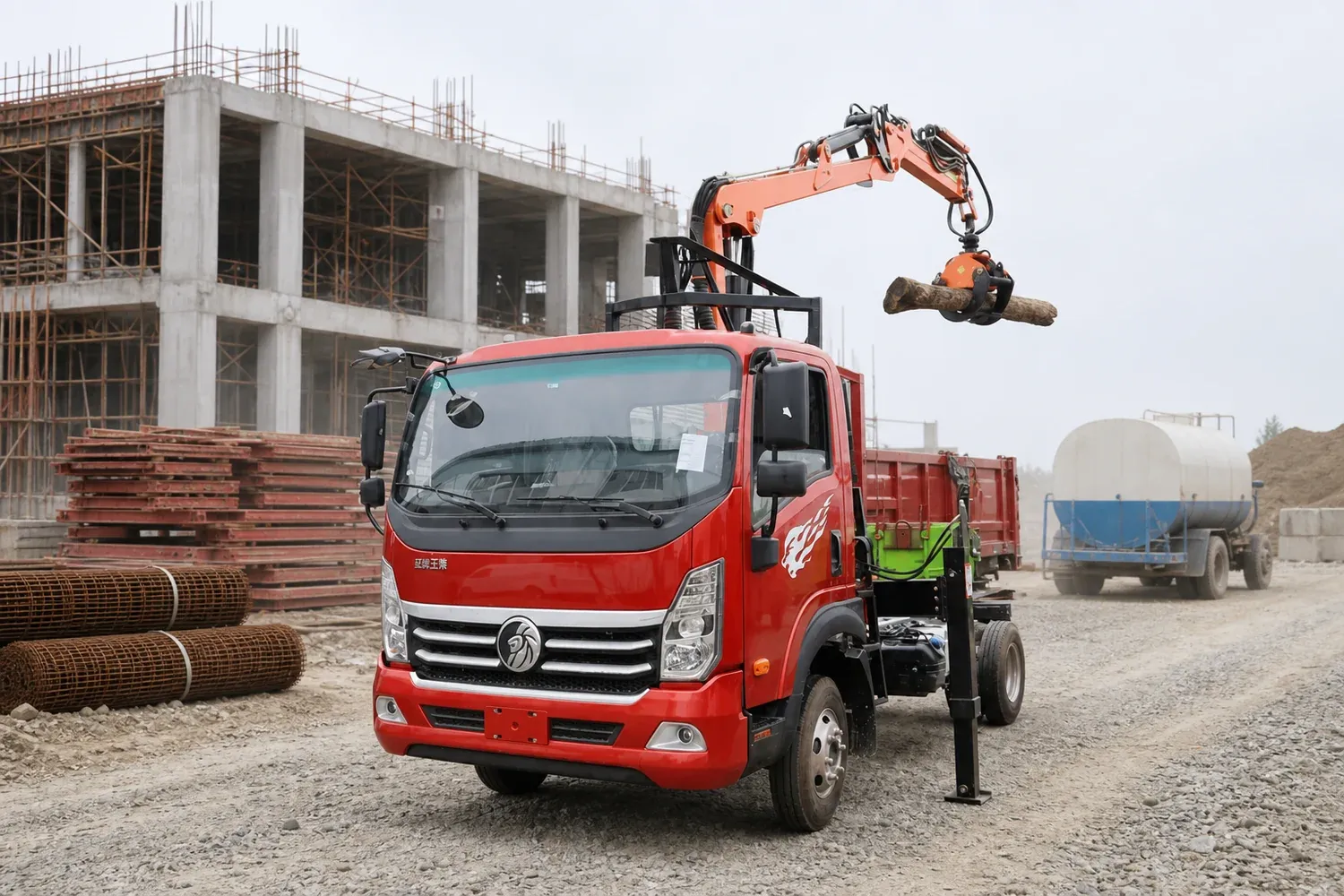
Buyers spend the first half of a specification conversation on the grab: shell type, linkage, boom length. Those decide whether the machine fits the job.
The chassis decides whether the machine exists — whether the grab and its load sit inside a legal gross weight, whether the body is long enough to hold what you are lifting, whether the hydraulics can be driven at all, and whether the truck can even be plated in your market.
This page explains how we choose the chassis, and why the same grab appears on so many different trucks.
The chassis families we build grab trucks on
We are an integrator: we buy the chassis, and we build the grab, the boom, the body and the hydraulics onto it. That means the chassis list is a fitment question, not a brand preference.
Family | Where it sits in the grab line |
|---|---|
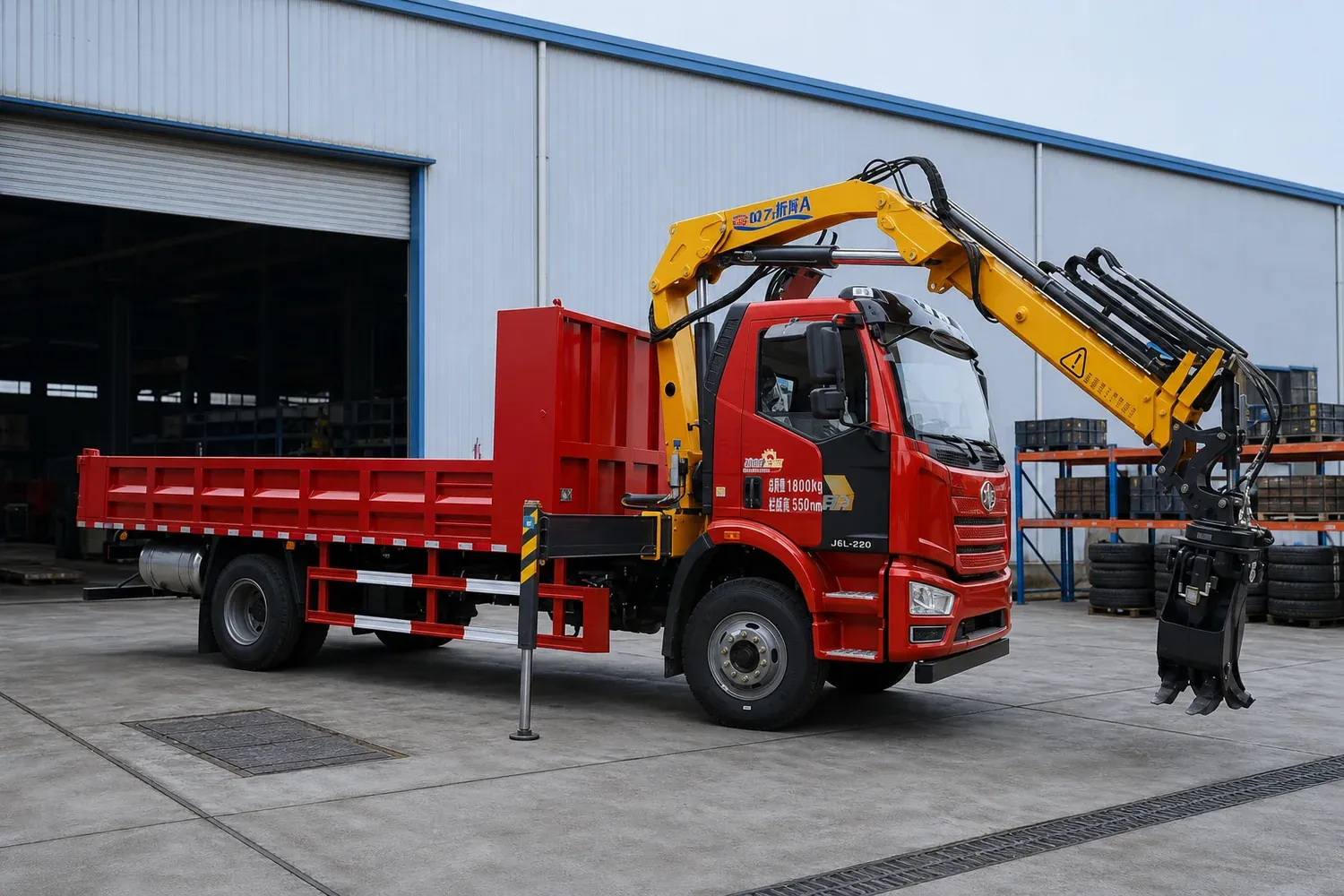
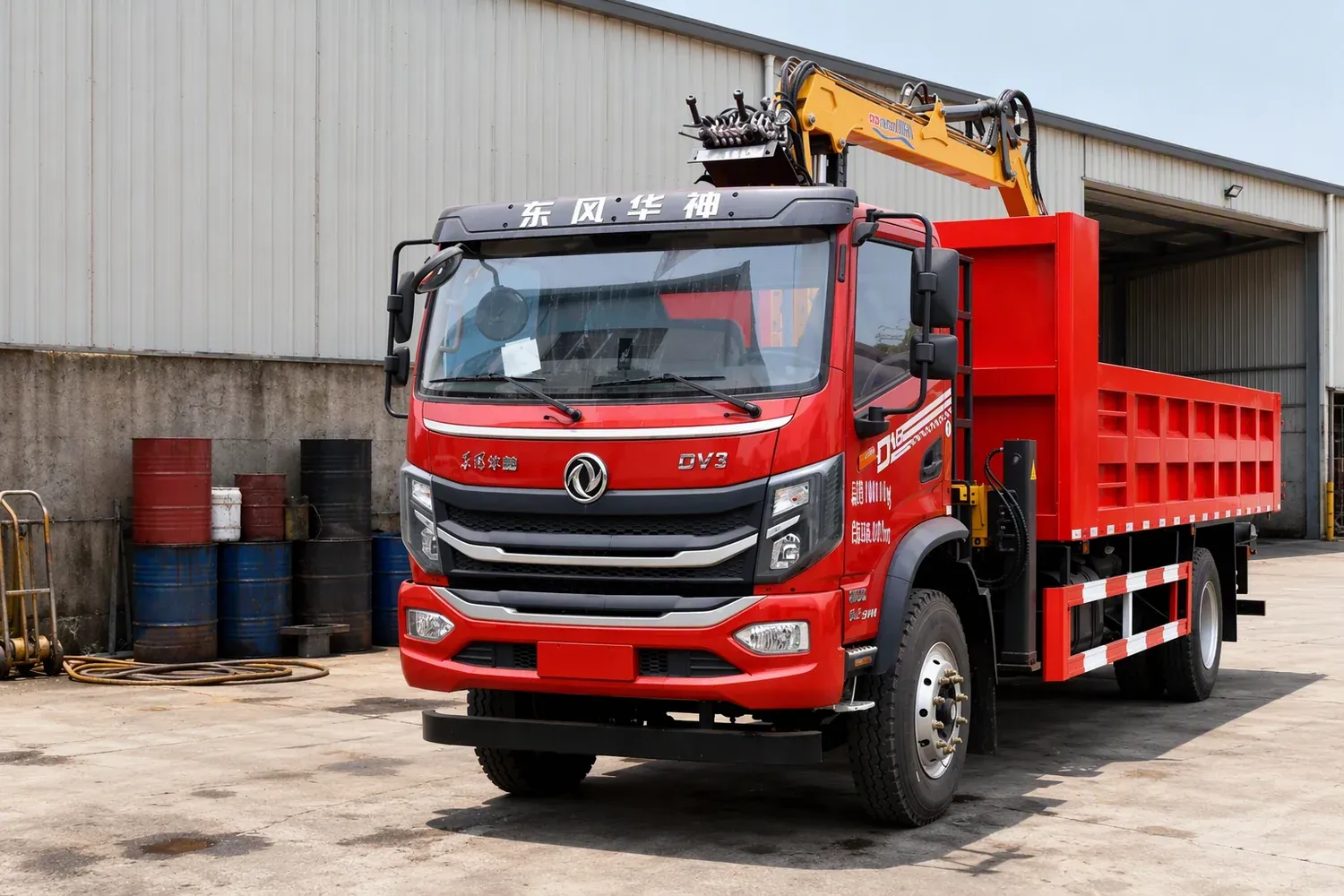
Dongfeng — Tianlong, Huashen DV3, D1L, D1S, D7V, D3S | The widest span we use: light and medium single-cab machines through to heavy 6x4 |
SINOTRUK — Wangpai, HOWO | Heavy 6x2 and 6x4 grab trucks, and the log-grab range |
FAW — J6L | Medium grab and log-grab builds |
SHACMAN — Delong L3000, L5000 | Heavy scrap and log builds |
ISUZU / Qingling — ELF, 700P | Light and medium machines |
Foton | Medium builds |
Dayun | Medium and heavy, including lifting-axle and magnet configurations |
Sanhuan Chuangke | Single-cab four-wheel-drive log grabs |
Aerospace Wanshan | Four-wheel-drive log grabs |
That is a long list, and the length of it is the point: the grab is matched to the chassis, not designed around one. It gives you a machine fitted to your market instead of a machine fitted to whatever a factory happened to have. The price of that flexibility is that you have to specify more — the chassis cannot be an afterthought.
A note on why the brand matters beyond fitment. A chassis is also a warranty and a service network, and the two are decided by which legal entity built it — Dongfeng in particular operates several, with different overseas arrangements. Your chassis is supplied under the manufacturer's overseas warranty for that chassis and market, and we confirm the term and coverage in writing before you order rather than quoting a period from a website. What Dongfeng does and does not publish about overseas service and warranty is set out on a separate page.
The seven things that decide the fit
When we sit down with a grab enquiry, this is the order the decisions are made in.
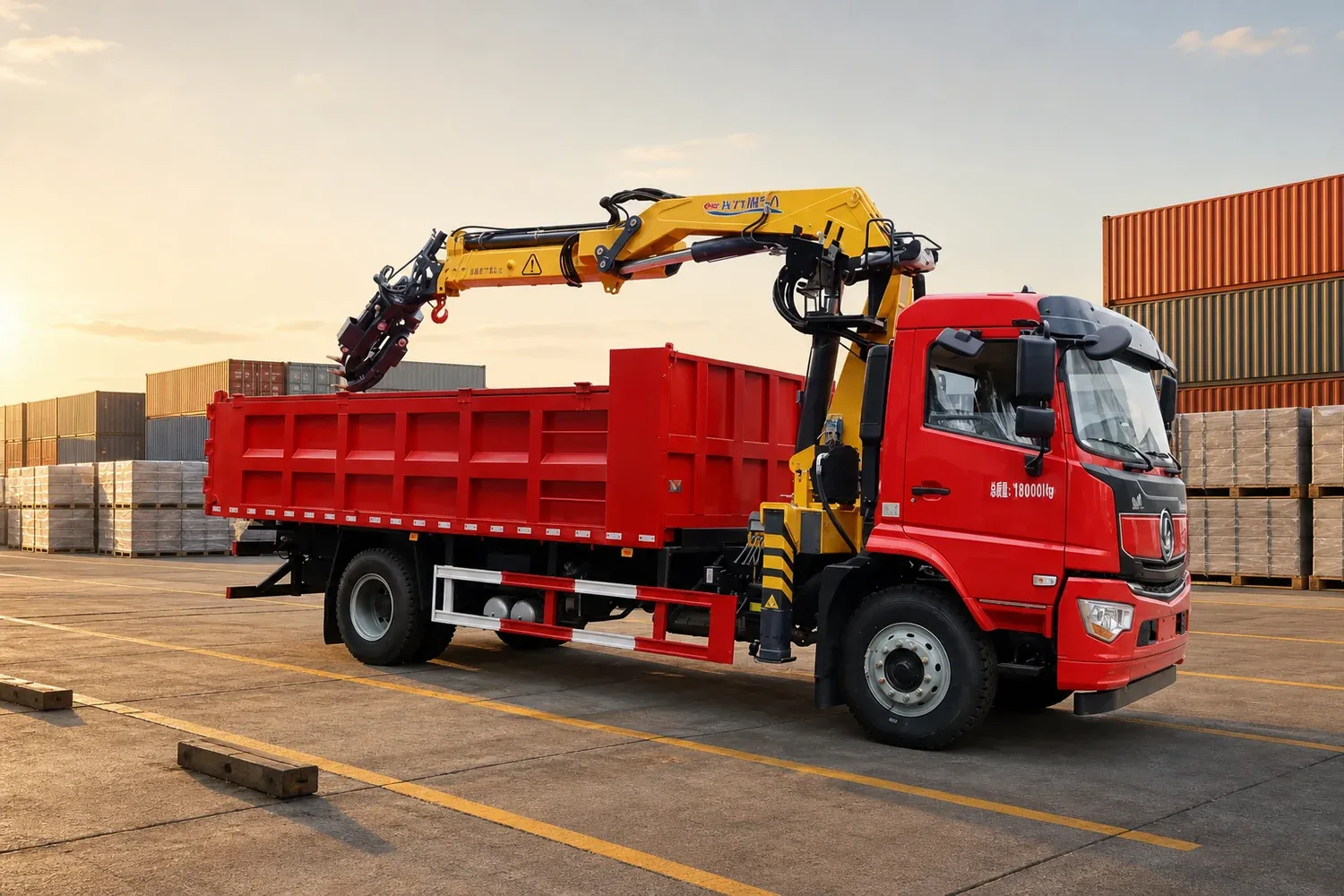
1. What the machine must carry, and where it lands on the axles. A grab truck is easy to get wrong in the middle of the load range. The grab unit sits behind the cab, so a large part of its weight lands on the front and second axles — which is why two trucks with the same gross weight do not necessarily both accept the same grab. This is decided first, before the body.
2. Wheelbase, because wheelbase is body length. Longer body means longer wheelbase, and longer wheelbase means a truck that turns less tightly and drags its tail more on uneven ground. On log and timber work, where the truck leaves the road, this trade is real. It is also where a crew cab costs you cargo — a crew cab eats exactly the millimetres a body needed.
3. The frame, and the room for the grab mounting and subframe. The grab crane needs a mounting area on the chassis frame with enough strength and enough unobstructed length. The body subframe occupies the same rails. Fitment is largely a question of whether both get the length and the section they need.
4. The hydraulic drive: power take-off and pump capacity. A grab truck's working end is hydraulically driven from the transmission. The PTO has to be available with the gearbox that is fitted, and the pump has to be sized for the grab's cycle. Change the gearbox and you may change whether the grab can be driven — which is why we ask about the engine and gearbox before we discuss the attachment.
5. Drive configuration. 4x2, 6x2, 6x4 or 4x4. This is a terrain decision, and it needs to be answered honestly — see our separate page on when a grab truck actually needs four-wheel drive. The short version: 4x4 is a chassis commitment, and on our 4x4 builds it comes with a single cab and therefore a shorter body.
6. Steering side. Left-hand drive narrows nothing; right-hand drive narrows the list. Not every chassis family we use for left-hand-drive export builds is available with right-hand drive, and the fourteen African markets that require it are covered in a separate page. Raise it in your first message, not your third — it removes chassis options, and removing chassis options removes body lengths.
7. The fuel system path. This one surprises buyers most: in our programme the mechanically controlled engine is a package with the chassis family, not an option on every chassis. The chassis range we normally specify for export grab trucks does not offer a mechanically controlled variant. So "which engine" is really "which chassis family", and it has to be settled before the body is drawn. We have written the whole argument for and against each path on a separate page.
Why one grab unit fits so many trucks
Because we are an integrator, the same grab and boom design appears on many chassis. That is not a trick to widen a catalogue — it is how the machine gets fitted to a market.
The practical consequences, both good and bad:
- Good: the same working end can be delivered as a light machine for a tight yard or a heavy 6x4 for a logging road, in either steering configuration, with either engine path. A single-chassis manufacturer cannot offer you that range.
- Bad: more specification decisions move to you. The chassis cannot be chosen last, because it constrains body length, steering availability and the engine path at the same time. Buyers who want to fix the price first will find the order of decisions frustrating. We would rather that than a machine that arrives technically correct and legally unusable.
What we will not tell you
- Axle ratings, wheelbase figures and body dimensions per model. We quote these for the machine we are actually going to build for you, from the chassis manufacturer's current documentation. Printed on a page, they become stale, and a stale figure on a website has caused more disputes than a missing one.
- Which chassis is "best". There is no such thing. The right chassis is the one that accepts your grab, your body and your market's rules at once, and that is a fitment calculation, not a ranking.
- Factory capacity, delivery schedules or purchase cost. These move, and none of them belong in an article about how a machine is chosen.
- That any combination is buildable. Some are not. A right-hand-drive requirement removes chassis families; a mechanically controlled engine requirement removes others; a long body removes single-cab options. If your requirement list is self-contradictory, the honest answer is that we cannot build it, and we will say so before you order rather than after.
What to send us for a chassis recommendation
- What you carry, and roughly what it weighs loose.
- Where the machine works — paved yard, forest track, transfer station — and whether it works in the wet season.
- The longest body you need, and whether a crew cab is mandatory.
- The country the truck will be plated in — which gives us the steering side and the emissions requirement.
- The diesel you can actually buy, including its sulphur content if you know it.
With those five, we can tell you which chassis families remain, what each one costs you in body length or payload, and which engine path each one allows. That is a shorter conversation than the one where we guess and you correct us twice.
Have a grab requirement and a country? Send those two things and we will come back with the chassis families that are actually available, and what each one costs you in body length.
Rules, standards and fuel specifications change. Verify with your local importer and registration authority before you order. This page describes how we build and what we will and will not commit to; it is not a statement of your market's legal requirements.