Nov 2, 2026
Grease Points Most Fleets Forget on a Knuckle Boom
The jib joint, boom sliders, slew ring and outrigger pins wear first. Where knuckle boom grease points hide, and how to grease so it stays in.
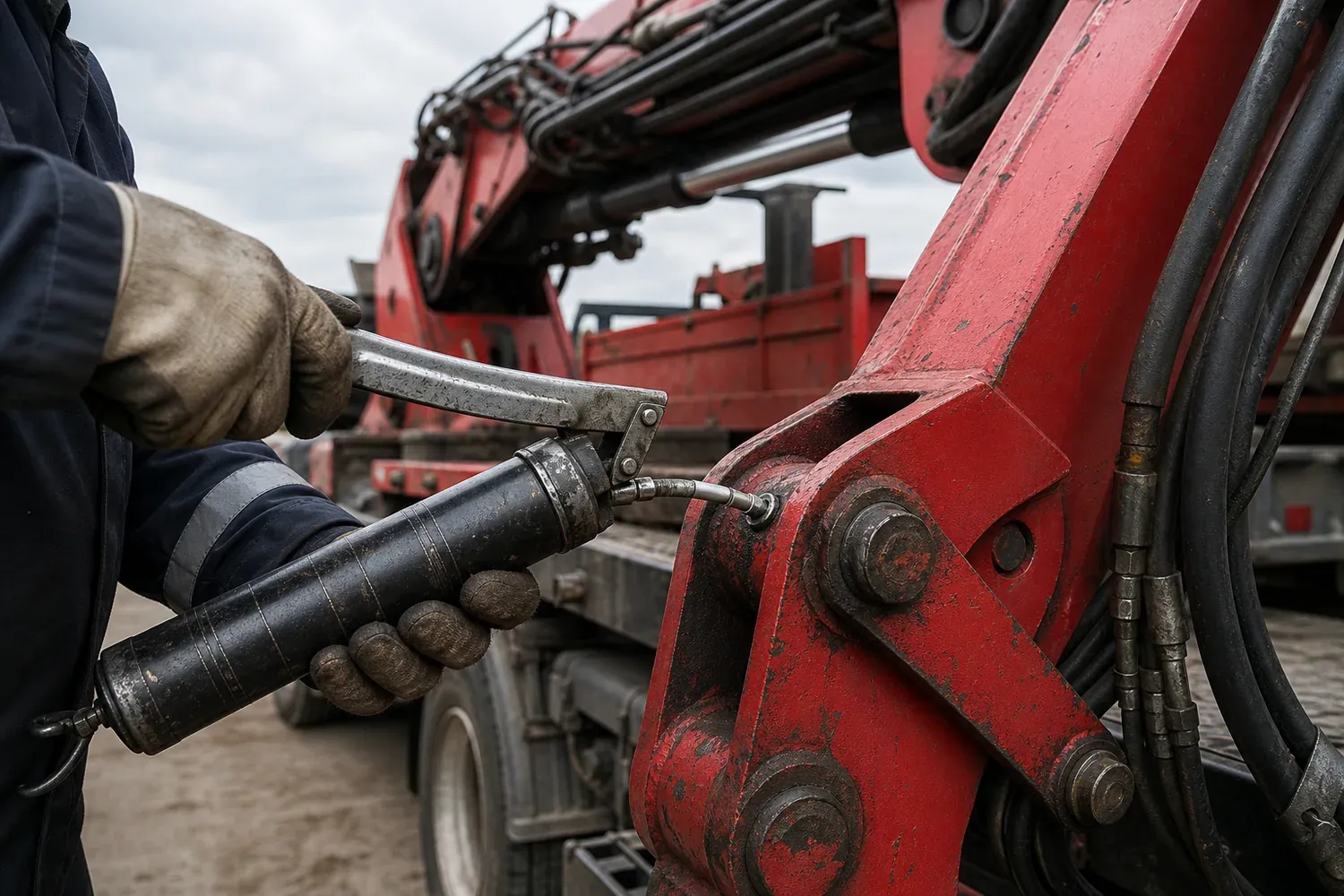
A knuckle boom has more joints than a straight boom, and every joint is a place where a pin, a bush or a slider wears a little every time the crane moves. Grease is the only thing standing between that wear and an expensive repair.
The points that fail first are rarely the obvious ones. Everybody greases what they can reach at waist height; the knuckle boom grease points that cost money are the ones under the boom, behind the jib and around the slew ring.
Why a knuckle boom needs more attention than a straight boom
A straight boom extends and retracts, so the main wear points are the boom sliders and the base articulation. A knuckle boom adds a jib joint and a linkage, and those two areas carry high load while moving through a large arc.
More joints also mean more places for a grease nipple to be missed, blocked or broken off. A broken nipple is invisible until the pin starts to squeal, and by then the bush is already worn.
The consequence is simple: the same greasing discipline that keeps a straight boom healthy will leave a knuckle boom half serviced. Plan for more points, not the same points, and expect the job to take longer than it did on the last truck.
The points that get missed
Start with the jib joint and the linkage between the main boom and the jib. These sit above eye level, they are awkward to reach, and they are the first to be skipped when the truck is parked nose-in against a wall. A step ladder and five extra minutes cover the two joints that wear fastest on the machine.
Then the boom sliders and wear pads. They do not take grease through a nipple in the usual way on every design, so check the manual for the correct method rather than pumping until something moves. Pads that are already scored or cracked need replacing, not greasing; grease will not put material back on a worn slider.
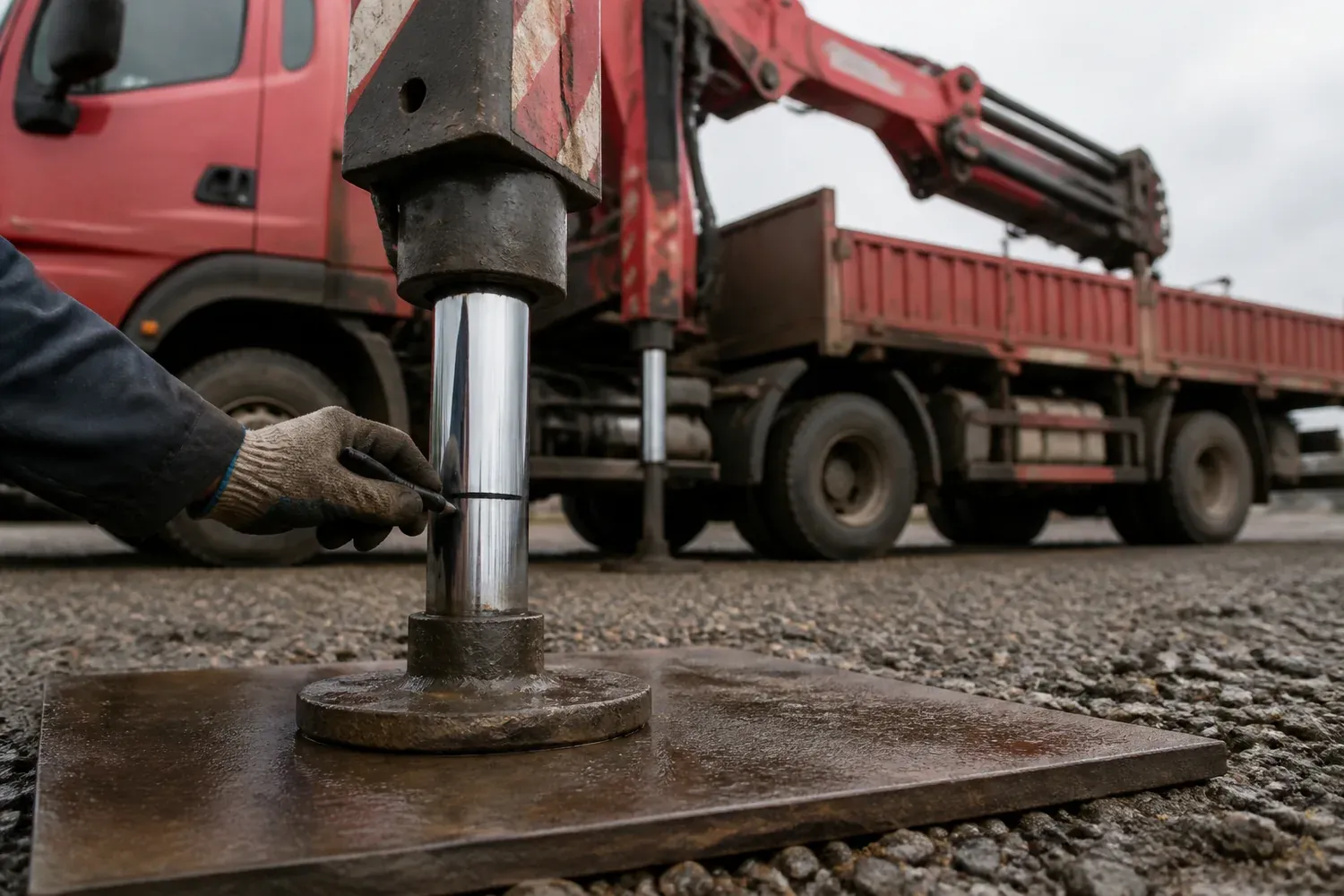
The slew ring, the slewing gear and the outrigger pivots are next, and they deserve the same attention as the boom. A ring that runs dry develops play that no amount of later greasing removes, and the repair requires separating the crane from its base. The outrigger pivots and cylinder pins work in mud and dust, which is exactly where grease is pushed out fastest and dirt is pushed in.
Greasing so it stays in
Wipe the nipple before the coupler goes on. Pumping dirt into a bearing is worse than leaving it dry for a day, and a rag costs nothing. If a nipple will not take grease at all, replace it rather than forcing the coupler; a blocked nipple usually means the passage behind it is blocked too.
Grease until clean grease appears at the seal, not until the gun feels stiff. Old grease has to be pushed out, otherwise you are adding new grease on top of worn material and calling it maintenance. On a joint that has been neglected, pump slowly and let the old material escape rather than blowing a seal with pressure.
Take the load off the pin where the design allows it. A pin under load will not accept grease evenly, and the surfaces that most need it are the ones that stay dry. Where the geometry makes that impossible, grease more often instead of harder.
A one-page schedule a driver can follow
Put the points on a single page with a photograph of each one, in the order a person walks around the truck. Photographs beat part numbers for a driver who has never been trained on the machine.
Tie the schedule to something that already happens: every fuel stop, every Friday, every oil change. A schedule that depends on remembering will be followed for two months and then quietly forgotten, and the joints that suffer first are the ones nobody can see.
Sign it. A sheet with initials and dates is the difference between a maintenance programme and a hope, and it is the first document a buyer asks for when the truck is eventually sold. Ten seconds with a pen protects a joint that costs a day to replace.
What to do next
If you are specifying a knuckle boom, ask for the lubrication chart before you ask for the price. A crane with clearly documented points and accessible nipples costs less over ten years than one that hides them behind the tank or under an unbolted cover plate.
Send us the crane model and a photograph of the boom joints. We will mark the points we consider critical and tell you which ones fail first in dusty or coastal conditions, so your mechanic starts with the right ones.
Ask about the grease specification too. The wrong grease in a high-load pin is nearly as bad as no grease at all, and the correct one is usually written in the crane manual that ships with the truck.
Related reading: why boom drift and outrigger creep appear first on a dry pin, how wear metal from a missed nipple reaches the hydraulic oil, and what a slow lift actually points to when the pump is not the cause.