Outrigger Spread and Ground Bearing: The Two Numbers That Decide If the Job Is Possible
Measure the site before the height: pad footprint, ground pressure maths, and what soft-leg protection does and does not do.
Height gets specified. Outreach gets specified. Then the unit arrives and cannot be set up, because the street is six metres wide with parked cars on both sides, or because the only surface available is a paving slab over a service duct.
Outrigger footprint is the constraint that cancels more orders than any other, and it is almost never in the enquiry.
What "spread" means on a vehicle-mounted platform
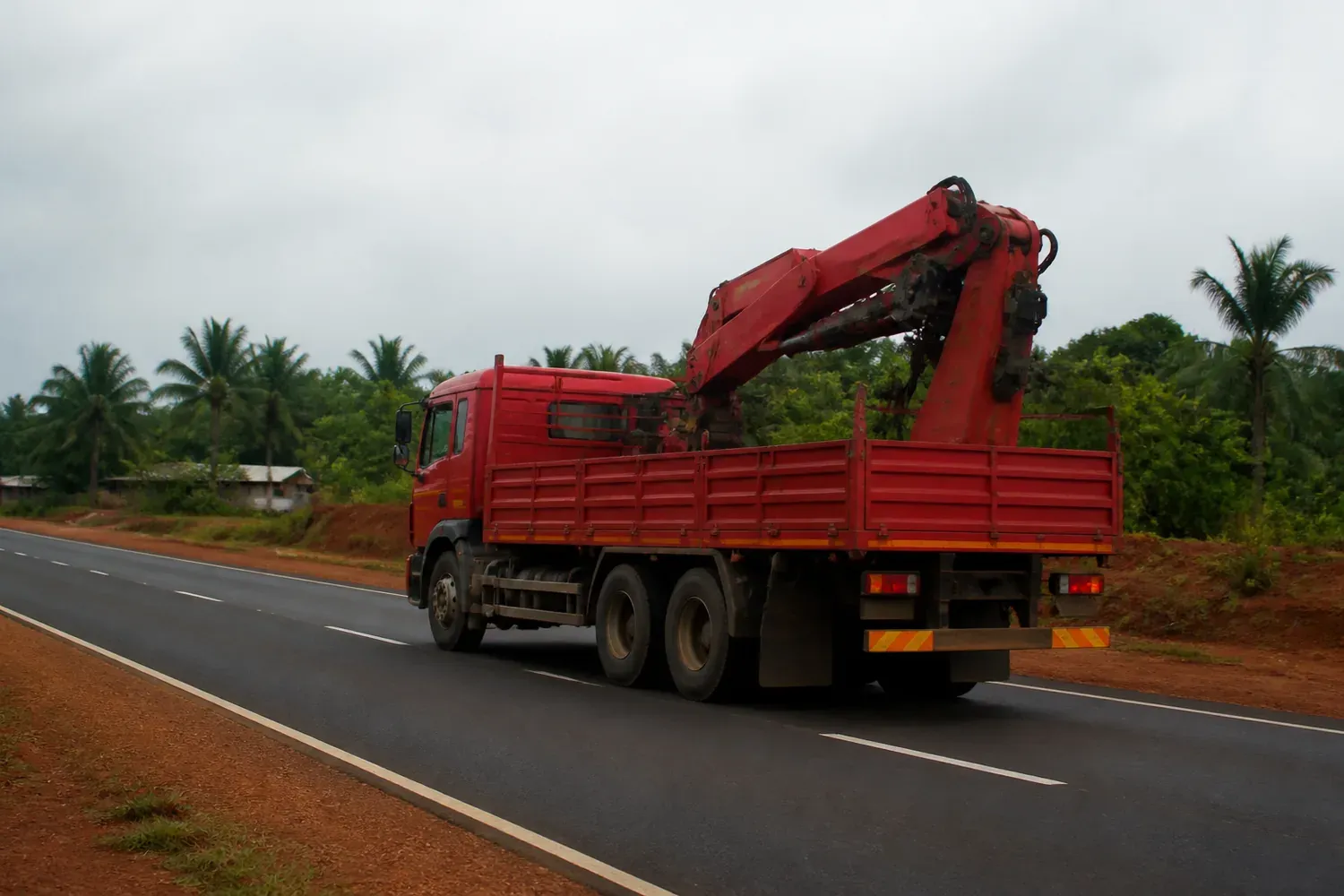
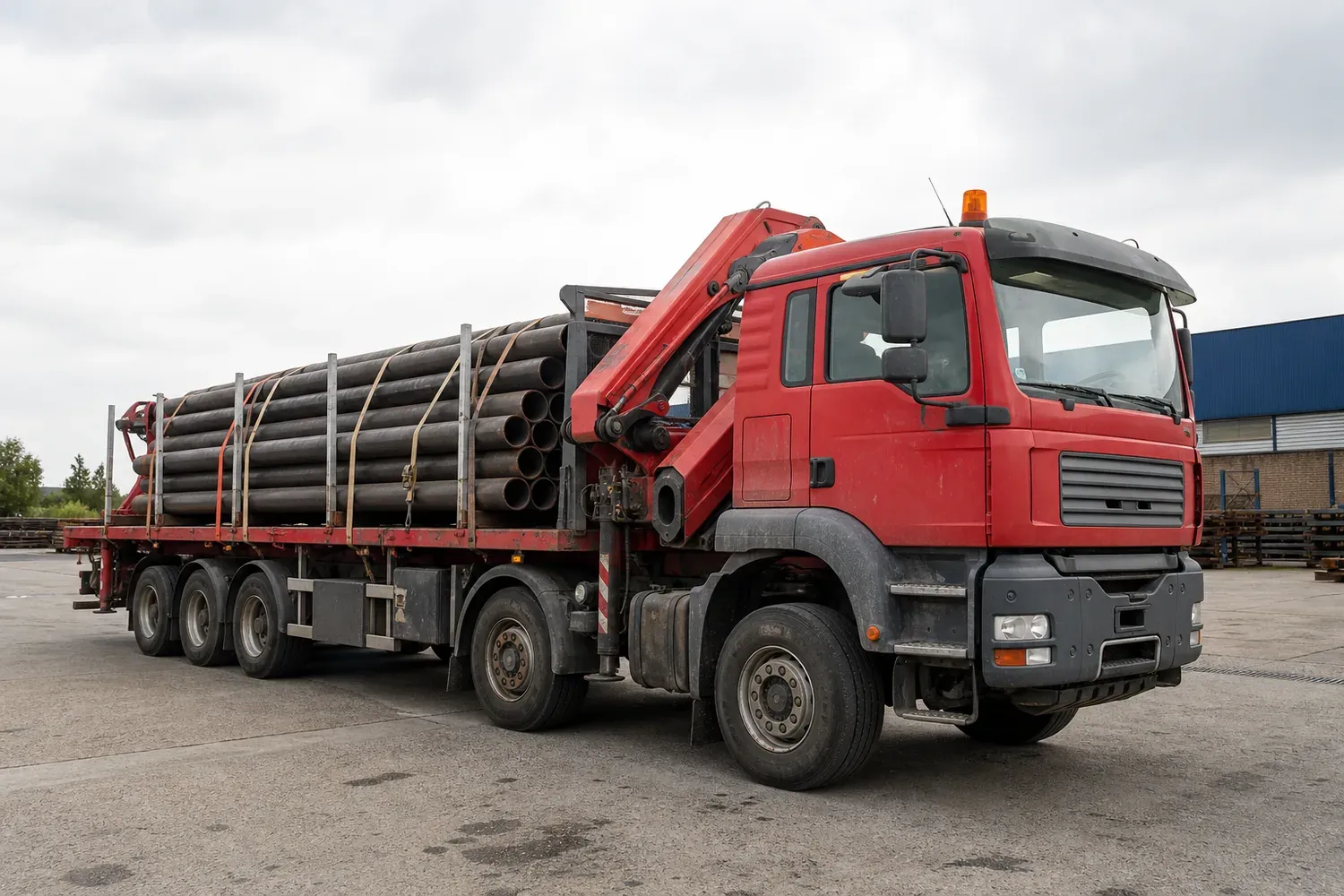
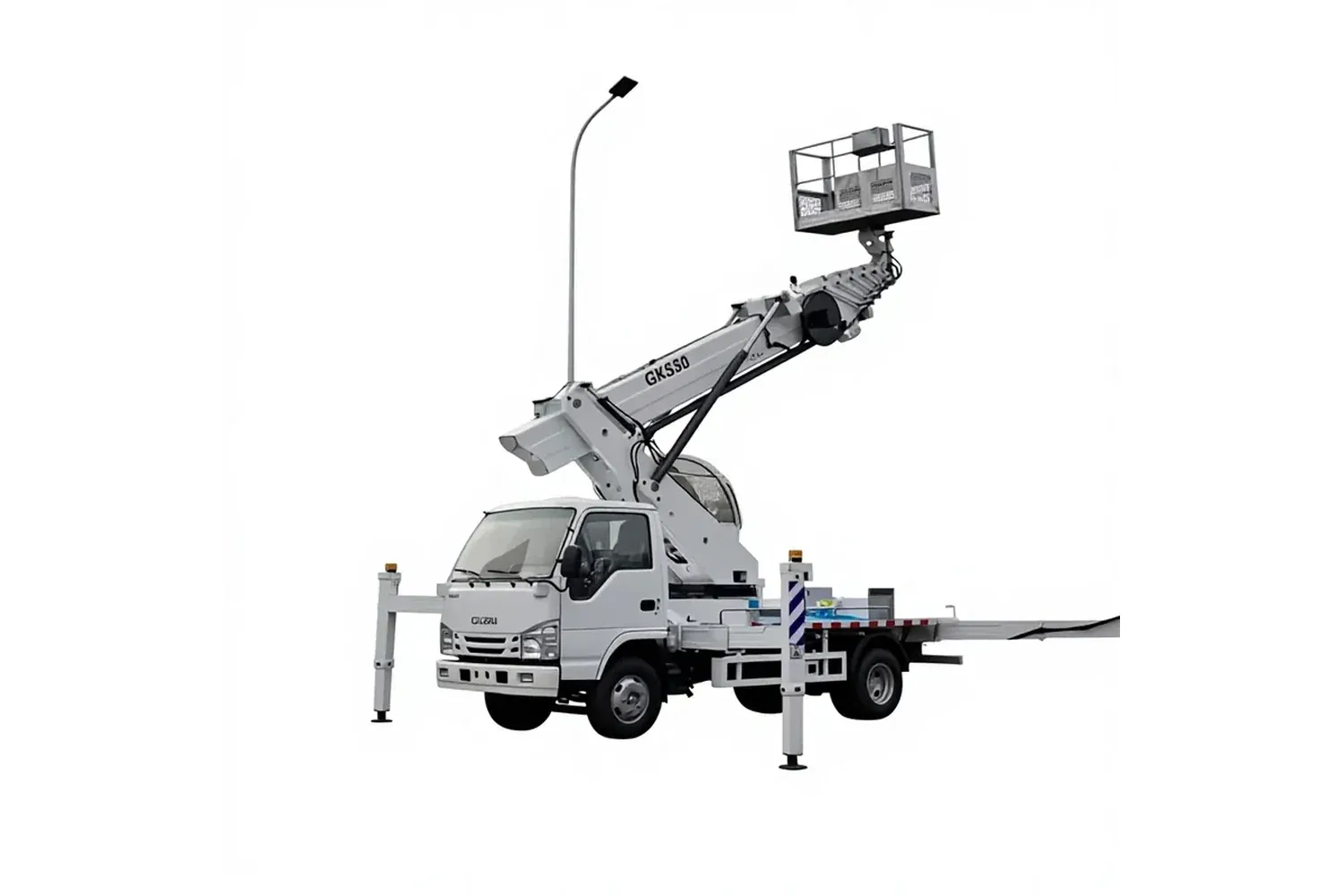
Outriggers are the legs that take the machine's weight and the boom's overturning moment off the tyres and put it into the ground. The spread is the distance between the fully extended pads — one figure across the vehicle, one along it.
On our 30 m telescopic unit the figures are 5,400 mm across and 5,000 mm along. That is a footprint larger than the vehicle itself. Several of our short models use V-form outriggers, front and rear, individually adjustable, which lets the pads sit around obstacles and in a narrower corridor than a fixed H-frame would allow — but the footprint still has to be measured before the machine is chosen.
The practical sequence is: measure the site first, then choose the height. Doing it the other way round is how a 28 m machine ends up parked in the yard.
The measurement you actually need
Stand where the vehicle will park and measure:
- The clear width available for the pads, not the roadway width. Parked cars, bollards, kerbs, a bus stop, a shop front's steps — all of it counts. - The clear length, including the space the boom needs when it swings over the side. - Overhead clearance on the approach and above the setup point: wires, branches, signage, bridge soffits. - The surface: what is it, and what is under it.
If the site is a 6 m street and the unit needs 5.4 m across, the setup works only with the road closed and the pads tight to the kerbs. That is a traffic-management decision before it is an equipment decision, and it belongs in your planning, not in the supplier's optimism.
Ground bearing, without hand-waving
The load under a pad is not simply a quarter of the vehicle weight. As the boom extends and swings, the load shifts onto one or two legs, and the peak pad load can exceed the weight of the whole machine. That is why the number you need is the maximum outrigger load from the manufacturer's chart, not a division you do yourself.
The pressure on the ground is then:
> ground pressure = pad load ÷ effective contact area
A pad of 400 × 400 mm has 0.16 m² of contact. A 10 t load on that pad is roughly 62 t/m² — far beyond what most asphalt, and certainly most block paving, will take without help. A larger pad, a steel plate or a timber mat spreads the same load over more area and drops the pressure proportionally.
Two rules follow, and they are not optional:
1. Use the pad or mat area, not the pad plus the mud around it. Soft ground deforms; the contact area you can rely on is the rigid one. 2. Never set a pad over a drain cover, a service duct, a cellar or backfilled ground. Those are voids with a lid, and the lid is not designed for a point load.
What the machine does when the ground moves
Levelling and monitoring matter as much as the surface. On the 30 m unit the levelling is hydrostatic and automatic, and there is soft-leg protection: if an outrigger loses ground contact, boom movement is limited rather than continuing to push the machine over.
That feature is worth asking about on any machine you buy, because it is the difference between a warning and a tip-over. It does not replace doing the ground survey. It is the second line, not the first.
When we would tell you the job is not suitable
- The only available surface is a suspended slab, a deck or a roof without a structural assessment. Do not set up and hope. - The slope exceeds what the outriggers can level. Individual adjustment has a limit; beyond it, the machine is working out of level. - The pads would sit on a recently excavated trench line, even if it looks compacted. - The street cannot be closed and the spread does not fit. Then the correct answer is a narrower machine or a different type, not a longer boom.
What to send with an enquiry
The site's usable width and length, the surface type, and a photograph of the parking position. With those we can tell you which models fit before you compare prices — and if none fit, we will say so.
Range and footprint by model: aerial work platforms for export. For the 30 m unit quoted above, the full sheet is on the 30 m telescopic boom page.
Related reading: