Oct 26, 2026
Boom Drift and Creeping Outriggers: Testing Holding Valves Properly
How to test boom drift and outrigger creep safely, tell a holding valve from a cylinder seal, and avoid the false diagnosis that wastes parts.
A boom that sinks with the lever in neutral is not a comfort issue. It is a load moving without a command, and the first time it happens with somebody underneath is the day the argument ends.
Outrigger creep belongs to the same family of faults. The legs look extended, the truck looks stable, and the whole platform is quietly leaning on a seal that stopped holding last month.
Both are diagnosed the same way: measure the movement instead of describing it. This page covers crane boom drift and holding valve faults in the order we test them, and the same method applies to the legs.
Drift is a safety fault, not a nuisance
A crane that drifts a few millimetres over a shift is normal enough that most operators ignore it. A boom that loses a hand's width while the driver eats lunch is a different machine, and it should be taken out of service until the cause is known.
The danger is not the drift itself but what it does to the geometry. As the boom sinks, the load moves closer to the ground and further from the chart you planned with, and the load on each outrigger changes with it.
Treat any new drift as a fault until proven otherwise. If a truck drifts today that did not drift last month, the difference is a seal, a valve or a scored rod, and none of those improve with use.
How to test drift without standing under the load
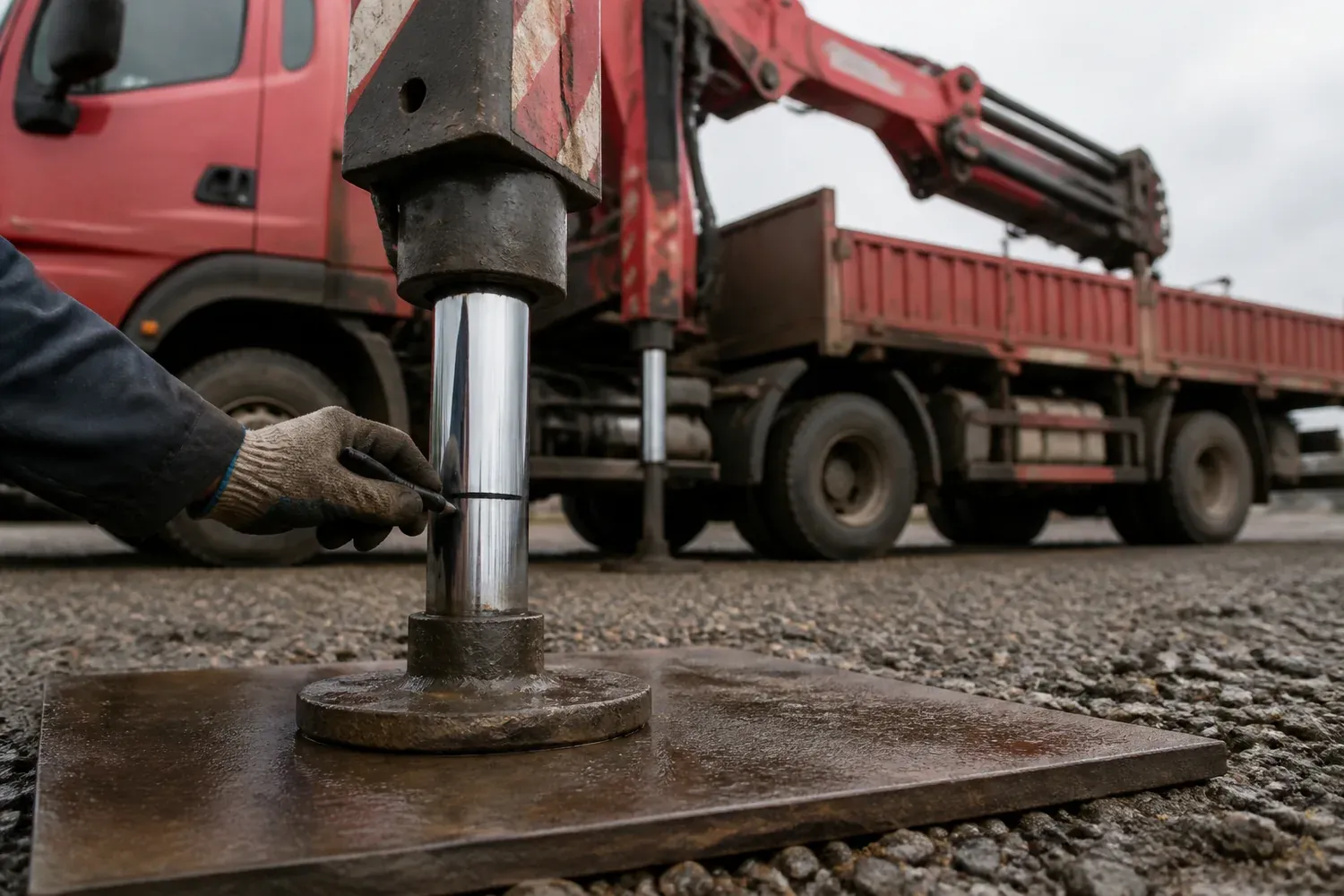
Land the boom on a blocking with the load still on the hook, mark the cylinder rod with a marker pen at a fixed point against the barrel, and note the time. Come back after a shift and measure the distance between the mark and the barrel.
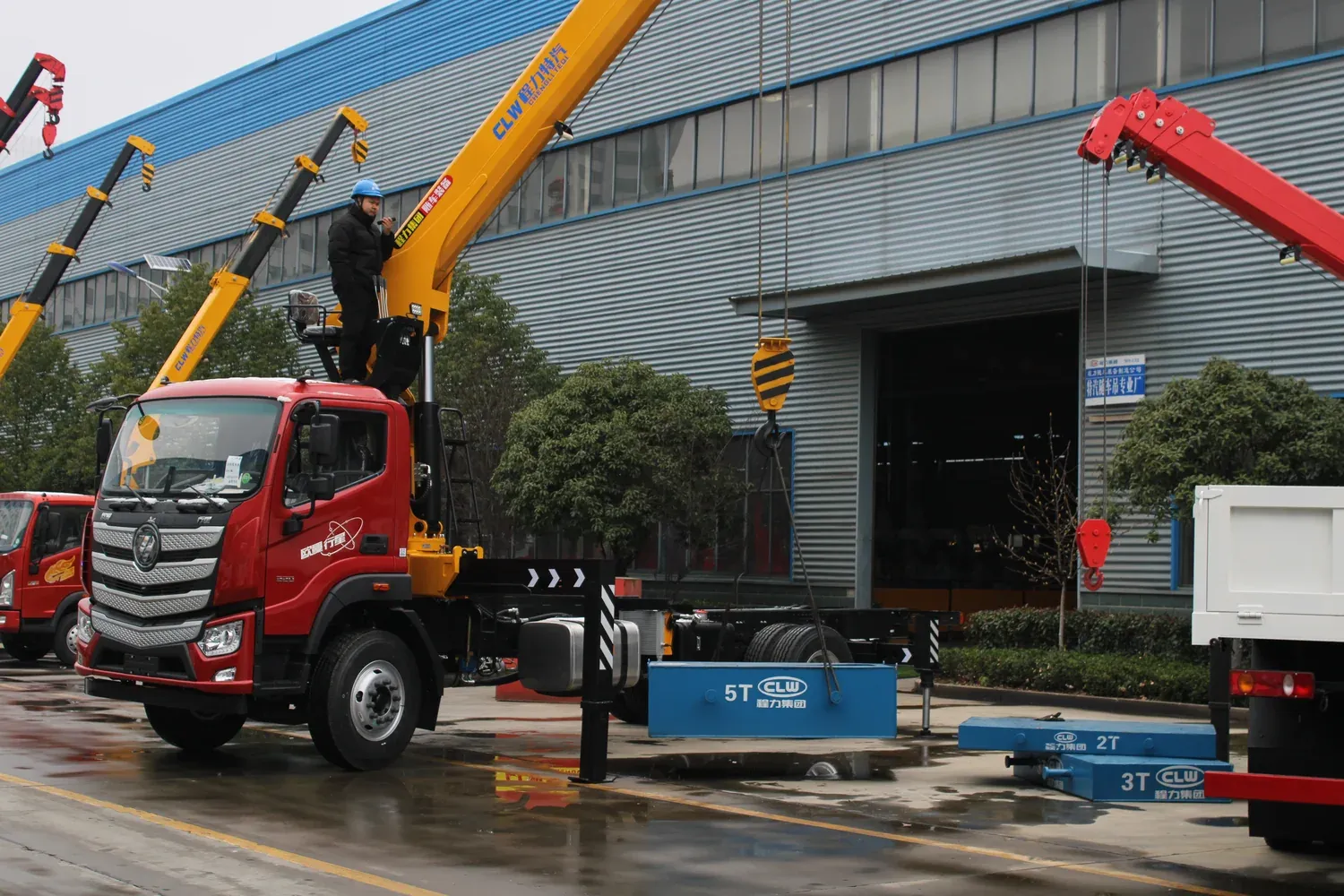
Do the same for outriggers: set the pads on steel plates, mark the leg, and record where it sits after the truck has stood for a few hours. Photograph the marks, because verbal reports lose half the detail by the time they reach the workshop.
Never test by standing under a suspended load to watch it fall. Every drift test we recommend can be done with the load landed on a blocking, and no measurement is worth the alternative.
Holding valve or cylinder seal: telling them apart
If one function drifts and the others on the same section hold, the fault usually sits in that circuit's holding valve or its cylinder. If the same drift appears across every function of one section, suspect the valve body rather than three separate seals.
Oil weeping past the rod seal, a scored rod or a wet dust boot points at the cylinder. A clean, dry cylinder that still drifts points at the valve, or at air that has been drawn into the circuit and is being compressed instead of holding.
Before replacing either, check the control linkage. A spool that does not return fully to neutral mimics a holding valve fault, costs nothing to fix, and is the most common false diagnosis we hear from fleets that replaced perfectly good valves.
Outrigger creep: same logic, cheaper parts
Outrigger circuits are simpler than boom circuits, which makes them easier to diagnose and much easier to neglect. Look for oil at the rod seal, a cracked pad, a bent leg, or a valve that does not fully close, and check the hose at the point where it bends as the leg goes down.
If the leg sinks only after the truck has been parked for hours, that is a seal or a valve rather than soft ground. A leg that sinks immediately under load is more likely a relief setting or a structural problem, and it should not be used until it is checked by someone who can measure it.
The cheapest preventive measure is a set of steel plates under the pads. On soft ground they spread the load and stop the leg sinking into the surface, which is often mistaken for hydraulic creep by a driver who never watched the leg itself. Keep the plates on the truck, not in the yard, or they will be the first thing left behind on a Friday.
What to do next
If you are buying trucks for a fleet, ask which holding valves and outrigger valves the crane uses and whether they can be resealed in your market. A valve you can repair locally is worth more than a marginally better chart on a machine that has to wait weeks for parts.
Send us the crane model, a photograph of the leaking or drifting area, and how much movement you measured over how long. We will tell you what to check next and which parts are worth holding in stock, so a seal does not turn into a parked truck.
When the truck is new, write the drift baseline into the handover sheet. A measurement taken in the first week is the only one that tells you, two years later, whether the machine has changed or whether the operator has simply started noticing. That single line on a form settles most warranty arguments before they begin.
Related reading: how to read a load chart before you plan a lift, what a factory acceptance visit should cover before a new truck is handed over, and why a crane lifts slowly when the fault is in the hydraulics rather than the valve. The current truck mounted crane range is listed on the products page.