Working Height vs Platform Height: Why Your "22 m" Job Needs a 20 m Platform
Why a 22 m job needs a 20 m platform: how working height is measured, and what a boom actually reaches at your outreach.
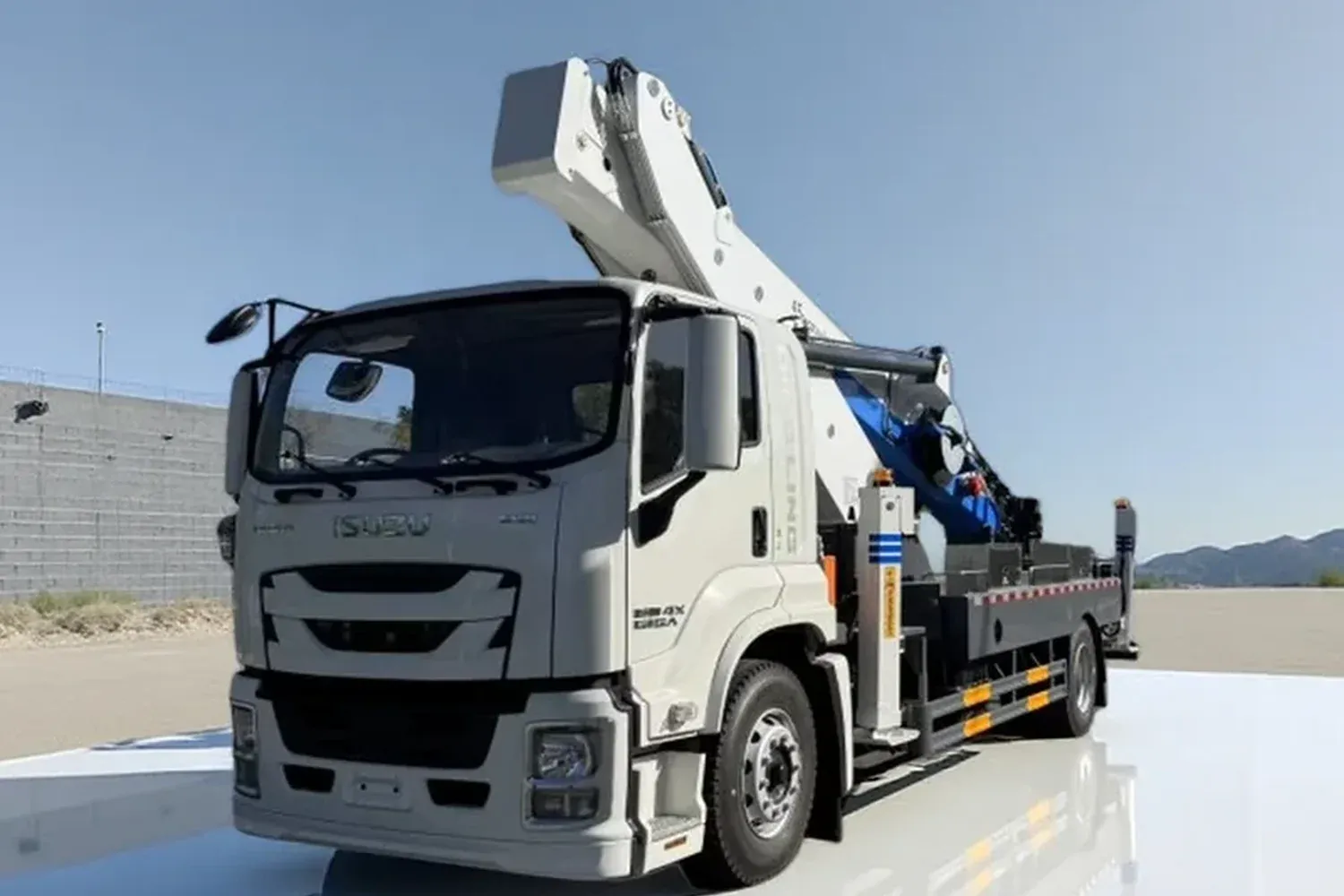
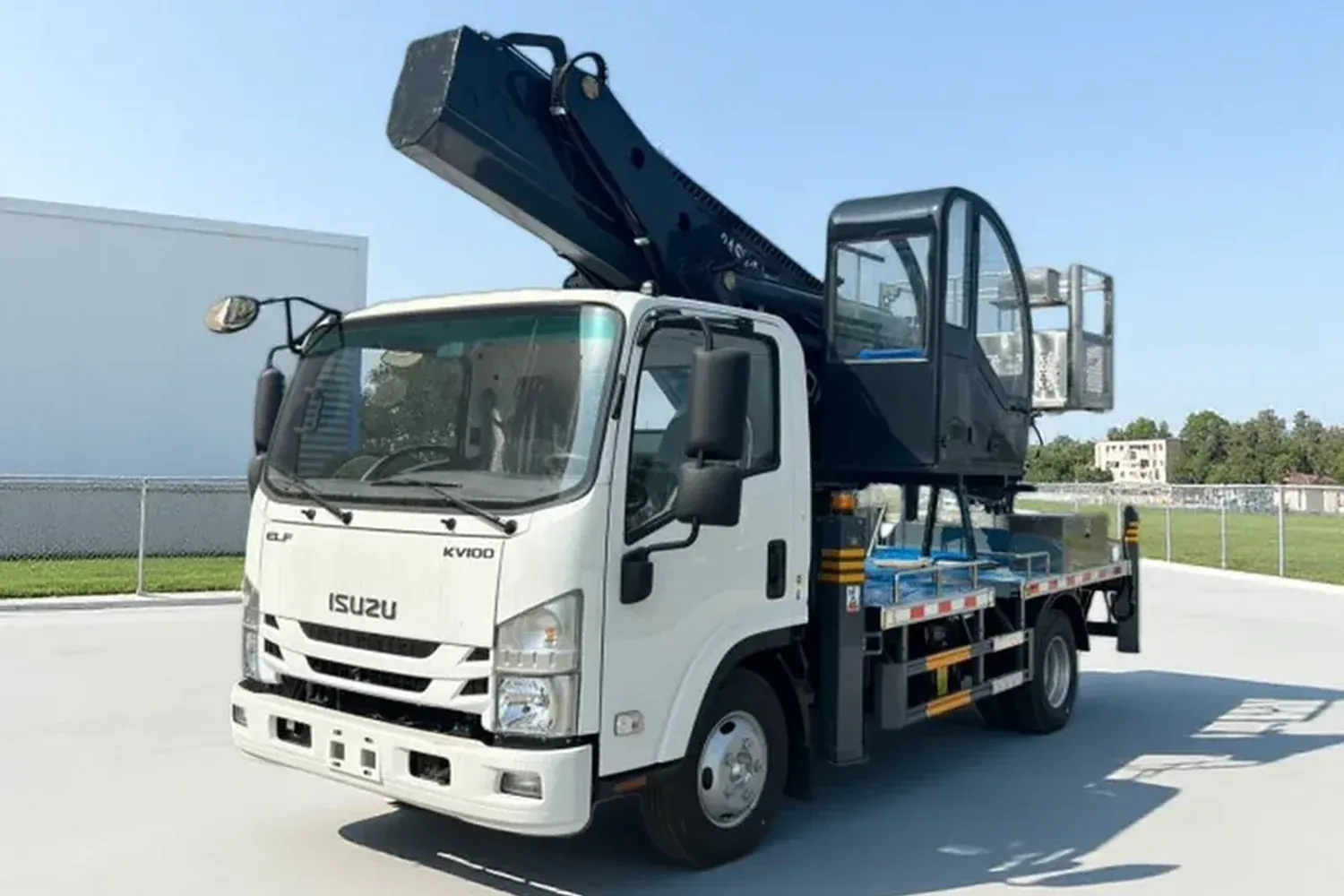
The single most expensive misunderstanding in this trade is two metres long. A buyer asks for a 22 m aerial work platform, receives a unit listed at 22 m, and then discovers on site that the basket floor stops at 20 m and the top of the wall is still out of reach.
Nothing was mis-sold. The two numbers are different measurements, and only one of them describes where your feet stand.
The two numbers, defined
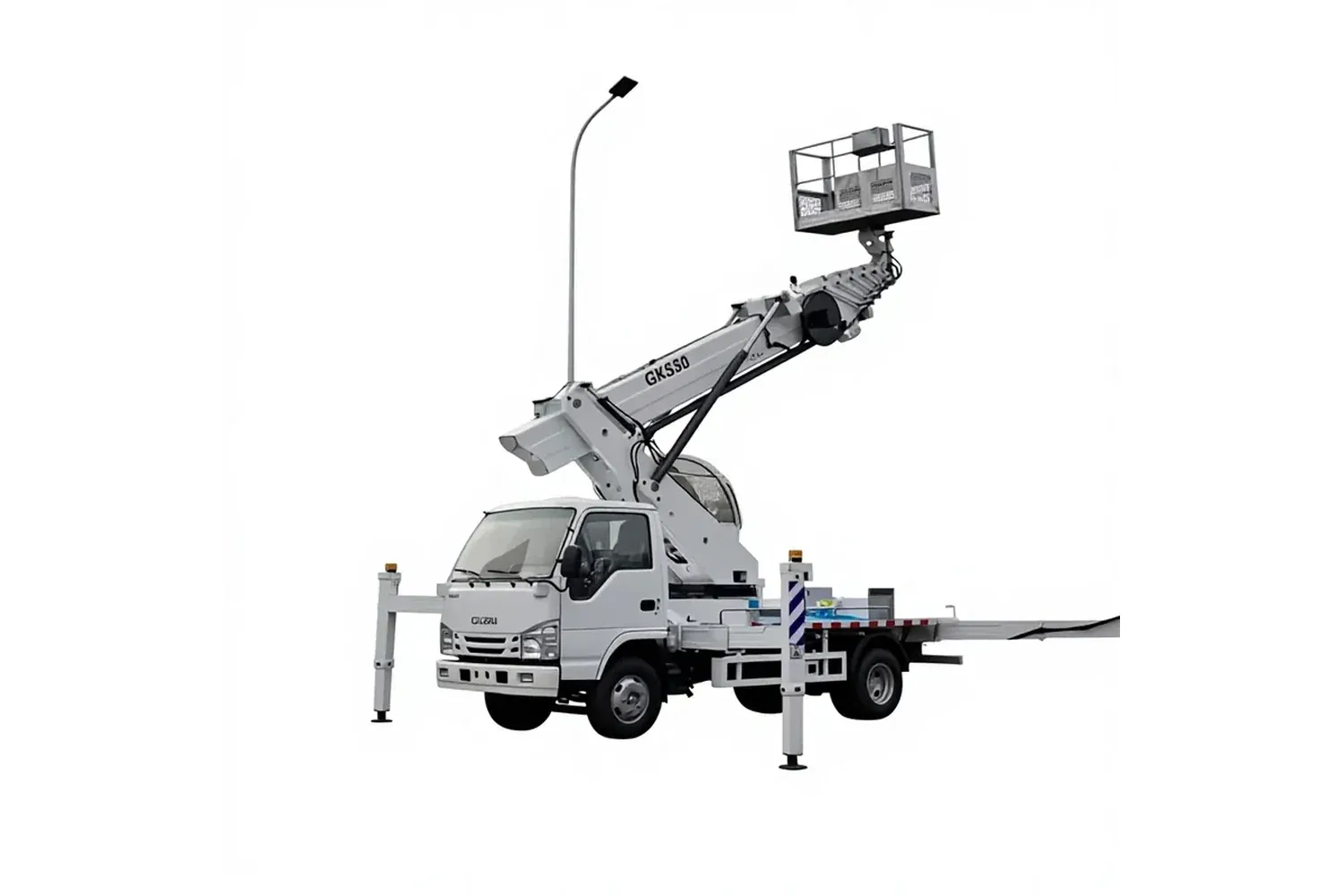
Platform height is the height of the basket floor above the ground with the boom fully raised. It is what the machine physically delivers.
Working height is platform height plus a person's reach — conventionally two metres, roughly a standing adult with arms up. It describes the highest point a worker can touch, not the surface they stand on.
So a unit sold as "22 m working height" puts the basket floor at about 20 m. If your task is to touch something at 22 m, that unit is correct. If your task is to stand at 22 m to work on a facade, it is 2 m short, and no amount of careful operation closes that gap.
Where the confusion is created
Catalogues mix the two. Some list maximum working altitude, some list platform height, some list a range such as "8–45 m" that describes the family rather than the machine. A quotation that says only "22 m" is not wrong; it is incomplete.
Ask for both figures, and ask which one the price is based on. On every aerial work platform page on this site the field is labelled Working height, so the basis is visible before you enquire.
There is a second trap behind the first. Height means nothing without outreach. A boom can reach its maximum height only with the boom vertical and the basket directly above the turntable. The moment you need to reach sideways — over a parapet, past a sign, into a courtyard — the height falls away quickly.
Our 30 m telescopic unit is a concrete example: maximum outreach is 14 m, but the working height at that outreach is 5 m. That is not a defect, it is geometry. A buyer who needs 20 m of height *and* 8 m of outreach is specifying a different machine from one who needs 20 m straight up, and the two are not interchangeable.
How to specify it correctly in one message
Write your requirement as three numbers instead of one:
1. The height you must touch, and whether that is the floor you stand on or the point you work on. 2. The horizontal distance from the nearest legal parking position to that point — measured on site, not from a drawing. 3. What is between the two — a parapet, a cable, a roof edge, a tree canopy.
With those three, a supplier can tell you whether you need a 22 m or a 25 m unit, articulated or telescopic, without a site visit. With only "I need 22 m", every supplier will quote you something that fits the words and may not fit the job.
When the numbers say you need something else
We would rather tell you this before you order:
- If the work point is under an overhang, a bridge soffit or a canopy, a straight telescopic boom cannot get there at height. Articulated geometry exists for that, and the height rating will be lower for the same chassis. - If the only parking position is more than about half the boom length away, the machine you are looking at will not reach at the height you need, regardless of its headline figure. - If two operators and tooling must be in the basket, check the rated load before the height. A 200 kg basket with two people and equipment is realistic; a 100 kg basket is not, and it is the option that often looks cheaper on a quote.
A short checklist before you compare prices
- Is the quoted height working height or platform height? - What is the working height at your required outreach, not at zero outreach? - What is the basket rated load, and does it cover your crew and tools? - Which chassis and wheelbase is that height built on?
Comparing two quotes where one uses platform height and the other uses working height produces a price gap that has nothing to do with quality. It is the most common reason a "cheaper" machine turns out to be the wrong machine.
If you send the three numbers above, we will reply with the model, the height basis, and the working height at your outreach — in writing, before any price.
Related reading: