Oct 16, 2026
Factory Acceptance: What to Check on a Crane Truck Before It Ships
A factory acceptance visit is not a tour. What gets checked on a crane truck before it ships, what a load test proves and does not, and the four things to photograph.
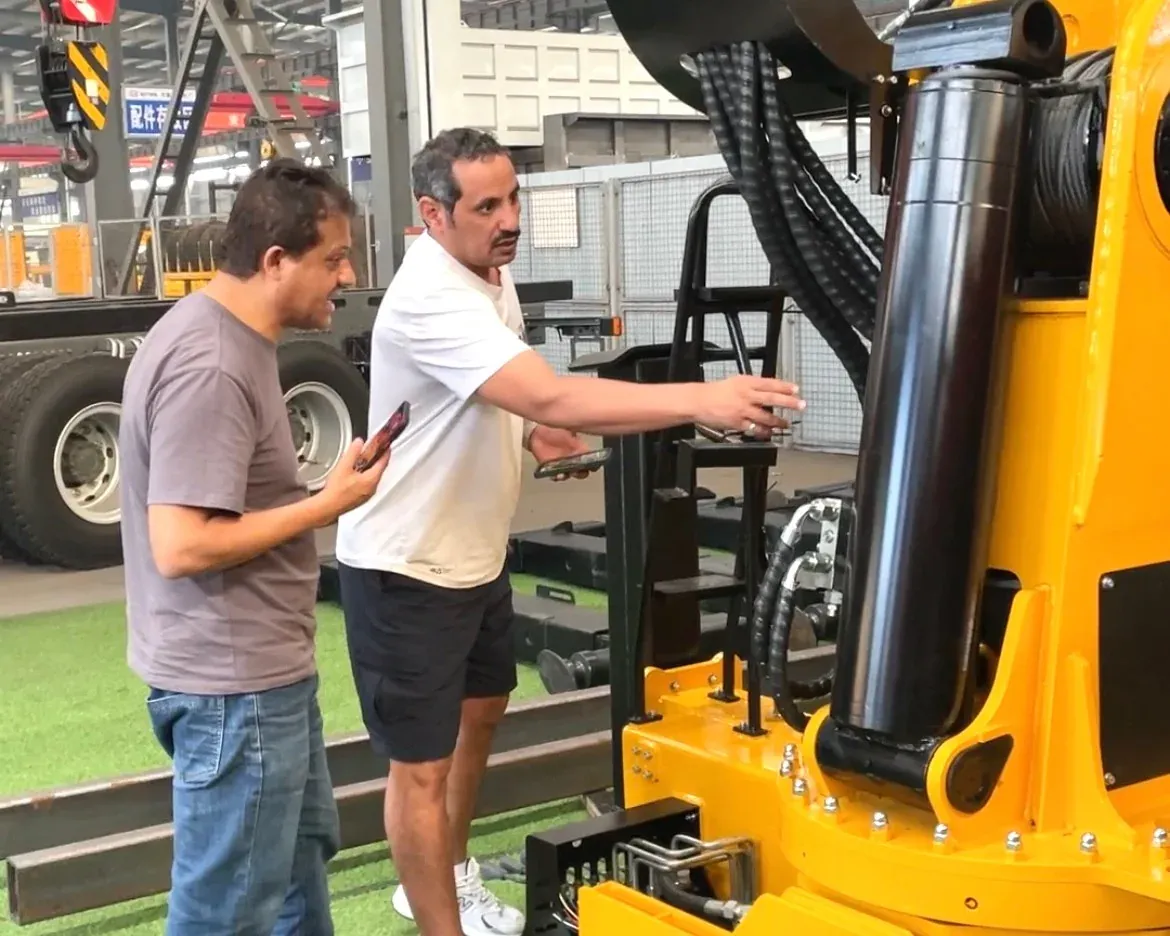
On a crane truck, the expensive mistakes are the ones that survive inspection, because nobody looked at the joint between the crane and the chassis. A factory acceptance visit is the last moment when fixing a mistake still costs a conversation instead of a shipping container.
This is what actually gets checked on the floor of a conversion plant, what a load test proves and what it does not, and what to photograph while you are standing there.
What a factory acceptance is not
It is not a tour, and it is not an audit of the crane. The crane arrives at the plant as a finished, separately certified unit, carrying its own maker's mark, its own rating plate and its own load chart. What is being inspected is the installation: the subframe, the mounting, the hydraulics and the paperwork that ties the two machines together into one road vehicle.
That is also the honest limit of what a plant can claim. On the trucks we arrange, the crane is a bought-in unit and the chassis is a bought-in unit; the work that happens on site is the integration, and the inspection below is an inspection of that integration.
Settle three things in writing before you travel
- The frozen revision. The document you inspect against must be the revision you ordered. If the specification is still moving on the day you fly, the visit becomes a negotiation about what was agreed rather than a check of what was built.
- The hydraulic schematic for the installation. Not the crane's own diagram - the plant's drawing showing where the pump takes its drive, where the tank sits, and how the return line is routed.
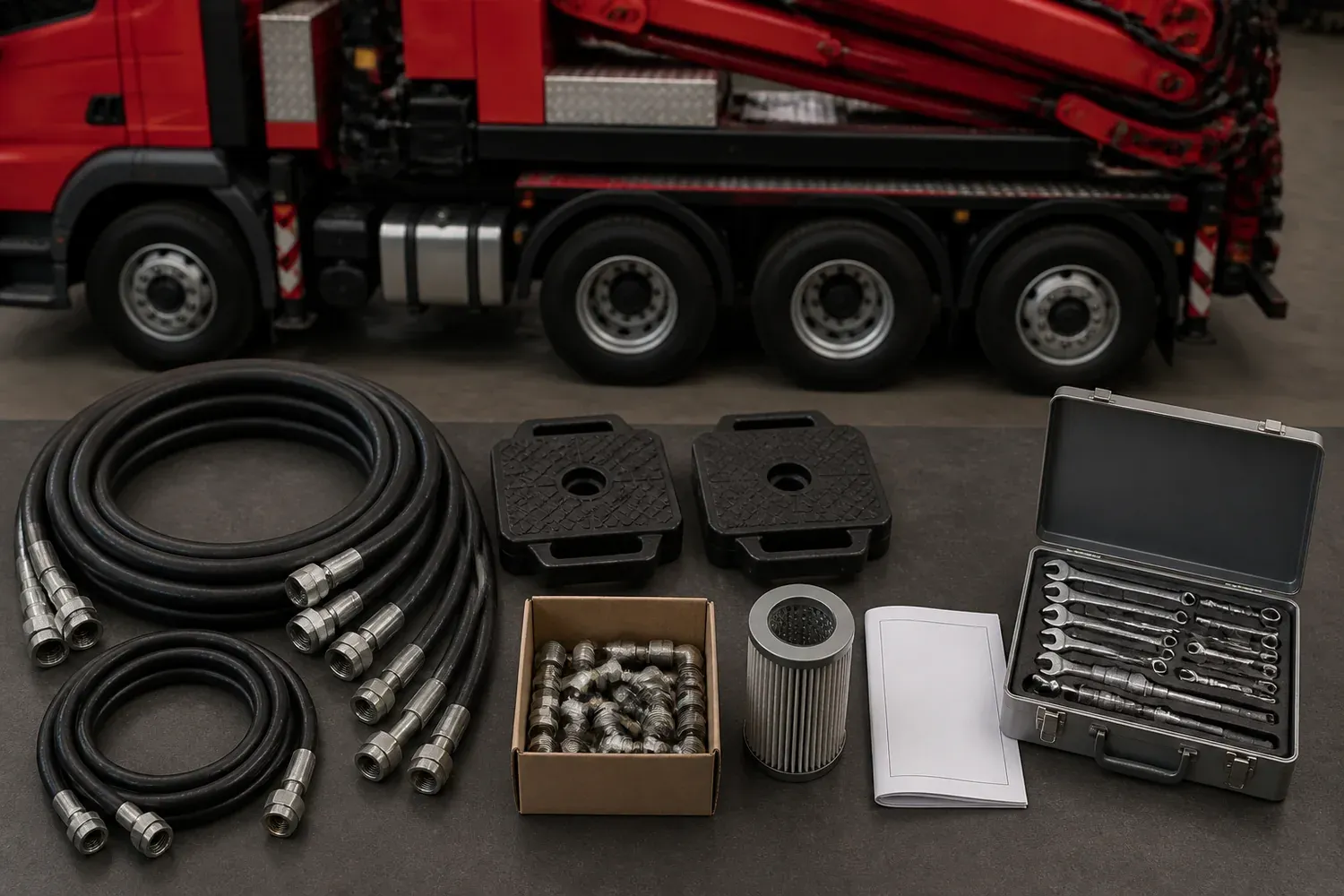
- The marking and paperwork set. Rating plate location, chassis number and its position, the operating decals in the language of the destination market, and the packing list that goes with the machine. Most post-delivery arguments are not about the crane; they are about a fitting, a pad or a manual that was never on the list.
The six checks on the floor
Check | What to look at | Pass criterion |
|---|---|---|
Subframe and mounting | Bolted or welded interface between crane base and frame rail; torque witness marks | No gaps, no shims stacked to close one, witness marks intact |
Outrigger beams | Full extension and retraction, by hand and powered | Beams travel without binding; mechanical locks engage at full extension |
Hose routing | Every run from pump to valve block to rams | No chafe point against a frame edge, no run that crosses a hot surface, P-clips present |
Weld quality at the mounting points | The welds that carry the crane | No undercut at the toe, no porosity, no spatter left in a way that hides a gap |
Controls and decals | Lever and remote functions, emergency stop, decals | Every function moves what the decal says it moves; decals in the ordered language |
Paint and marking | Rating plate, chassis number, boom marking | Both machines' own marks still legible and not painted over |
What a load test proves - and what it does not
A test lift proves that the machine lifts, that the rams hold, and that nothing in the installation moves under load. It does not prove stability at the working radius you actually intend to use, and it says nothing about the ground you will be standing on. Those are questions about your site, not about the plant.
Published lifting figures belong to the crane maker and appear on its load chart, at a stated radius. We do not publish test loads for a build we have not seen, and a plant that quotes you a comfortable round number for a lift at full reach is telling you something about its paperwork rather than its iron.
If the radius is the number you are unsure about, the useful reading is on how boom type and crane class are decided, and on how a grab unit's fitment is set by the chassis rather than the head:
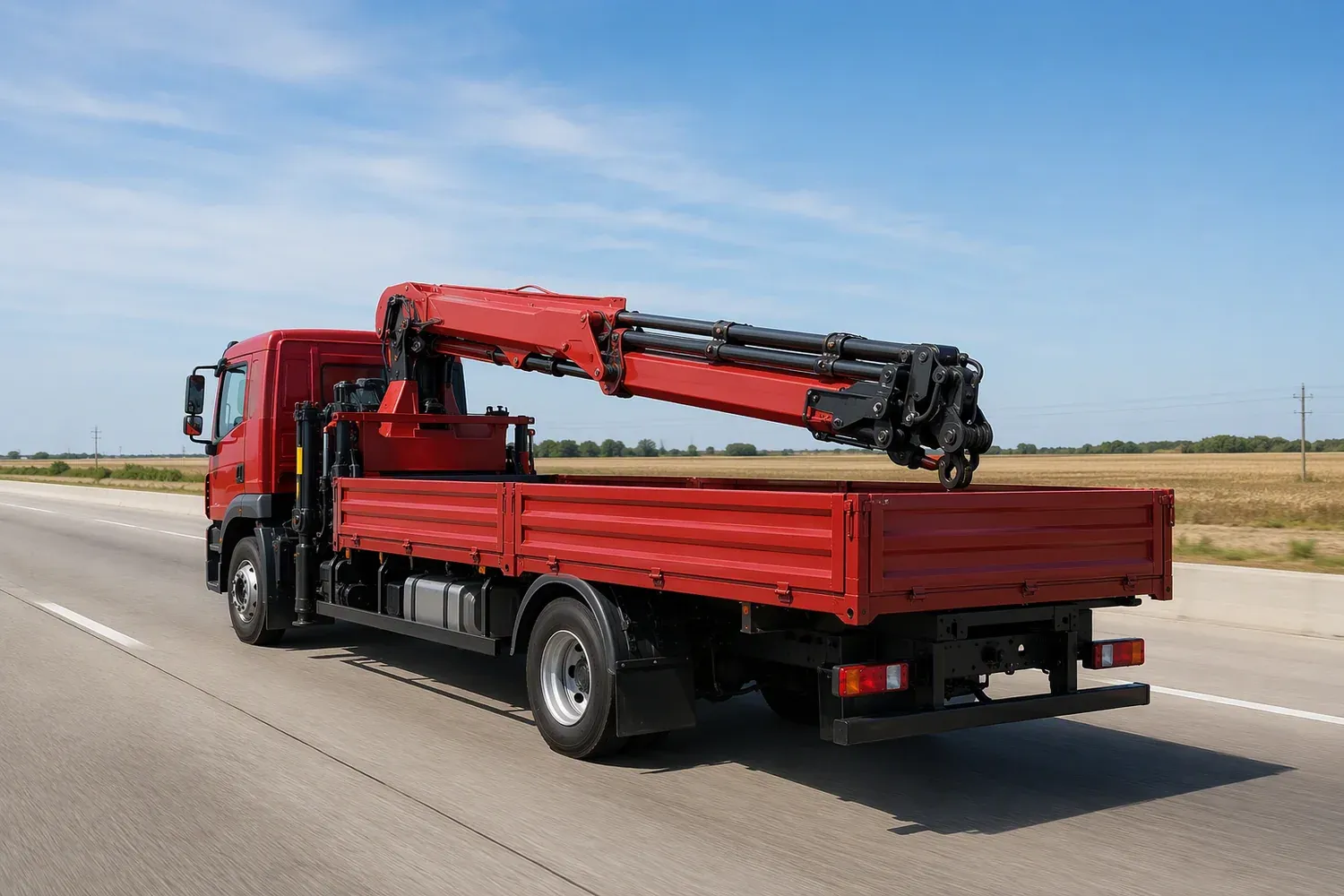
Two builds that come through acceptance visits most often are an 8 t knuckle-boom crane on a Sinotruk 4x2 chassis and a 4 t telescopic-boom crane on a Dongfeng 4x2 chassis; the checks below apply to both.
Photograph these four things
The photographs you take on the floor are not souvenirs. They are the evidence an insurer, a customs officer or a later dispute will ask for.
- The mounting joint, close enough that the witness marks and the bolt heads are readable.
- The hose runs, from the pump to the valve block, including the one place you were told there was no room.
- The rating plate and the chassis number, in one frame with the surrounding paint.
- The load chart plate on the crane as fitted, not the brochure version.
What a visit looks like in practice
Two things usually happen in the same hour, and they are different in character.
The first is the assembly area, where the crane column is offered up to the frame before the deck goes on. This is the moment to look at the interface rather than the crane: the plate thickness, whether the rail has been reinforced where the load lands, and whether the fitter can extend the outriggers without a mallet. A buyer standing here with a phone in each hand, photographing the joint and then the surrounding frame, is doing the single most useful thing available to him on that day.
The second is the hydraulic walkthrough, and it is the part most buyers skip. A fitter who can trace the circuit out loud, from the pump drive to the tank return, and who points out the one run he is not happy with, is telling you more about the build than any paint finish. Ask him to run it and watch the return line under load, and ask what oil grade will be in the tank when the machine lands in a cold market.
Three questions buyers ask before they fly
Is it worth travelling at all, or can the plant send photographs?
For a first order on a new configuration, travel. Photographs are chosen by the sender; the joint you need to see is rarely the joint that gets photographed. For a repeat order of a configuration you have already accepted, a dated photographic set taken to a list you specify is a reasonable substitute - and the packing list is the part most often skipped.
Who pays for what happens if the inspection fails?
That belongs in the order, not in the visit. The practical form is a defined hold point: the balance is released after the acceptance, and a failed item is re-presented for a second inspection at the plant's cost. If there is no hold point, the visit is advisory.
Do we need an independent inspector?
If your market requires a pre-shipment inspection for customs or for a letter of credit, that inspection is a different exercise with its own checklist, and it does not replace the interface check above. The two can be done on the same day, in that order.
Published by Truck Crane China - crane trucks integrated on export chassis and inspected before they leave. If you are planning an acceptance visit and want the interface checklist as a pre-visit document, ask us: WhatsApp +86 158 0912 4321, or email [email protected].
The machines referred to here are built as integrated units: chassis and crane each keep their manufacturer's own marking, and the assembly, the hydraulics and the acceptance work are what we are responsible for.