Oct 1, 2026
Knuckle Boom or Telescopic Boom: Which Crane Truck Fits the Job
Boom type is not a brand preference — it is a decision about where you park. The mechanical difference between a folding and a telescopic boom, and the three questions that actually decide it.
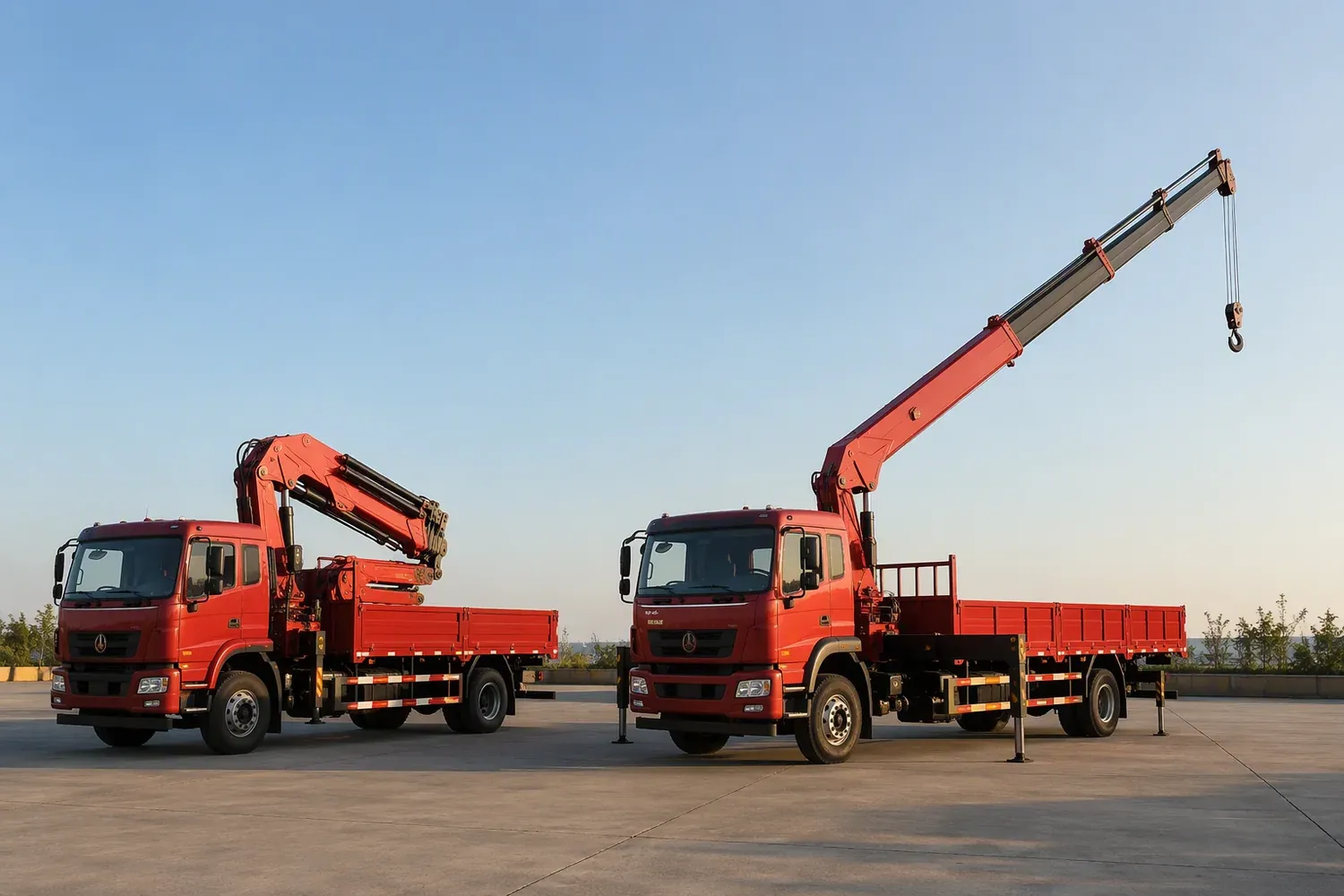
Boom type is not a brand preference, and it is not a price bracket. It is a decision about the space you will be working in — and it is usually made by whoever writes the quotation, not by whoever will operate the truck.
Two crane trucks with the same tonnage, the same chassis and the same price can be useless in each other's yard. Here is the distinction that actually decides it.
The mechanical difference that decides the answer
A telescopic boom extends along one straight axis. Sections slide out of each other, so the load travels out and up in a straight line from the column. To place a load, the whole boom has to be able to swing through the space between the column and the load.
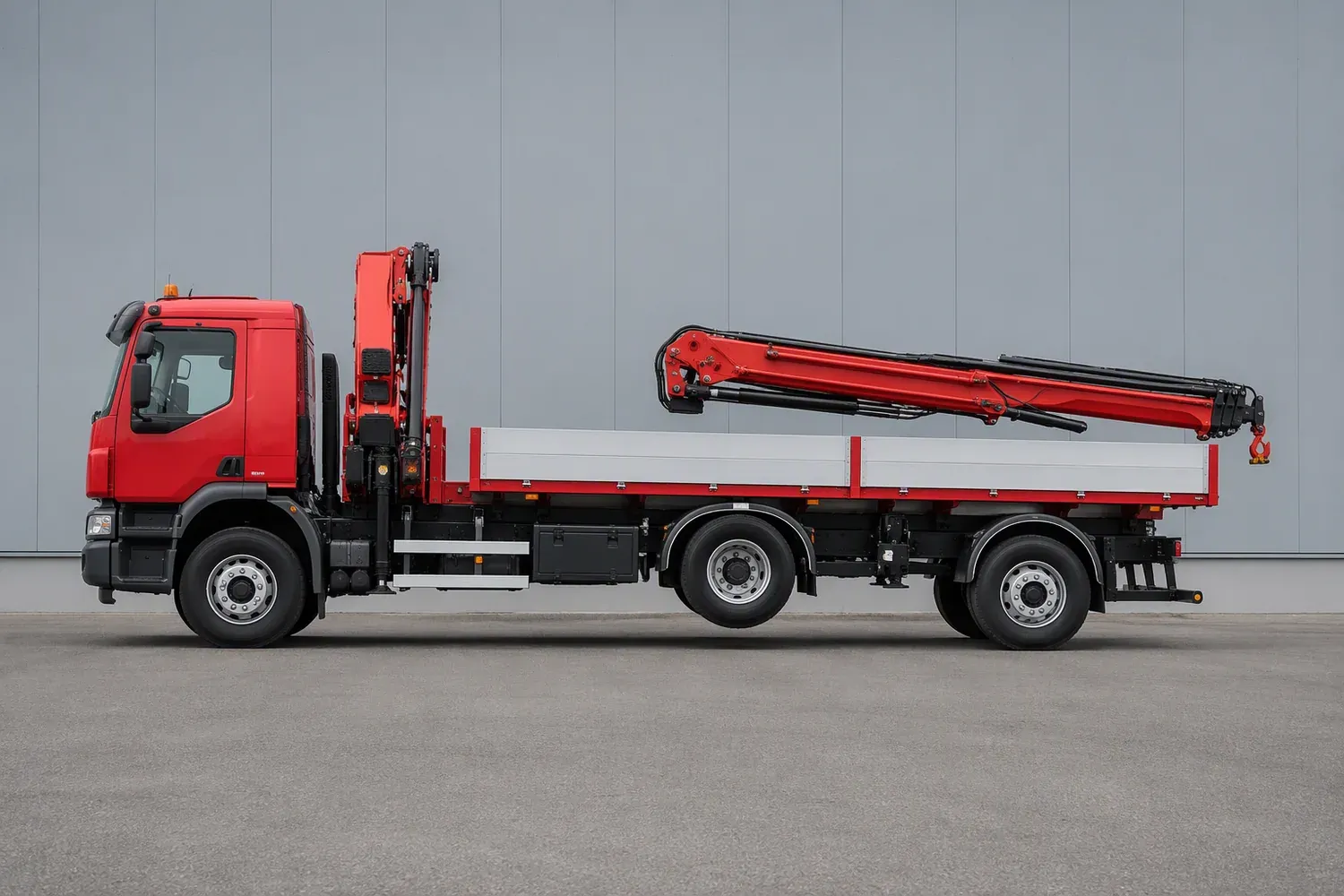
A knuckle (articulated) boom folds at one or more joints. Each joint adds a degree of freedom, which lets the boom bend over an obstacle, work close to the column, and stow at a much lower height.
In engineering terms the trade is simple. A telescopic boom has no articulation joint holding a raised load — the extension cylinders carry it, and the boom is easier to control at long, straight reach. A knuckle boom trades some of that straight-line reach for the ability to put the load somewhere a straight boom cannot physically point.
Where the fold matters more than the height
These are the jobs where a folding boom is the difference between doing the work and not doing it:
- Loading over a sideboard or into a container standing beside the truck.
- Working under tree canopy, under a canopy roof, or beside power lines where the boom has to stay low.
- Yards where the truck cannot get square to the load, so the load has to be reached sideways and brought in.
- Any repeated cycle where the load has to be picked up and set down close in — the fold keeps the cycle short.
Where telescopic still wins
- High lifts. Height is where a straight boom is most efficient.
- Long, straight reach with a hook, where the operator wants the load to travel a predictable line.
- Applications where the boom is expected to stay raised for long periods.
Most buyers who have run both will specify by job, not by principle — which is why we build on both.
What we build on each principle
Line | Boom | Range we list | Typical use |
|---|---|---|---|
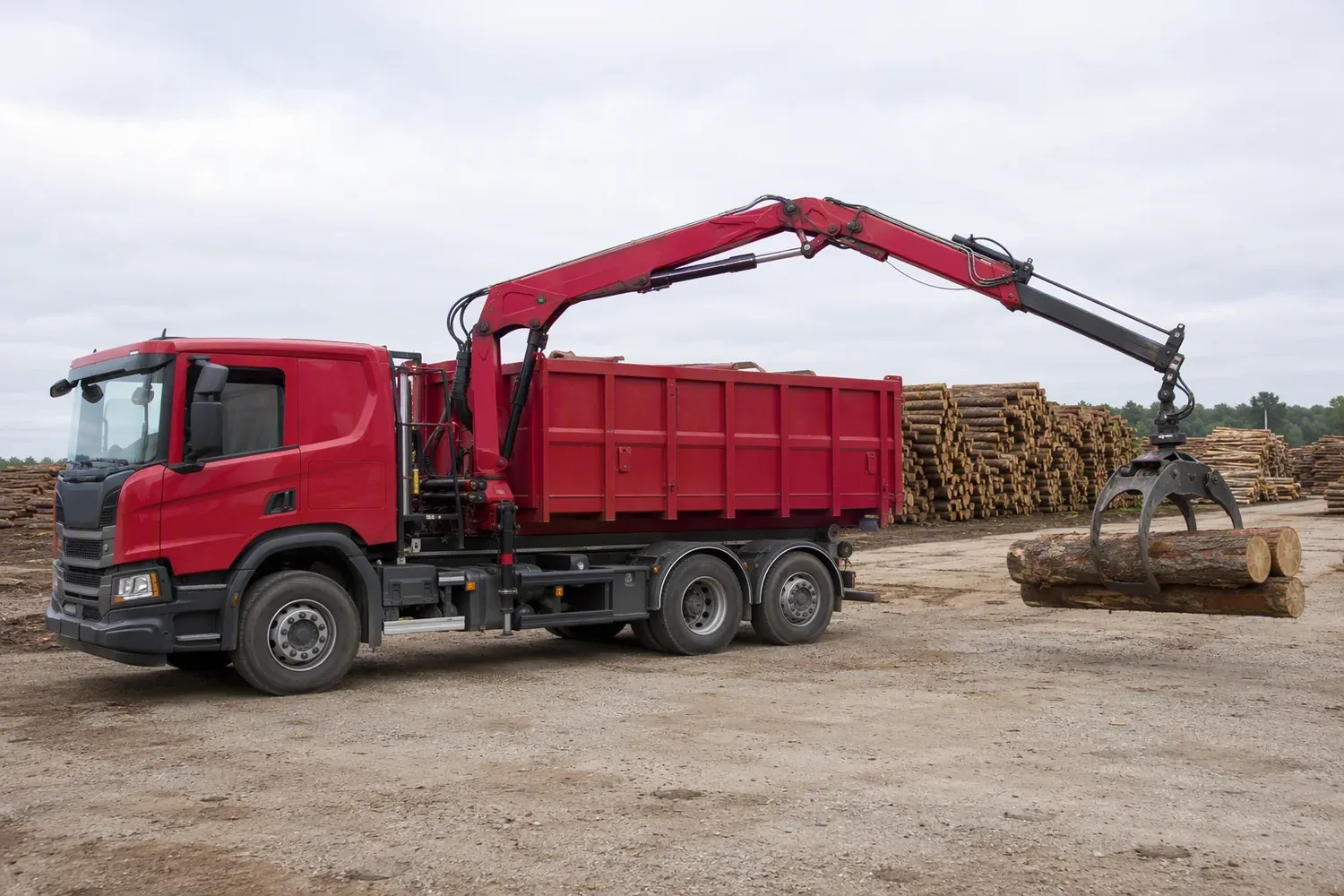
Truck-mounted grab | Knuckle boom with a grab head | 6.3 t to 12 t, 8.2 m to 12 m reach | Log, timber, scrap, flat-jaw and magnet work |
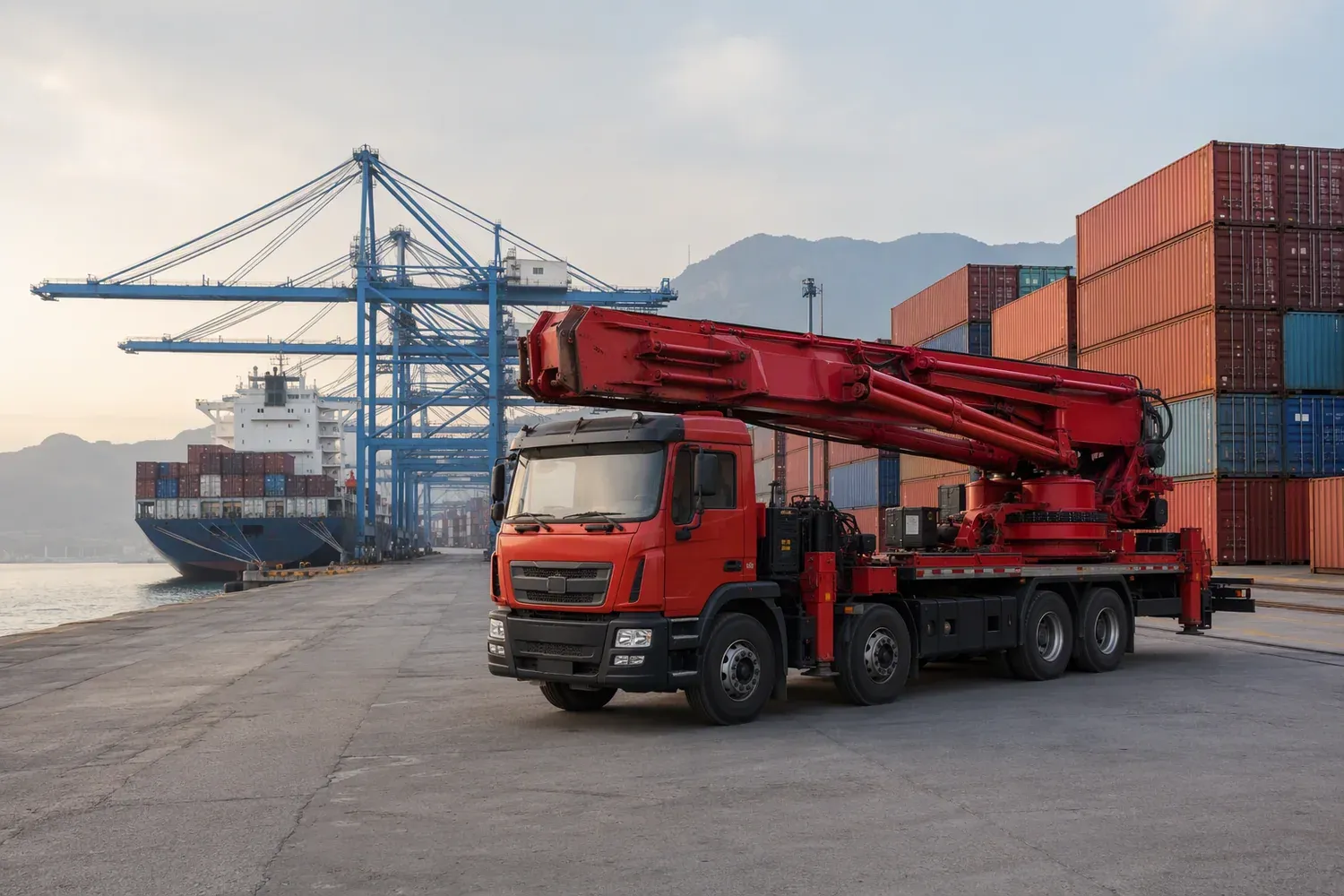
Truck-mounted crane | Telescopic boom, 4- and 5-section | 5 t to 16 t | General lifting, construction, containers, steel |
Trailer-mounted crane | Knuckle boom, 6x4 tractor | 38 t class | Heavy lifting where the tractor doubles as the carrier |
In the crane line, the tonnage in the model name is the crane class: 5 t, 8 t, 12 t, 14 t and 16 t, on 4-section and 5-section telescopic booms, on 4x2, 6x4, 8x4 and semi-trailer carriers. In the grab line, every unit is an articulated boom with a grab head on the end rather than a hook — the same boom principle, a different tool on the end of it.
You can see both principles side by side on the truck-mounted crane and truck-mounted grab listings. The Dayun 6x2 lifting-axle crane truck is a good example of the telescopic side, and the 8x4 Dongfeng D7V log grab of the articulated side.
The three questions that decide it, in order
- What is the load, and at what radius? Not the tonnage on the crane — the load and the distance. This is the only input that sets the size.
- Is there anything between the column and the load? A wall, a sideboard, a container roof, a tree branch, a low ceiling. If yes, the boom has to fold.
- How high, and how often? A high, occasional lift and a low, thousand-cycle day are different machines.
If a supplier quotes a boom type before asking those three questions, they are quoting their stock, not your job.
What we will not tell you
- We do not publish capacity-versus-radius figures. The load chart is specific to the crane model and the boom length in use, and it travels with the quotation. Anyone who quotes a lift without the radius is guessing.
- We will not tell you one boom type is better. On the same chassis and the same tonnage, a knuckle boom is not an upgrade and a telescopic boom is not a downgrade.
- We will not claim a certification or homologation outcome for either type in your market.
What we ship, and how we confirm it
Drive side and emission class are set per order and per market — they are not assumptions on our side. Left-hand drive is our standard build; right-hand drive is available on request. The crane load chart and the full specification sheet come with the quotation, not after the deposit.
Specifications and models named on this page are the ones currently listed on this site (reviewed 1 October 2026).
If you can tell us the load, the radius and what is in the way, we will tell you which boom — and if the honest answer is that you need a different chassis as well, we will say so before you order.
WhatsApp us the load and the radius — a photo of the yard helps more than a description.