Oct 29, 2026
Hydraulic Oil Contamination: The Cheapest Reliability Upgrade for a Crane Fleet
Dirt, water and wear metal cause most crane hydraulic failures. Where contamination enters, how to read the signs early, and a programme that costs little.
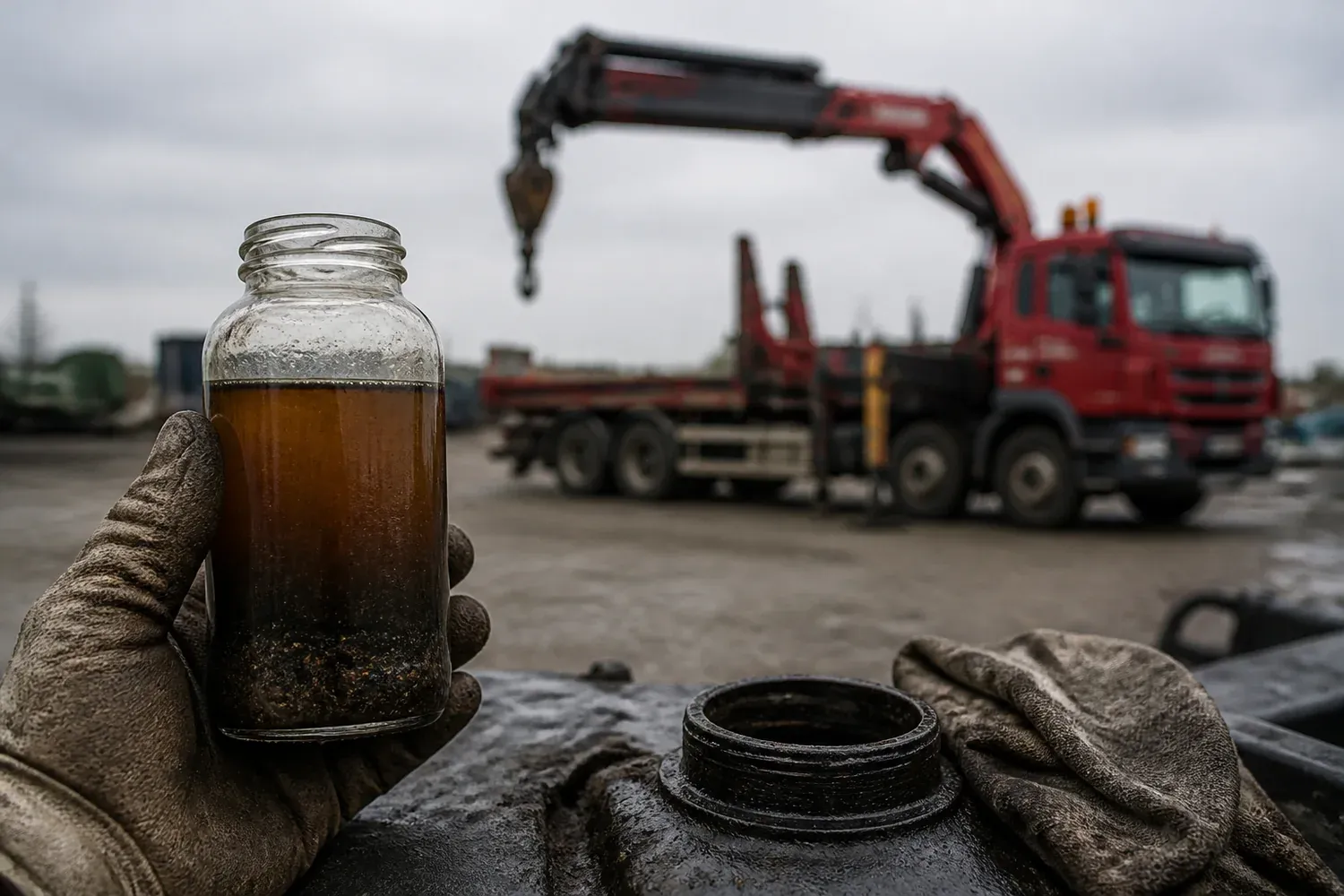
Most crane failures we are asked to explain are not design failures. They are dirt failures, water failures, or the same oil doing duty for three years because nobody wrote down when it was changed.
Contamination is cheap to prevent and expensive to ignore. A filter and a sample cost a fraction of a pump, and the work can be done in your own yard by the mechanic you already employ. That is why hydraulic oil contamination is the reliability upgrade most fleets never budget for.
What contamination actually destroys
Dirt wears clearances first. The pump loses flow slowly, the valves start to stick, and the symptoms arrive so gradually that the operator adjusts to them instead of reporting them.
Water does different damage. It attacks the oil's ability to lubricate, it encourages corrosion on rods and in the tank, and when it boils at working temperature it turns into vapour that compresses badly and leaves the system hunting.
Fine wear metal is the third problem. Once a pump or a cylinder starts to wear, the particles it sheds travel the circuit and accelerate wear everywhere else, which is why a single failure often turns into three.
The three ways dirt and water get in
The first route is the repair itself. Any time a hose is opened in a dusty yard, grit enters, and a fitting left uncapped for an hour does more damage than a month of normal work.
The second is the reservoir. A breather that has never been changed, a filler cap that does not seal, or oil poured from a dirty drum will move contamination in with every top-up.
The third is condensation. A tank that heats during the day and cools at night pulls moisture in through the breather, and in humid climates or cold nights it collects water that nobody sees until the oil turns milky.
Reading the signs before the failure
Colour and smell are the first free test. Oil that has gone dark, smells burnt or looks cloudy is telling you something, and it costs nothing to look at it once a week.
Foam on the dipstick after a shift, or oil that stays foamy in the tank, points to air or water rather than wear. A filter that loads up far sooner than the service interval says is another early signal that nobody reads.
Temperature is the third clue. Oil that runs noticeably hotter than it used to, on the same job in the same weather, is either contaminated, aerated or being asked to do more work than before. A cheap infrared thermometer pointed at the tank after a shift gives you a number to compare, which is worth more than an opinion.
Building a simple oil programme
Change filters on the crane maker's schedule, not when the crane starts to complain. Write the filter numbers on the inside of the toolbox lid so the next mechanic does not have to look them up, and keep one spare set on the shelf for each crane model in the fleet. A filter you already own is a filter that gets changed on time.
Take one oil sample a year, and one after any repair that opened the system. A laboratory report says whether wear is starting, which is a different and much cheaper question than whether it has arrived, and it gives you a baseline that a buyer will value when the truck is eventually sold. A sample is only useful if it is taken properly. Draw it from a moving circuit at working temperature, not from the top of a cold tank, and label it with the hour meter reading so the next report has something to compare against.
Store oil in closed drums, use a clean pump rather than a bucket, and cap every fitting during a repair. Those three habits cost almost nothing and remove most of the contamination routes described above. They also make the workshop easier to audit, which matters more than most fleets admit until a warranty claim is questioned.
What to do next
If you run a fleet and want fewer hydraulic failures in year three, tell us the duty cycle and the climate. We will match the crane and the chassis to that work, and tell you which filters and seals are worth holding as spares.
If you are already fighting contamination, send us a photograph of the oil on a white cloth and the last filter you cut open. That pair of images usually tells us more about the system than a page of description, and it costs you ten minutes.
Ask for the hydraulic schematic and the filter list with the truck. A fleet that knows its own circuit can diagnose in an afternoon what otherwise takes a week of emails between a driver, a workshop and a supplier in another time zone. If you are ordering several units, standardise the filters across them. One part number on the shelf for the whole fleet is a reliability decision disguised as a purchasing one, and it is the cheapest kind of standardisation you will ever get.
Related reading: why cold hydraulic oil costs a shift before it costs a pump, why a crane lifts slowly when the fault is flow rather than load, and what boom drift and outrigger creep reveal about the seals in the same circuit.