Sep 30, 2026
There Is No Such Thing as 'a Grab Truck': Three Load Families and One Design Choice That Cuts Across Them
Log, scrap and bulk are three different machines — different shells, different linkages — and one design choice, soft versus rigid linkage, cuts across all three.
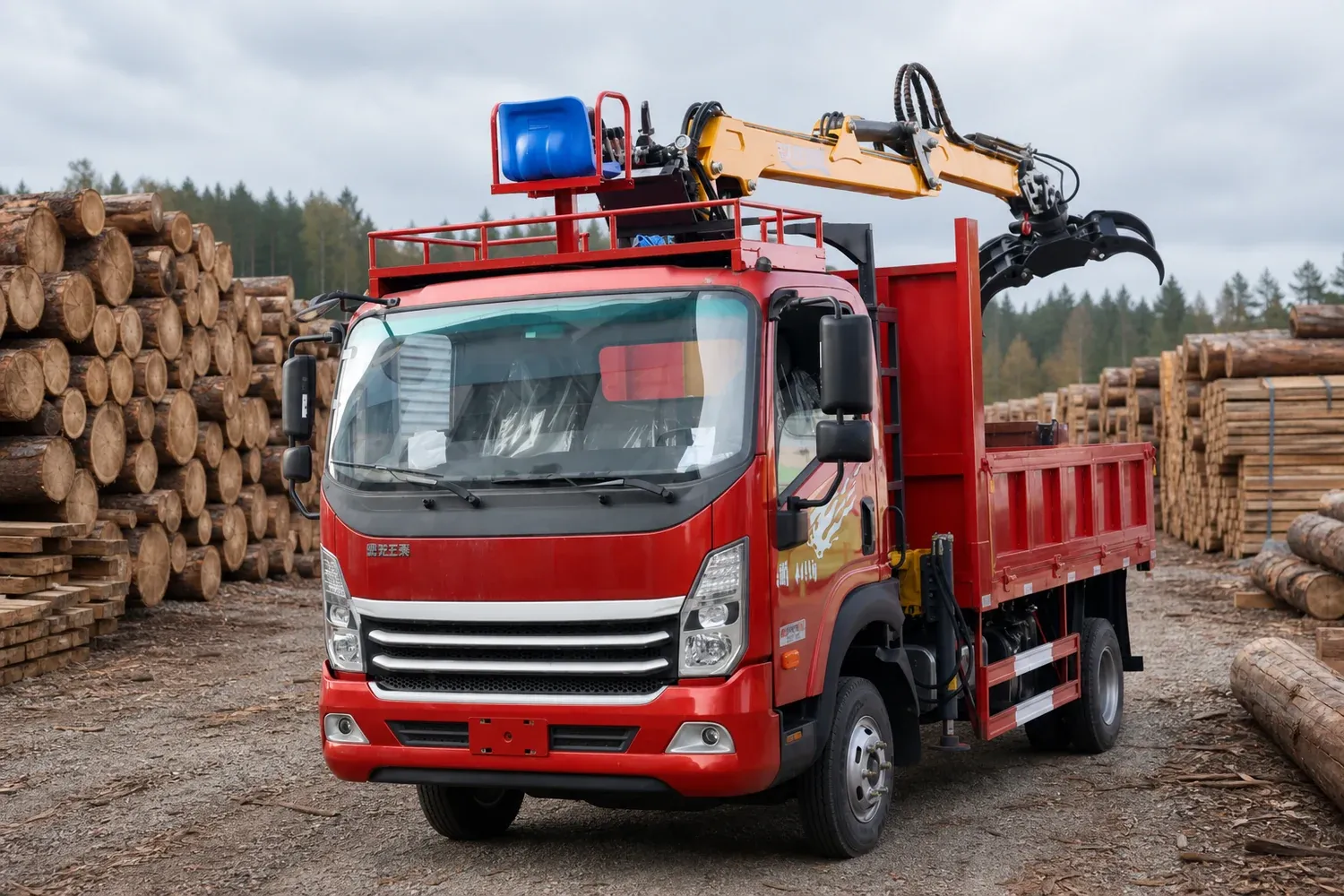
A buyer writes: "Send me a price for a grab truck."
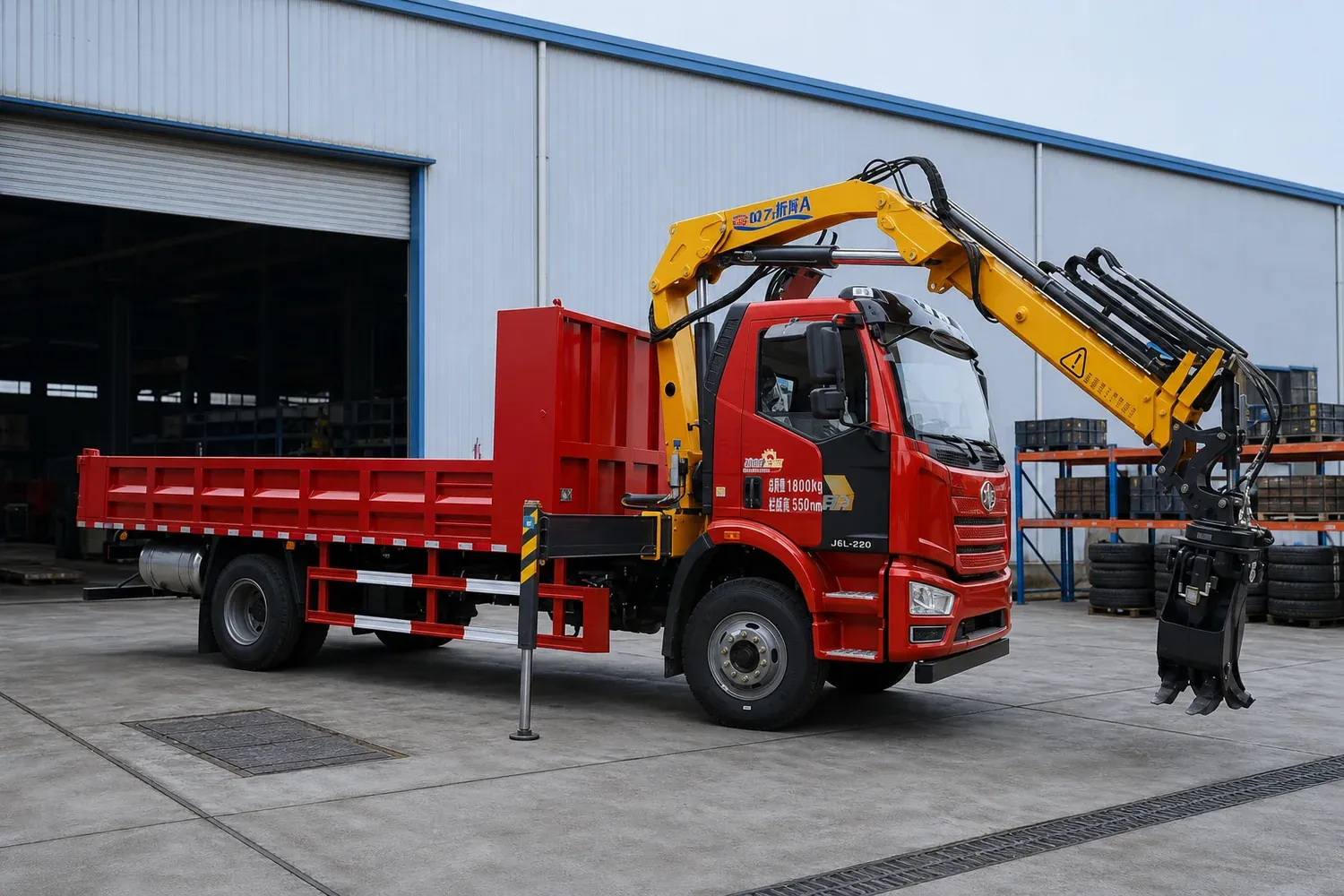
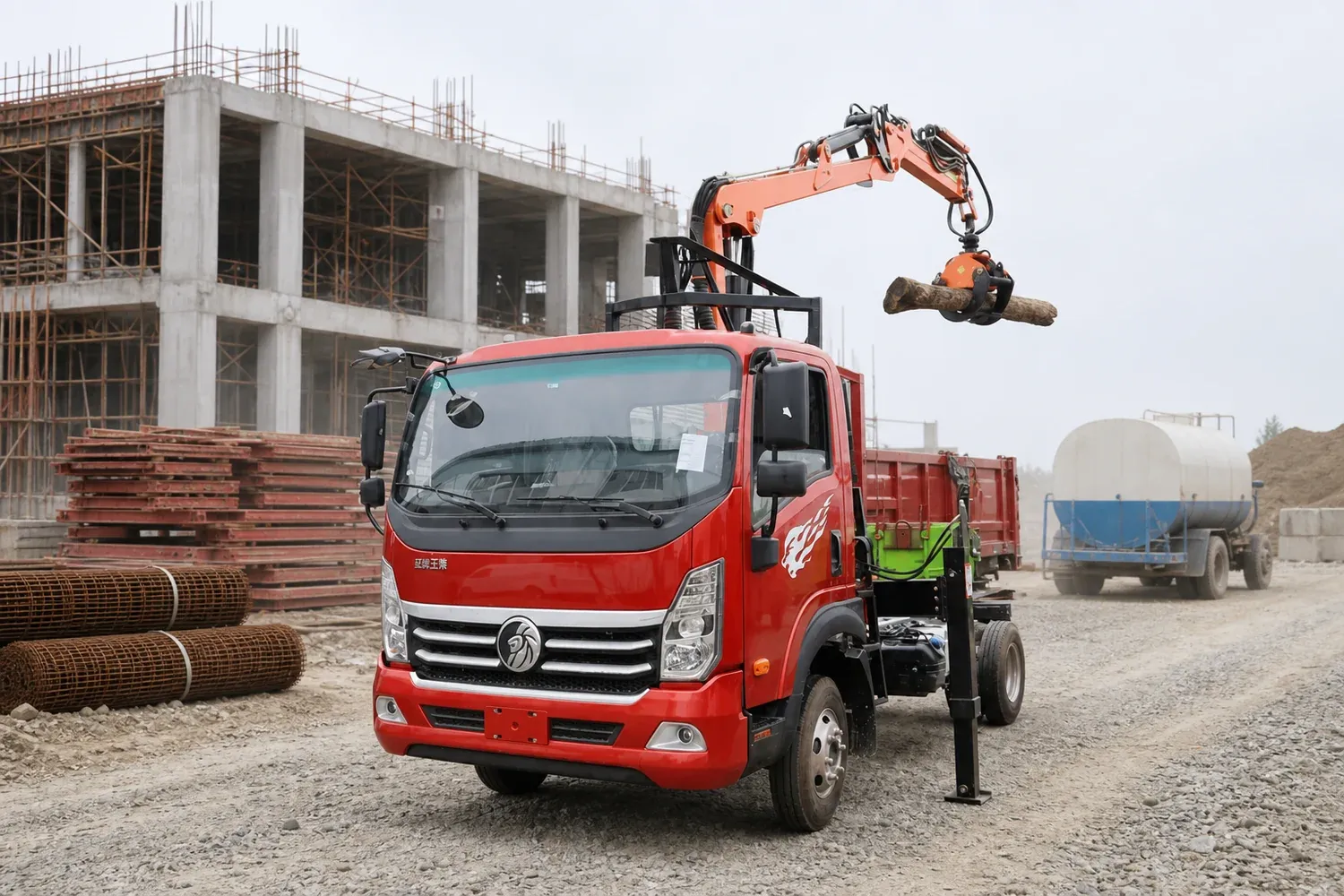
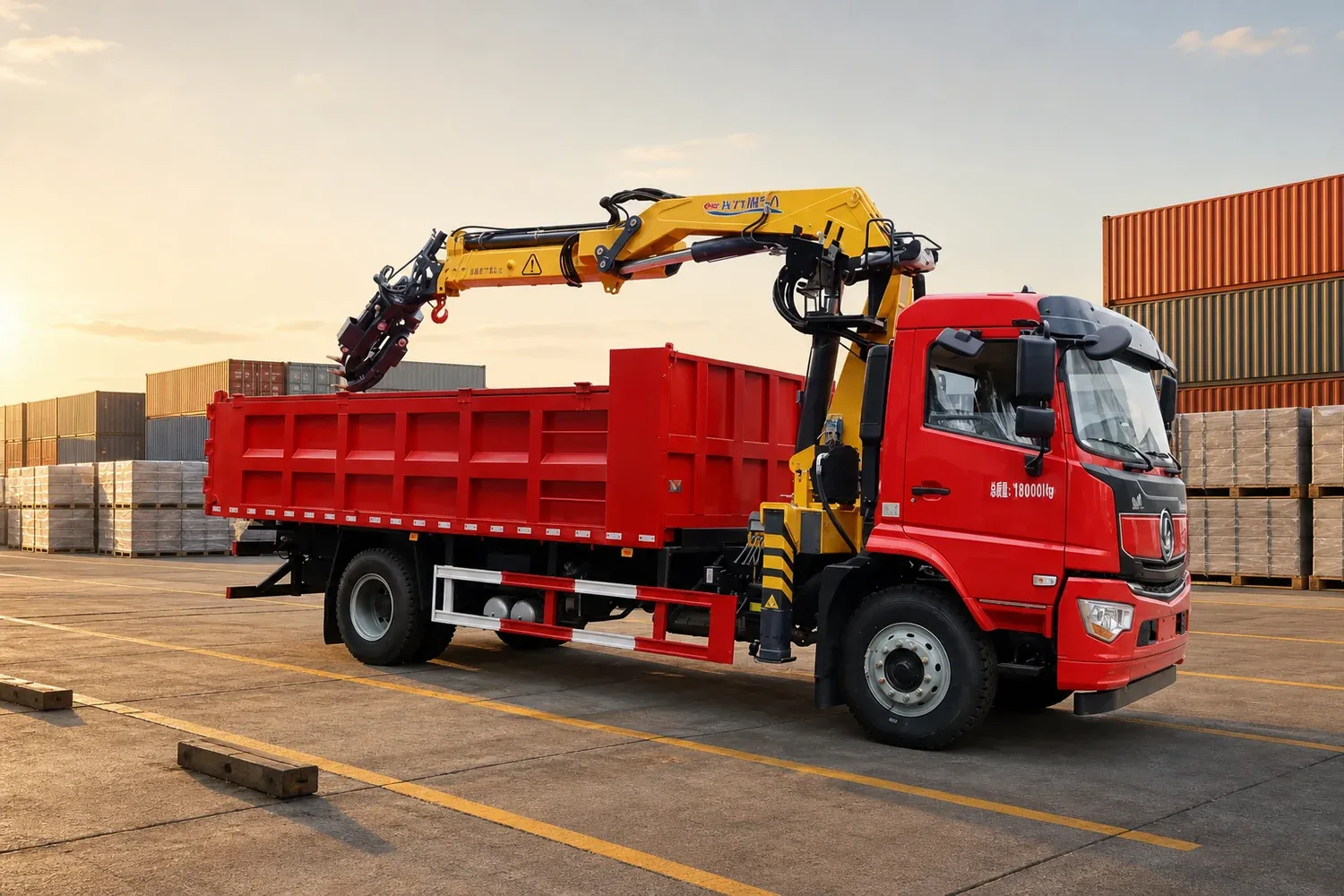
There is no such machine. What is being described is a truck chassis with a hydraulically powered grab on a boom — and that single sentence covers machines that share almost nothing except the principle.
The reason this matters is not pedantry. Two "grab trucks" can differ in what they can lift, how many cycles an hour they complete, and which chassis will survive the job. If you brief a supplier with one sentence, you will get a price for the wrong machine.
Here is how we actually divide them, and the one design choice that runs across all three.
Family 1 — Timber and log grabs
The load: long, light for its volume, and awkward.
A log or bamboo load is a length problem before it is a weight problem. Two design consequences follow.
The attachment is a jaw, not a bucket. Flat-jaw grabs and 2+2 or 3+2 configurations are built to close around a bundle of stems and hold it along its length. A clamshell built for gravel will drop a log.
The boom is soft-linked or rigid. This is the choice that most changes how the machine feels, and we build both:
- Soft linkage lets the grab hang and swing to follow the load. It is more forgiving when you are picking up stems that are not neatly stacked, and it tolerates the operator being less precise.
- Rigid linkage holds the attachment on a fixed geometry. It is more predictable for grabbing from a stack or a truck bed, and it is the choice when the same machine also handles other attachments.
Our timber line spans boom lengths from 6.5 m to 8.8 m, and includes 4x4 variants on single-cab chassis. That range exists because reach, not capacity, is usually what limits a log grab — you are reaching across a pile or into a stack, not lifting at the machine.
Family 2 — Scrap and metal grabs
The load: dense, sharp, and unpredictable in shape.
Scrap is the opposite problem to timber — nearly all weight, very little volume, and it does not stack neatly. Scrap grabs in our range use multi-petal shells — five or six petals rather than two, so the shell closes around irregular shapes from several directions.
Two variants sit on this family:
- Magnet-equipped grabs, for ferrous material that a shell cannot grip at all — turnings, small plate, mixed scrap.
- Cutter-equipped grabs, where the attachment is expected to shear as well as hold.
Scrap work also drives the chassis differently: a scrap grab spends its day at a fixed yard, so axle rating and rear overhang matter more than traction.
Family 3 — Bulk, aggregate and general grabs
The load: loose, free-flowing, and defined by volume.
Sand, gravel, grain, and general yard material. The attachment is a clamshell, and the design question becomes shell geometry versus material — how the shell seals, and whether it releases cleanly.
This is the family where operators most often ask to run more than one material with the same machine, which pushes the specification toward a general-purpose shell and a rigid linkage.
We also build this family as a grab body on a refuse-capable chassis for municipal collection work, with a lifting axle on some builds.
The design choice that cuts across all three: soft or rigid
If you take one thing from this page, take this: soft or rigid linkage is a working-style decision, not a quality tier.
Soft linkage | Rigid linkage | |
|---|---|---|
Grab position | Hangs and follows the load | Held on fixed geometry |
Best at | Loose, unstacked, uneven material | Stacked material, truck beds, precise placement |
Operator demand | Lower | Higher |
Multi-attachment use | Less suited | Better suited |
Typical family | Timber | Scrap, bulk, municipal |
Neither is more expensive to build because it is "better". They solve different problems, and we will ask which one matches your site before quoting.
What we will not tell you
- Lifting height. We do not publish it, for any grab model. It depends on the attachment fitted and the machine's geometry, and a number printed on a page has caused more arguments on site than any other figure. Ask, and we will work it out for your configuration.
- Grab self-weight, opening, and volume. These are built to order and we are not going to print a figure that only applies to one build. Tell us the material and we will specify the attachment.
- Body plate thickness. It varies by build and by what you are carrying. A number on a web page would be a claim we cannot hold.
- Price. Not on a page. Configuration decides it, and we would rather quote the machine you need than the machine a price line describes.
One more thing we will say plainly, because it is the most common misunderstanding we deal with: "grab truck" has no separate customs code. It clears under the truck heading. Anyone who quotes you a "grab truck import duty rate" is quoting something that does not exist.
How to brief us so you get the right machine
Send us four things and the conversation gets short:
- What you are lifting — and roughly what it weighs loose, not in theory.
- Where the machine works — yard, forest road, roadside, transfer station.
- Reach you need — how far from the machine the material actually sits.
- Your market — because steering side and fuel sulphur decide the chassis long before they decide the grab.
We build on multiple chassis families, in left-hand and right-hand drive, with mechanically controlled and electronically controlled engines. Which of those applies is a market question, and we will ask it.
Not sure which family you need? Send a photo of the material and where it sits. That is usually faster than a specification.
Rules, standards and fuel specifications change. Verify with your local importer and registration authority before you order. This page describes how we build and what we will and will not commit to; it is not a statement of your market's legal requirements.