Sep 29, 2026
A Used Crane Truck into Saudi Arabia: Three Rules — and One We Could Not Verify
SASO's certificate list excludes used lifting equipment. That decides most used crane truck deals into Saudi Arabia — the three rules that follow, and the one we could not verify.
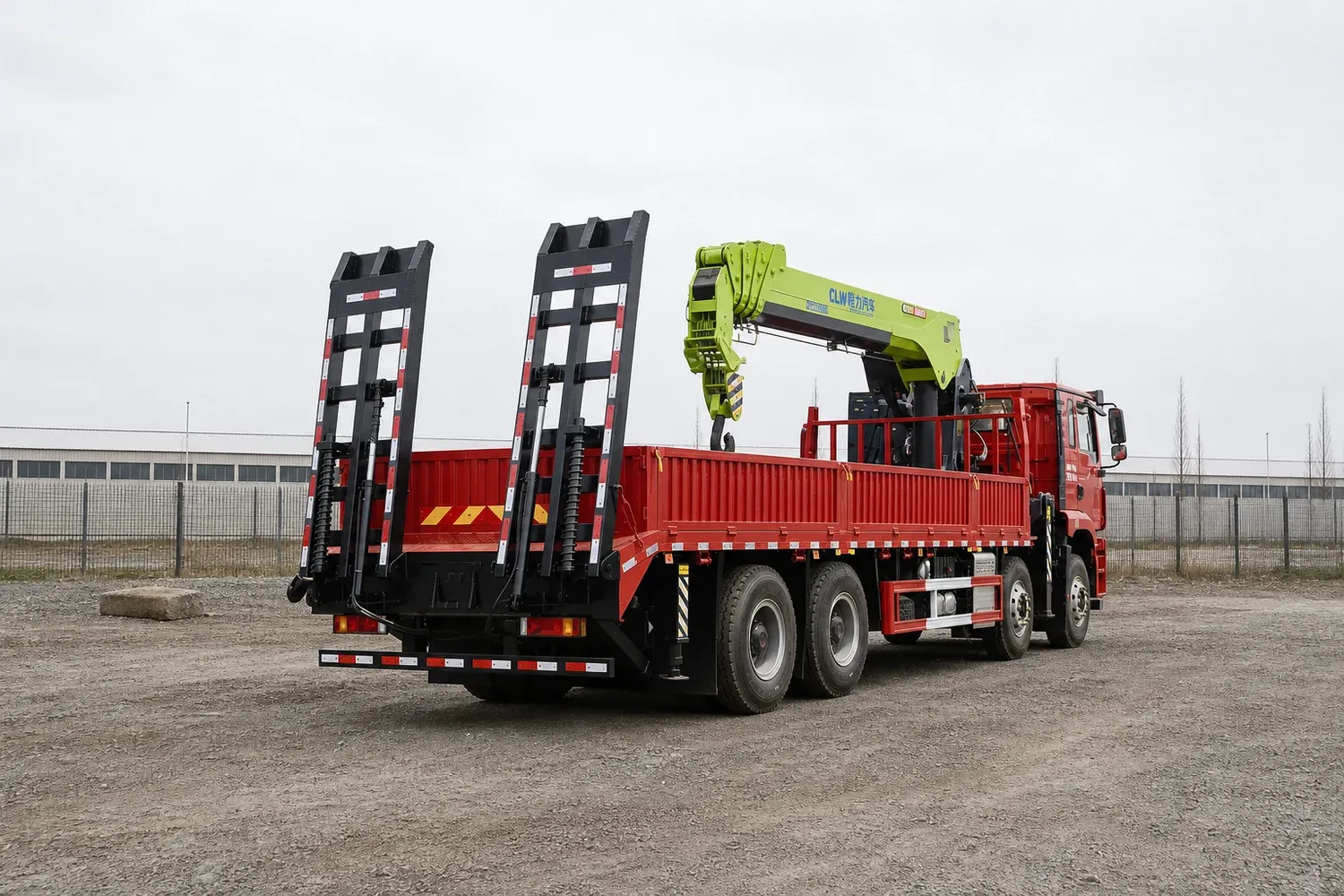
Here is the sentence that decides most used crane truck deals into Saudi Arabia, and it is in SASO's own certificate list:
Used lifting equipment is excluded from the Certificate of Type Conformity for Lifting Equipment.
Read that carefully, because it separates two things buyers usually treat as one.
Rule 1 — The truck can be used. The crane cannot be.
SASO's Certificates of Conformity list, entry 14, covers Certificate of Type Conformity for Lifting Equipment — lifting equipment under the Machinery Safety Technical Regulation, Part 3: Lifting Equipment — and it states plainly that used lifting equipment is excluded.
A truck-mounted crane is two things bolted together:
- a commercial truck chassis, regulated as a vehicle, and
- a crane, regulated as lifting equipment, certified separately from the vehicle.
The exclusion bites on the second item. So if you are offered a used crane truck, the question is not "is the truck acceptable?" — it is "is the crane attached to it certifiable?" And on the text of entry 14, a used crane is not.
This is also why "it passed SASO" is not a useful statement about a used unit. Passing the vehicle side says nothing about the equipment side.
There is an obvious corollary, and it cuts in a specific direction: if the blocker is the crane being used, then a new crane on a chassis that has its own paperwork is a different proposition from a fully used machine. Whether that combination is admissible in your case is a question for your Saudi importer and the certification body — we are describing the structure of the rule, not clearing a route.
Rule 2 — Used vehicles have had their own conformity requirement since mid-2024
Separate from the equipment question, the vehicle side carries additional documentation when it is used.
Saudi Arabia has required a Certificate of Conformity (CoC) for imported used vehicles from 30 June 2024. The requirement is set out in third-party certification and inspection material — TÜV Rheinland published the change, and Intertek operates a Certificate of Inspection service for used vehicles to Saudi Arabia. We are citing those because we did not obtain the underlying SASO instrument, and we would rather tell you the source than present a third-party summary as a statute.
The practical point does not depend on which document you read: a used vehicle enters a different documentation stream from a new one. New vehicles run the standard SABER conformity assessment. Used vehicles add inspection and certification on top.
Rule 3 — Whoever files, it is not your supplier
Whatever you buy, the filing side does not change. Saudi Arabia's conformity assessment runs through SABER in two stages:
- PCoC — Product Certificate of Conformity, model-specific
- SCoC — Shipment Certificate of Conformity, per shipment
SABER is open only to Saudi importers, SASO-approved certification bodies and Saudi Customs. An overseas exporter cannot open an account or file a declaration. That is as true of a used unit as a new one, and it is the reason a used purchase does not simplify anything on the paperwork side.
One steering note that does favour used equipment in this market: Saudi Arabia drives on the right and takes left-hand-drive vehicles, the same as China. Unlike Kenya or Tanzania, there is no left-to-right conversion problem here, so a used left-hand-drive unit is not excluded on steering grounds. We could not locate a Saudi prohibition on right-hand-drive registration either — but it is moot for a China-sourced programme.
The one we could not verify: the age limit
We could not find an official age cap for imported used vehicles in Saudi Arabia.
That is an unsatisfying answer and we are not going to replace it with a plausible one. Plenty of market commentary asserts a limit. We did not obtain an official text, and an age limit is exactly the kind of number that belongs in a contract — so we will not state one.
Two consequences you should plan around:
- Ask your importer for the current rule, in writing, before you commit to a build or a purchase. They are the party with portal access and the party who carries the clearance risk.
- Do not build a business case on the absence of a rule. "Nobody could tell me it was prohibited" is not the same as "it is permitted."
What we will not tell you
We will not promise that a used crane truck will clear customs or be registered. Too much of that outcome sits with the equipment certificate, the used-vehicle documentation stream and the importer's filing.
We will not give you an age limit, a duty rate or a registration document list. The duty side is the GCC Common External Tariff, where most goods are subject to a rate "not less than 5%" on CIF — a floor, not the rate for your vehicle. The exact figure lives in ZATCA's 12-digit schedule and has to be looked up for your HS line. VAT is separately confirmed at 15%.
We will not tell you whether the SCoC stage includes a physical inspection in Saudi Arabia. We could not verify the procedure text.
We will not present third-party guidance as Saudi law. Where our source is a certification body rather than SASO, the text above says so.
What to send us
If you are weighing used against new for a Saudi programme, these five answers decide it:
- The crane's year, make, model and hours — entry 14 turns on whether the equipment is new.
- Whether the crane has any existing type documentation, and from which body.
- The chassis year, mileage and configuration.
- Your importer, and their SABER filing history — first filing, or established?
- What the machine will actually lift, and at what radius — because if the honest answer is that it needs a new crane anyway, the used-versus-new question has already been answered.
If the crane has to be new regardless, we build new cranes and integrate them onto commercial chassis, and we will prepare the lifting-equipment file to the regulation rather than hand you a parts list. That is the part of this market we can be precise about.
References
- SASO, Certificates of Conformity — official certificate list, entry 14 (lifting equipment) and entry 7 (under-run protective devices), last modified 28 September 2025 (saso.gov.sa)
- GSO, Technical Regulations for Motor Vehicles, MV 2025 MY-D3 — Saudi country annex (Emission: Euro V)
- TÜV Rheinland — notice of the Certificate of Conformity requirement for imported used vehicles to Saudi Arabia, effective 30 June 2024 (third-party certification body, not a SASO publication)
- Intertek — Certificate of Inspection for used vehicles to Saudi Arabia (third-party inspection service)
- ZATCA — tariff search, 12-digit schedule (for the actual duty rate on your HS code)
Rules are stated as published at the date of writing, with sources identified as official or third-party. Used-vehicle requirements change. Confirm the current position with your Saudi importer before you commit.
Need a crane specified for a Gulf programme? Message us on WhatsApp at +86 158 0912 4321 and tell us the market and the machine.