Sep 30, 2026
Fourteen Right-Hand-Drive Markets: Does Your Grab Truck Need a Cab Swap?
Fourteen African countries drive on the left. A steering-side question changes the chassis, the cab and the delivery time — here is the list, and the four places the map lies.
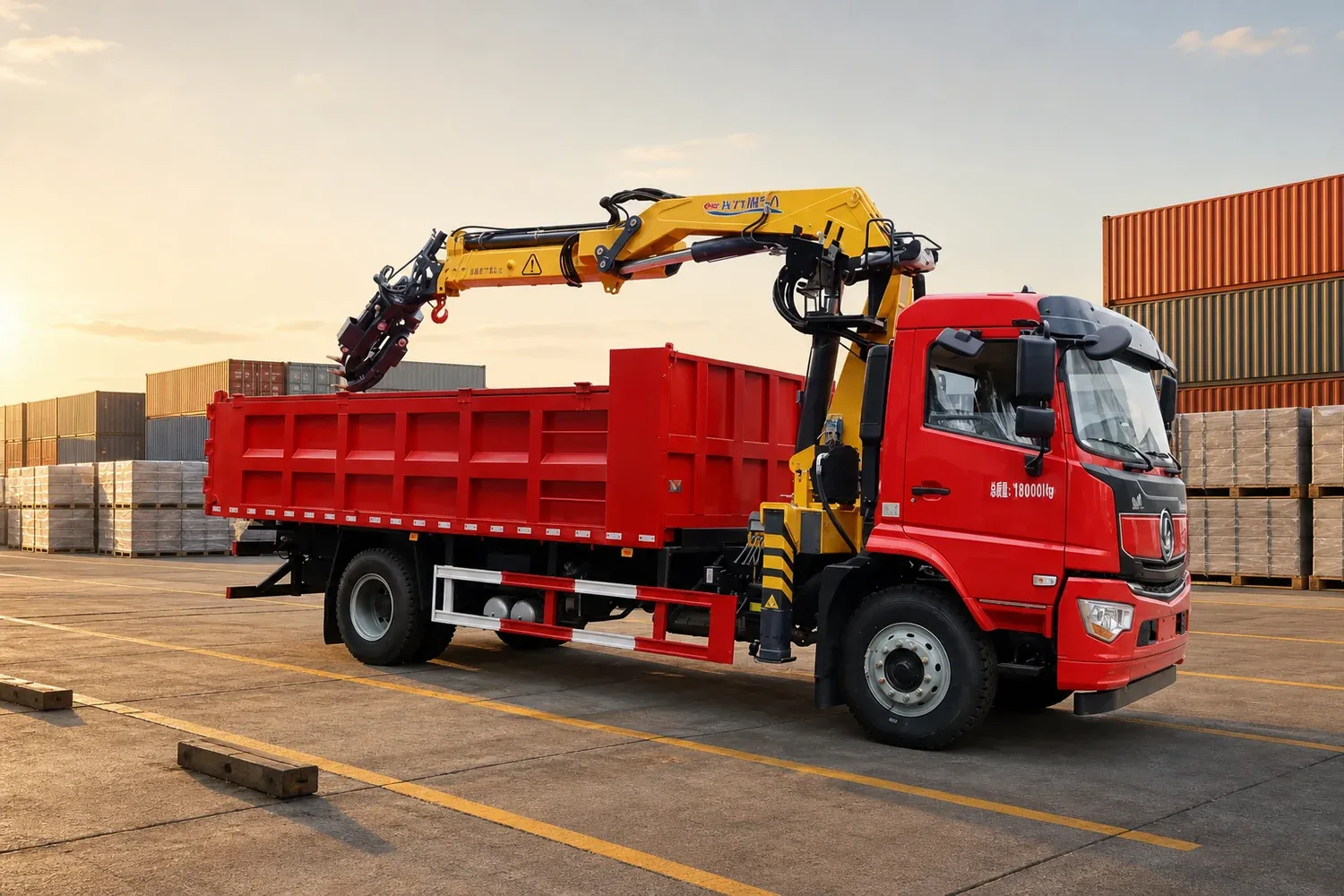
There is a sentence that changes a grab truck quotation more than boom length, grab type or payload:
"We drive on the left."
Everything about the working end of the machine — boom, grab, body — is unaffected. Everything about the chassis and the operator's position is affected, and that is decided before the price is, not after.
Here is the list, and here is what it actually changes.
The count: 14 right-hand drive, 40 left-hand drive
Africa has 54 countries. Fourteen of them drive on the left and require right-hand drive vehicles. The other forty drive on the right and take left-hand drive.
Right-hand drive (14):
Region | Countries |
|---|---|
East Africa | Kenya, Tanzania, Uganda, Mauritius, Seychelles |
Southern Africa | South Africa, Namibia, Botswana, Eswatini, Lesotho, Malawi, Mozambique, Zambia, Zimbabwe |
Left-hand drive (40): the whole of North Africa (Algeria, Egypt, Libya, Morocco, Sudan, Tunisia), West Africa (16 countries), Central Africa (8), East Africa (Burundi, Comoros, Djibouti, Eritrea, Ethiopia, Madagascar, Rwanda, Somalia, South Sudan), plus Angola.
Watch Angola. It sits in southern Africa, surrounded by left-hand-traffic neighbours, and it is left-hand drive. Buyers group it with South Africa and Namibia and order the wrong steering side.
What actually changes — and what does not
This is where buyers expect a bigger problem than there is.
Unchanged: the entire working end. The boom, the linkage, the grab shell, the tipping body and the hydraulics are the same machine in either market. A log grab does not know which side the driver sits on.
Changed: the chassis. Steering position, steering gear, pedal layout, dashboard, and — for a truck with a crane or grab — which side the operator platform and controls are mounted. On a grab truck that platform position is a real design decision, because it decides which side of the machine the operator works from at a stack or on a roadside.
Not changeable later. Right-hand drive is a property of the chassis as built. It is not a conversion you can add to a left-hand-drive truck in your own workshop, and any supplier who offers that is offering you a vehicle your registration authority will inspect very closely.
Four places where the map lies
The 14/40 split is the general rule. Our research surfaced four exceptions that matter on real orders:
- Mauritania — drives on the right nationally, but the mining road between Fderîck and Zouérat drives on the left. A truck doing that route is in an unusual situation; confirm with your operator before ordering.
- Democratic Republic of Congo — right-hand drive by law, but right-hand drive vehicles are in wide use in the Katanga mining region. If your customer is a mining contractor in the south-east, the fleet may be mixed regardless of what the rule says.
- Somalia — drives on the right, but the used vehicle stock is overwhelmingly right-hand drive from the earlier period. Selling a new left-hand-drive unit there is not a compliance question so much as a market-fit question.
- Namibia — left-hand traffic like South Africa. If your customer is a contractor working across the South African border, right-hand drive is the practical choice for both.
Cross-border fleets: the question buyers forget
Before you answer "which side", answer this: will the truck work in more than one country?
A grab truck bought for a border-adjacent operation may spend its life in two markets that drive on different sides. In Africa that is not hypothetical — the southern African left-hand-drive bloc borders the left-hand-traffic bloc, and mining and construction contractors move equipment across those lines constantly.
If your answer is "both", the steering side and the registration market are two separate decisions, and you should say so at the start rather than discover it at the border.
What we build
We build both steering configurations, on more than one chassis family, with mechanically controlled and electronically controlled engines.
Three things we will tell you plainly:
- Steering side and engine are separate questions. Both are decided by your market, but they are decided by different facts — steering by which side of the road you drive on, engine by fuel sulphur and your market's emissions requirement. Do not let one stand in for the other.
- Right-hand drive narrows the chassis list. Not every chassis we use for left-hand-drive export builds is available right-hand drive. Ask early, because the chassis decides wheelbase, and the wheelbase decides body length.
- On four-wheel-drive builds the cab is single, not crew. If a right-hand-drive requirement lands on a 4x4 build, you have already committed to a short cab and therefore a shorter body.
What we will not tell you
- What the cab swap costs. We will not put a number on it, because it depends on the chassis, the build and the volume, and a published figure becomes a promise we did not make. Ask, and it comes as part of a quotation.
- That a left-hand-drive truck can be converted. It cannot be, in any way we would support or warrant. This is the one line on this page we want read as absolute.
- Delivery times for a right-hand-drive chassis. They move with the chassis manufacturer's schedule. Any date we gave you today would be a guess.
- Anything about your registration rules. Which steering side your authority accepts is a question for your importer, and the four exceptions above are exactly why we do not generalise.
What to send us
- Which side of the road you drive on — and whether the truck will work across a border into a market that drives on the other side.
- Your registration market — the country the truck will actually be plated in.
- What the truck carries and where it works — so the body and boom are sized with the cab length you will end up with.
- The fuel sulphur you can buy — because that decides the engine, and the engine has to fit the chassis you are about to choose.
Answer those four and we can tell you which combination is buildable, which is not, and what we would refuse to ship.
Right-hand drive, and not sure what else it changes? Tell us the country and the job. We will tell you which chassis families are available and which body lengths you have to give up.
Rules, standards and fuel specifications change. Verify with your local importer and registration authority before you order. This page describes how we build and what we will and will not commit to; it is not a statement of your market's legal requirements.