Oct 7, 2026
Timber Grab and Log Grapple: How to Size the Grab Head
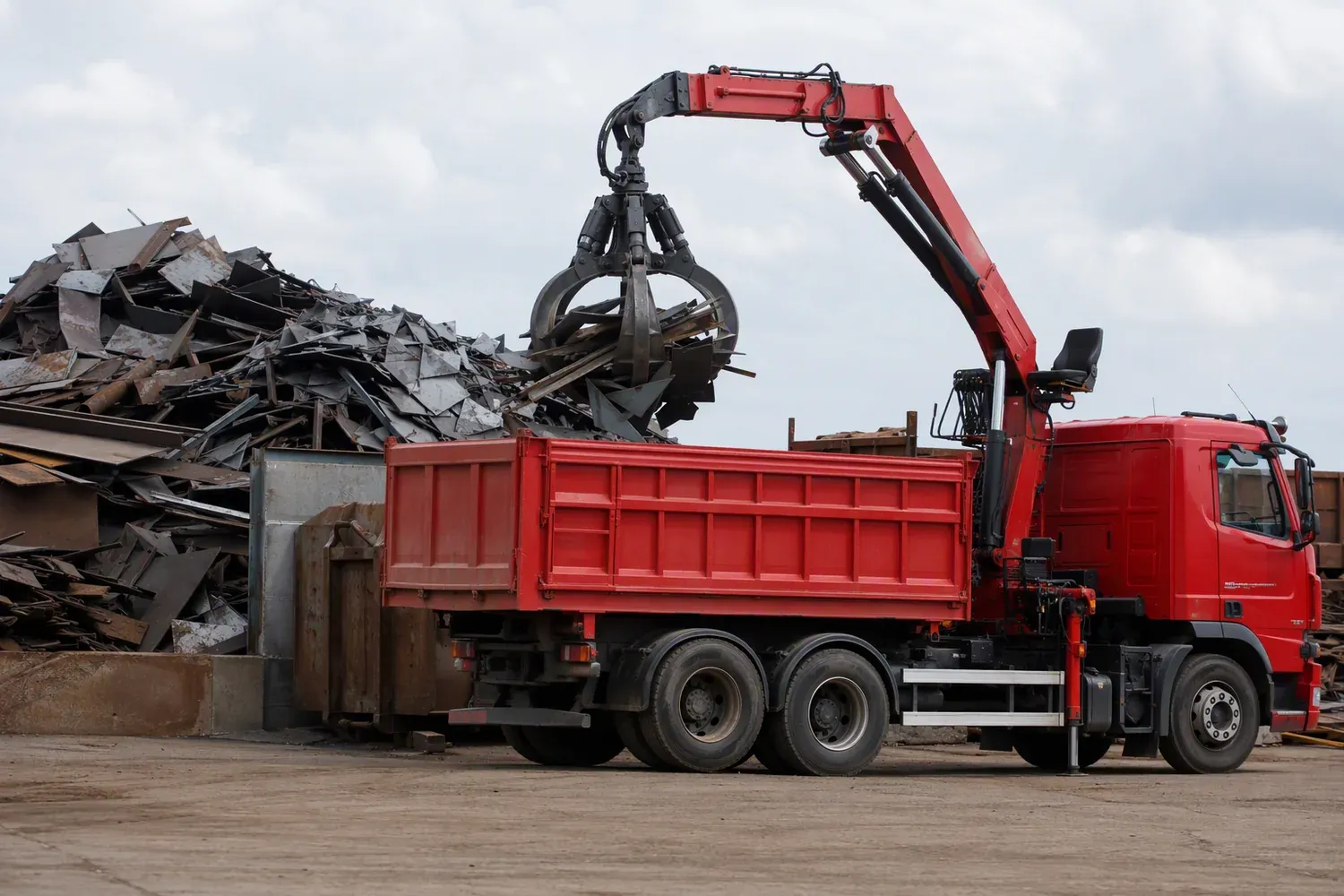
On a log grab truck the crane is the easy part: the head is the specification. Linkage, jaw type and the published opening that ends most conversations.
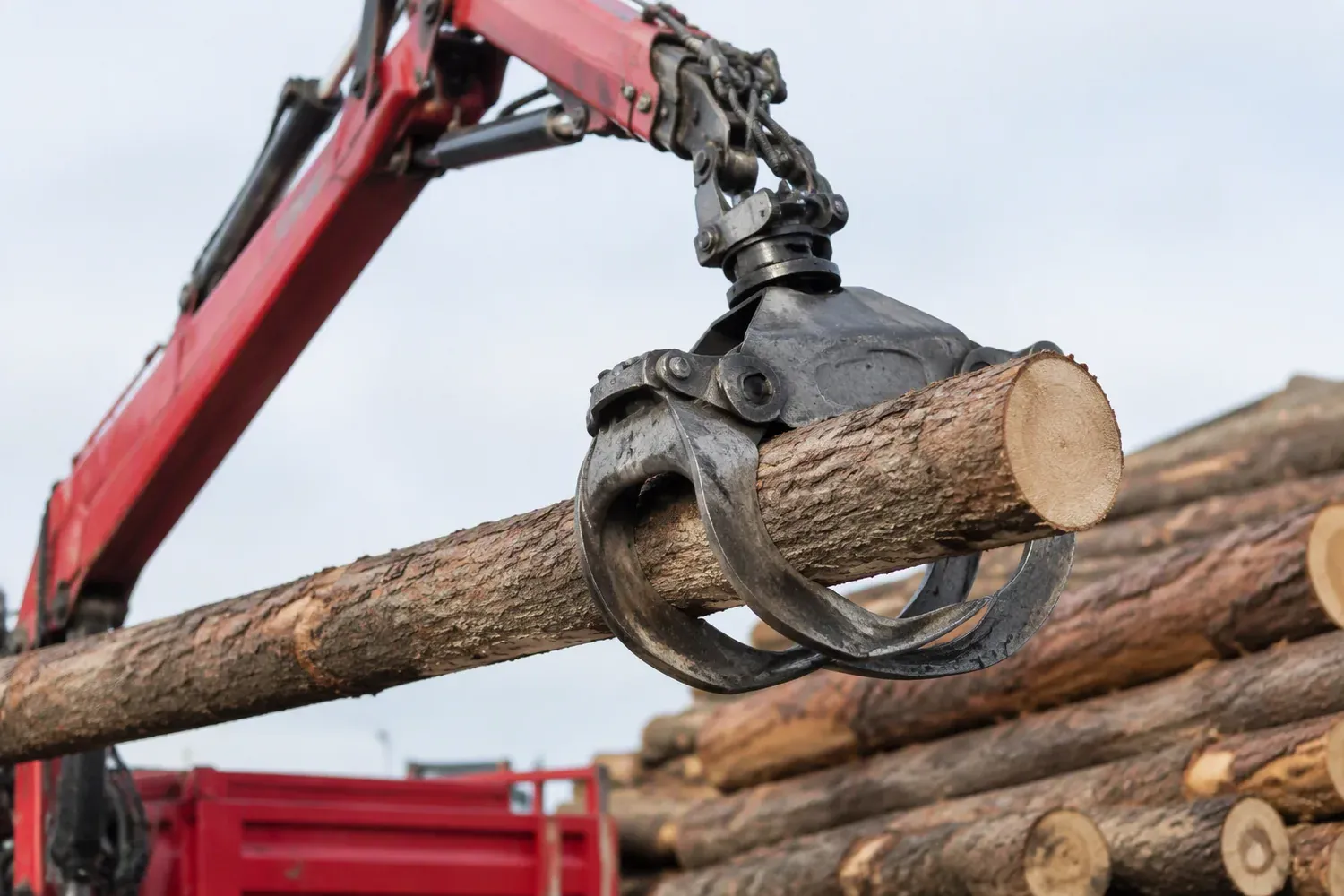
On a log grab truck the crane is the easy part. The head is the specification — and it is the part buyers most often accept without asking.
Two trucks with identical cranes and identical chassis can be right and wrong for the same job, because one carries a timber jaw and the other a flat jaw on a different linkage.
Three decisions, in order
- How big is the material? Log diameter, and whether you lift single stems or bundles.
- How is it presented? Stacked at a landing, lying singly in a forest, or loose in a yard.
- Does the head have to hold the load through the cycle? If the material is carried over the truck rather than lifted and released, the head's behaviour under load is the whole specification.
Everything else — crane tonnage, boom sections, body size — follows from those three answers.
What we build, side by side
Model | Chassis / class | Boom | Head |
|---|---|---|---|
TMG-WP2501 | SINOTRUK Wangpai, 3,600 mm wheelbase, 160 hp, 8 t rear axle | 6.5 m | 3+2 grab, on a 4,200 × 2,300 × 800 mm body |
TMG-WP2507 | SINOTRUK Wangpai 2080, 180 hp, 1,081 rear axle | 6.8 m | 2+2 rigid-linked grab, opening 1.3 m, on a 3,500 × 2,200 × 600 mm twin-ram tipping body |
TMG-WP2508 | SINOTRUK Wangpai 2080, 4,495 kg GVW, 160 hp, Eaton 8-speed | 6.5 m / 7.5 m | 2+2 soft-linked timber grab, opening 1.2–1.3 m, same 3,500 × 2,200 × 600 mm body |
TMG-WP2509 | SINOTRUK Wangpai 1880, 160 hp, 7 t rear axle | 7.5 m, two-section telescopic | 1.3 m flat-jaw timber grab, 3,500 × 2,200 × 600 mm body |
Read the table as four different answers rather than four grades of the same truck. The lightest unit in the list — TMG-WP2508 at 4,495 kg GVW — is the right machine for short timber on a small operation, and a wrong machine for a landing that unloads full-length stems all day. The largest rear axle in the list is on the shortest boom (TMG-WP2501 at 8 t and 6.5 m), because that truck is built to carry the timber, not to reach across a stack with it.
Opening: the number that ends most conversations
Our published timber heads open 1.2 m to 1.3 m. That is the figure to compare against your material before anything else:
- It takes the logs and stem sizes that most sawmills, plantations and firewood operations handle.
- It is a hard limit. A head cannot be asked to grip what it cannot open around, and no amount of crane tonnage changes that.
- If your material exceeds the published opening, say so in the enquiry. The answer is a different head matched to the crane — not a bigger crane with the same head.
This is also why we publish the opening on the models where we build the head for it, and stay silent where we have not. A number we have not listed is a number we have not confirmed.
Rigid or soft linkage — and flat vs round jaws
Rigid linkage (TMG-WP2507) keeps the head square to the boom. The load stays where the operator put it, which suits consistent timber and controlled placing.
Soft linkage (TMG-WP2508) lets the head follow the load. It is more forgiving with irregular bundles and uneven ground, at the cost of some precision while placing.
Neither is an upgrade. The linkage is a consequence of how uniform your material is — and the subject has its own article on this site rather than being repeated here.
Jaw type is a separate decision: a timber jaw is built around round logs, while a flat jaw (TMG-WP2509) is for stacked and sawn material and for loads that must not be dented. Note that the flat-jaw model in our range sits on a two-section telescopic boom rather than a folding knuckle boom — a different machine geometry, and a reminder that the head and the boom have to be specified together.
The four questions we ask before quoting
- Maximum log diameter and length. Length drives the body; diameter drives the head.
- Single stems or bundles? Bundle handling is where linkage choice actually shows up.
- Where does it work? A landing with a concrete apron, a forest track, or a yard. Ground condition is what decides whether you need 4x4 or a lifting axle.
- What carries the truck after the wood? If the truck also hauls general cargo, the body and crane classes have to satisfy both jobs.
What we will not tell you
- We will not state an opening or a gripping force we have not published. If a supplier quotes a jaw opening without telling you which head it belongs to, the number is not usable.
- We will not say rigid linkage is better than soft, or the reverse. It depends on how uniform your timber is.
- We will not carry a published load figure from one model to another. A grab load figure belongs to the truck and head it was measured on.
- We will not promise a log length that fits the body. Body dimensions are published per model; check them against your longest stem.
Where to go next
The complete timber and scrap grab range — with chassis, boom, head and body for each model — is on the truck-mounted grab listing. If your operation mixes timber with scrap, the head comparison in the scrap grabber or magnet article is the next thing to read.
Left-hand drive is our standard build; right-hand drive is available on request. All models, boom lengths, head types and openings on this page are those currently listed on this site, reviewed 1 October 2026.
Send us the log diameter and length on WhatsApp and we will name the head and the body before we name a price.