Oct 1, 2026
6x2 with a Lifting Axle: When It Beats a 6x4
A lifting second axle decides the weighbridge ticket, the tyre bill and the turning circle. Where a 6x2 wins, where a 6x4 still does, with the published figures for one 24,500 kg build.
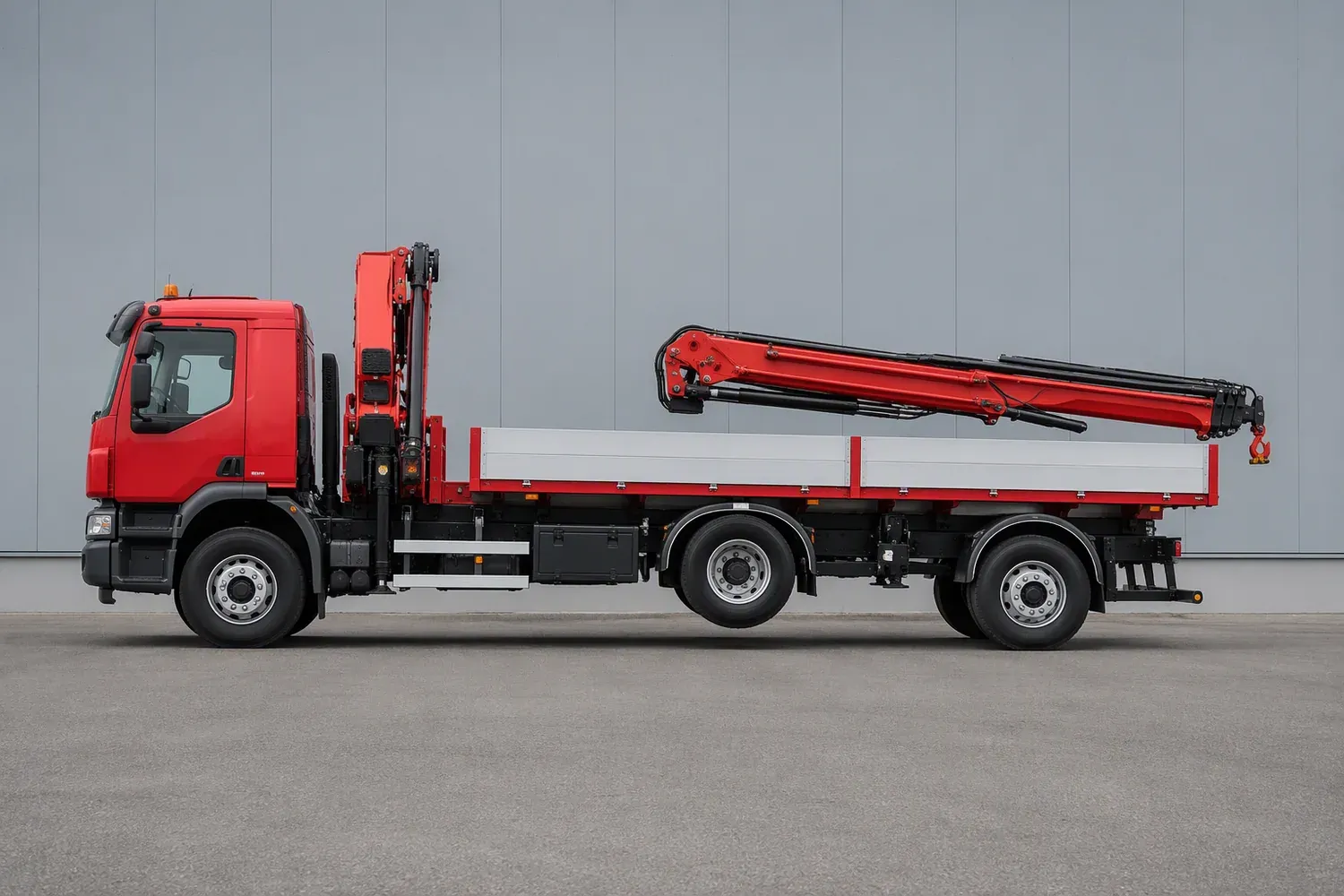
On a 6x2 with a lifting second axle, one axle can be taken out of the equation. It is raised when the truck is light and lowered when the truck is heavy — and that single feature decides your weighbridge ticket, your tyre bill and your turning circle.
It also makes the truck genuinely different from a 6x4, in ways that show up on the third job rather than the first quotation.
What "lifting" actually does
A lifting axle has two states, and the truck behaves like two different vehicles depending on which one you are in:
- Raised (light). The axle is off the ground. Its tyres do not roll, so they do not scrub through turns, and the truck turns in a shorter radius. The load sits on the steering axle and the rear group.
- Lowered (loaded). The axle carries its share, spreading the load across three points instead of two. This is what keeps the truck inside its axle limits once the crane, the body and the cargo are on it.
The usual failure of a lifting axle is not mechanical — it is procedural. An operator who never lowers the axle runs a truck that is effectively a 4x2 with a long rear overhang, and finds out at the weighbridge.
The arithmetic that sets the limits
On the 6x2 crane truck we list, the published figures are:
Item | Published figure |
|---|---|
Gross vehicle weight | 24,500 kg |
Curb weight | 13,725 kg |
Rated payload | 10,645 kg |
Front axle load | 6,500 kg |
Rear axle load | 18,000 kg |
Second axle | 5 t, lifting |
Rear axle | 10 t |
Wheelbase | 4,300 + 1,300 mm or 4,700 + 1,300 mm |
Frame | 300 × (8 + 8 + 6) mm, three-layer through-frame |
Engine | YCK05240-60 or YCS06245-60A, 240 / 245 hp, 5,132 / 6,234 cc, China VI |
Gearbox | Fast 8-speed, ratios 4.444 / 4.111 |
Tyres | 10.00R20 18PR, 8 tyres |
Fuel tank | 200 L |
Top speed | 89 km/h |
Read the last three columns of that table together and the design intent is visible. A 5 t lifting second axle under an 18,000 kg rear group, on a 300 × (8+8+6) mm three-layer frame, is a truck built to carry a crane and a loaded deck on tarmac without asking the front axle to do work it should not do.
Where the lifting axle wins
- High-mileage on-road work. Container yards, steel and building-material distribution, long runs with a light or empty return leg.
- Depots and tight yards. A raised axle shortens the effective turning geometry; the truck that can turn inside the gate is the truck that gets used.
- Mixed loads. The truck is legal-light one trip and heavy the next, without the operator having to think about it beyond lowering the axle.
- Routes with a laden weight limit rather than a design limit — the configuration that lets you carry the most on the days you need it.
Where a 6x4 still wins
- Traction on loose or wet ground. With the second axle raised, a 6x2 is a 4x2 for grip purposes. Gravel, mud, sand, wet clay, gradients — this is where the second driving axle earns its cost.
- Sites that never get better than they are. A quarry or a works yard does not become a highway because the quotation was cheaper.
- Heavier cranes and longer reach. The more crane and outrigger reaction you mount, the more you want the load spread over a driven tandem.
- Anyone whose local rules reward drive axles rather than axle count.
The honest summary: a lifting axle is a road feature, and a second drive axle is a traction feature. Buying one when you need the other is the most expensive mistake in this class.
The configuration, and what we confirm at quotation
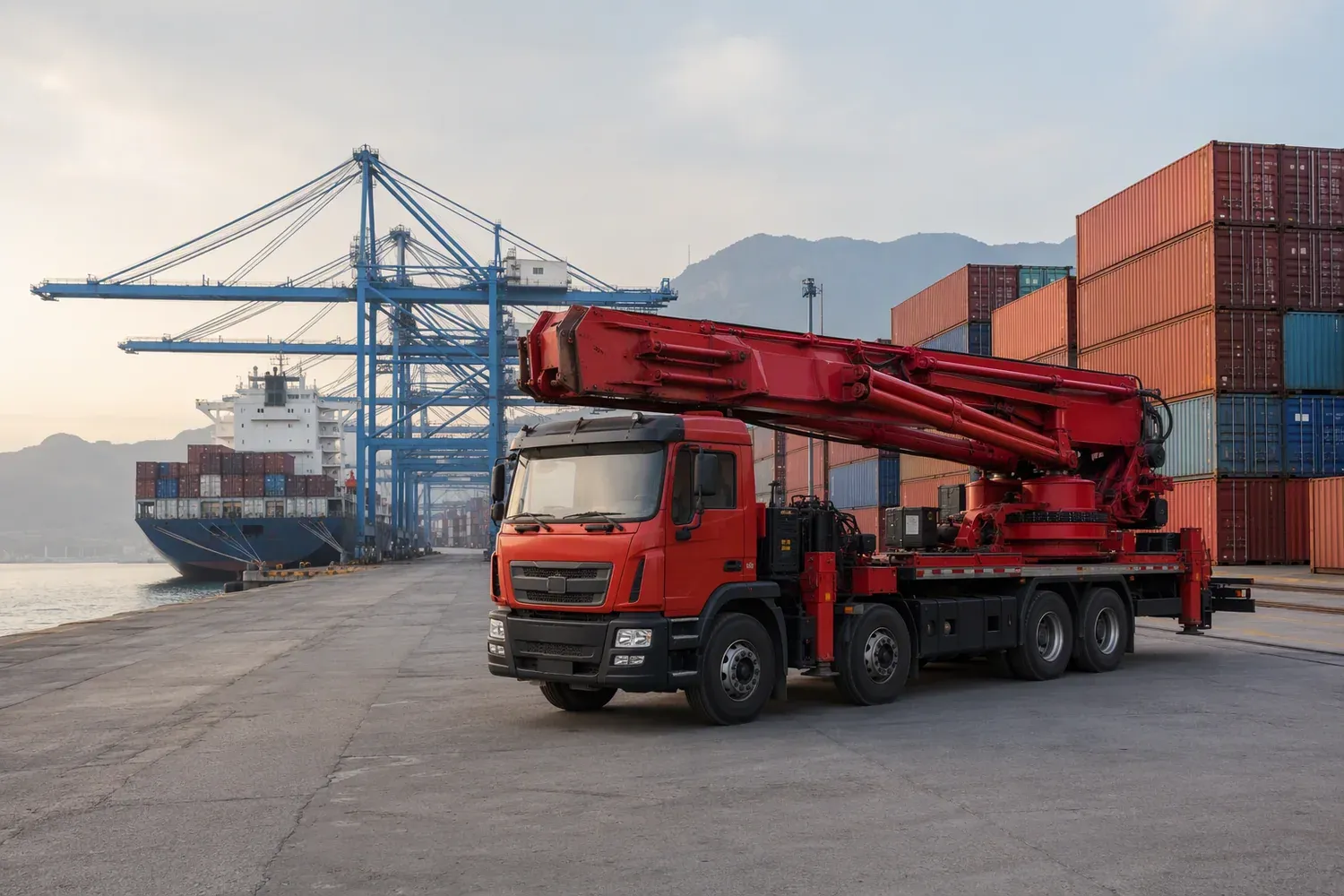
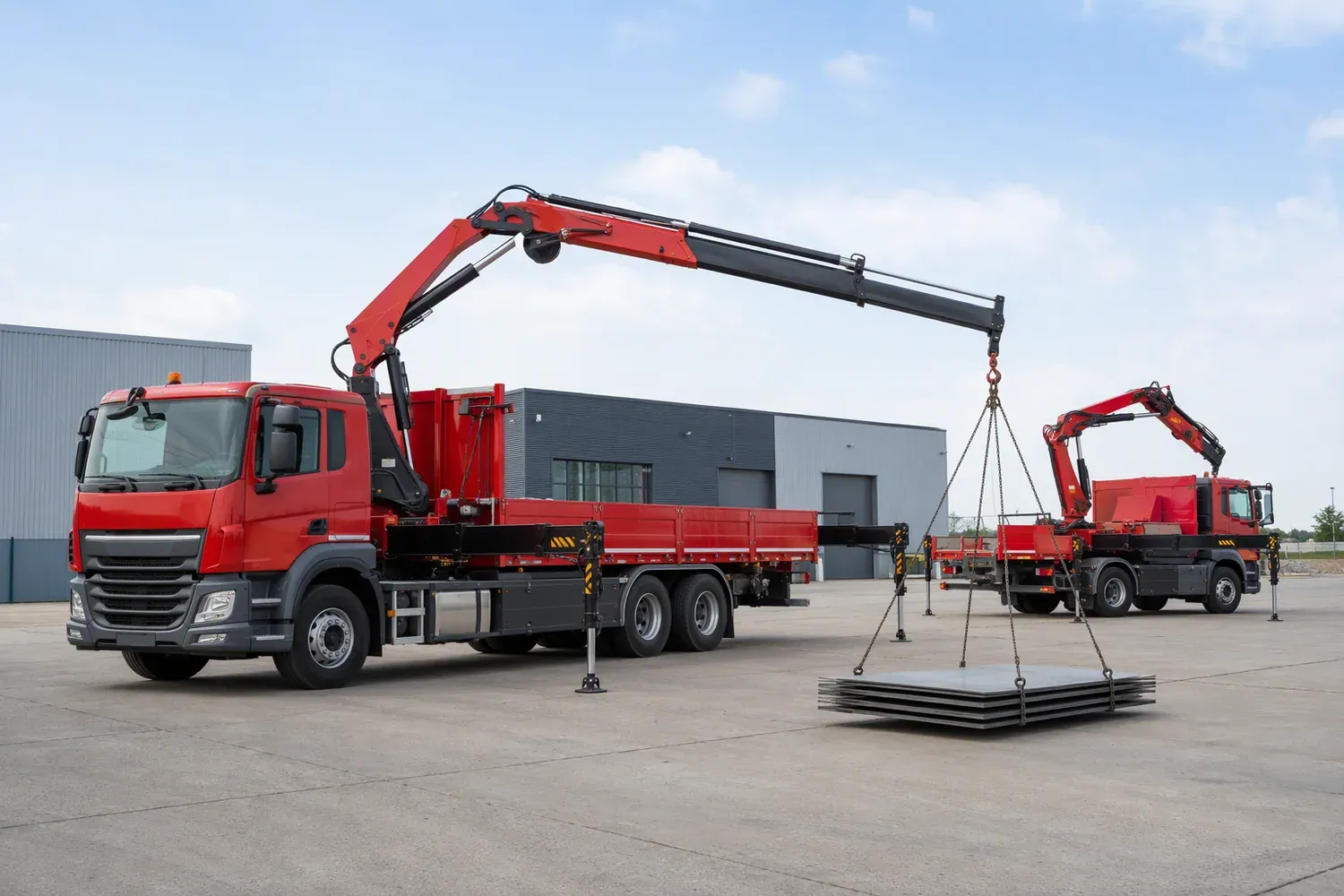
The truck above is listed as the Dayun 6x2 lifting-axle crane truck, with a 10–12 t crane class. Left-hand drive is the standard build and right-hand drive is available on request; China VI is the emission class declared for this chassis.
Two items are deliberately left to the quotation rather than to this page: the crane make and model fitted to your order, and the body and tipping arrangement. Both are configuration choices, and stating them here for one build would mislead buyers ordering another.
If you are weighing a 6x2 against a 6x4, the truck-mounted crane line shows both on 6x4 carriers and this unit on 6x2, which is the comparison worth making on paper before either is ordered.
What we will not tell you
- We will not quote a fuel or tyre-life saving as a percentage. It depends on route, load factor and driver, and we have not measured it on your operation.
- We will not promise that any axle configuration satisfies your national weight rules. That is decided by your local weighbridge rules and enforcement, and it is the first thing your transporter should confirm.
- We will not publish payload or axle figures for a build we have not weighed.
What to decide first
Ask two questions before the truck: how often the truck will leave loaded, and what the ground is like where it loads. If it is mostly tarmac and mostly loaded, a lifting axle is the right answer. If the truck loads on loose ground or climbs a site road every day, order the second drive axle and accept the extra weight and cost.
Fax or message the route and we will tell you which one — and if the answer is a 6x4, we will say so.